DEX aggregators are the backbone of Solana trading. Instead of manually checking prices across Raydium, Orca, Meteora, Phoenix, and dozens of other liquidity sources, an aggregator scans them all simultaneously and routes your trade through the path that gives you the best price. The difference between using an aggregator and trading directly on a single DEX can easily be 0.5-3% per trade — which adds up fast.
Jupiter has dominated this space since 2022, but serious competition has emerged. Titan Exchange and Prism (along with other contenders) are pushing the boundaries of what a DEX aggregator can do — faster routing, better MEV protection, and features Jupiter doesn't offer.
This guide compares the three leading Solana DEX aggregators across every metric that matters for traders.
What Does a DEX Aggregator Actually Do?
Before comparing, it's worth understanding why aggregators exist:
- Price discovery: Scans 30+ liquidity sources to find the best price for your trade
- Route splitting: Splits a single trade across multiple DEXs if that yields a better price (e.g., 60% through Raydium, 40% through Orca)
- Multi-hop routing: Routes through intermediate tokens when a direct pair doesn't exist or when an indirect route is cheaper
- Slippage optimization: Calculates optimal slippage tolerance based on current liquidity depth
- MEV protection: Implements strategies to reduce frontrunning and sandwich attacks
Without an aggregator, you'd need to manually compare prices across every DEX, calculate whether splitting your order makes sense, and hope you don't get sandwiched. Aggregators automate all of this in milliseconds.
The Quick Comparison
| Feature | Jupiter | Titan Exchange | Prism |
|---|
| Liquidity sources | 30+ DEXs | 20+ DEXs | 25+ DEXs |
| Platform fee | 0% (aggregation) | 0% (aggregation) | 0% (aggregation) |
| Limit orders | Yes (free) | Yes | Yes |
| DCA (Dollar-Cost Average) | Yes (built-in) | Yes | Limited |
| Perps trading | Yes (Jupiter Perps) | No | No |
| API access | Yes (free + paid tiers) | Yes (free) | Yes (free) |
| Token launch | Yes (Ape Pro) | No | No |
| MEV protection | Partial (Jito integration) | Enhanced (proprietary) | Standard |
| Speed (median) | ~400-600ms | ~300-500ms | ~400-700ms |
| Mobile app | Via wallet integrations | Native app | Web only |
| Token | JUP | TITAN | None |
Now let's break down each aggregator in depth.
Jupiter: The Established Standard
Jupiter needs little introduction. It's the most-used DEX aggregator on Solana by a massive margin, processing billions of dollars in weekly volume. Nearly every Solana wallet (Phantom, Solflare, Backpack) integrates Jupiter as their default swap engine.
Routing Engine
Jupiter's Metis routing algorithm is the benchmark for Solana DEX aggregation. It:
- Scans 30+ integrated DEXs including Raydium, Orca, Meteora, Phoenix, Lifinity, and more
- Splits trades across multiple routes when beneficial
- Supports multi-hop routing through up to 3 intermediate tokens
- Recalculates routes in real-time as liquidity shifts
For most trades, Jupiter finds the best or near-best price. Its edge is particularly strong for large trades ($10K+) where route splitting across multiple DEXs significantly reduces price impact.
Limit Orders
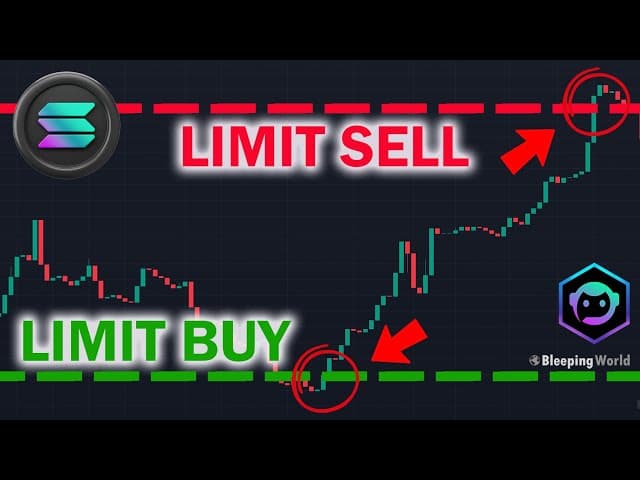
Jupiter offers free limit orders — a feature that transformed how Solana traders operate. Instead of sitting at your screen waiting for a price target, you set the order and walk away.
How it works:
- Set your desired price and amount
- Jupiter monitors the market continuously
- When the target price is hit, the order executes automatically
- No expiration by default (you can set one)
- Partially fillable — your order can fill in chunks as liquidity allows
The key limitation: limit orders depend on the order being matched against available DEX liquidity. During extreme volatility, execution might slip past your target price before the system can fill it.
DCA (Dollar-Cost Averaging)
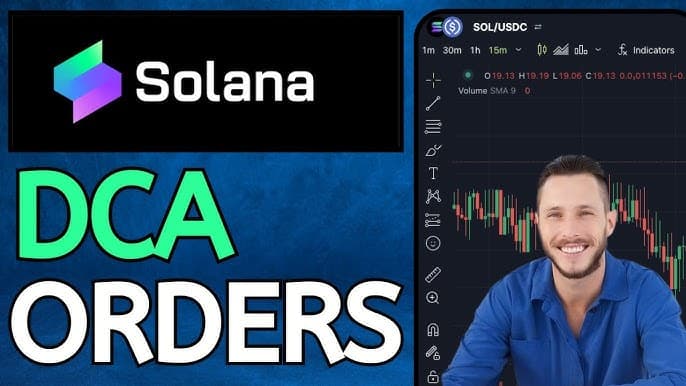
Jupiter's DCA feature lets you automatically buy or sell a token over a set period:
- Choose the token pair, total amount, and time interval
- Trades execute automatically at each interval
- Minimum order size: approximately $1
- Intervals: minutes, hours, days, or weeks
This is excellent for accumulating tokens without trying to time the market, or for gradually taking profits without creating a single large sell candle.
Jupiter Perps
Beyond aggregation, Jupiter operates its own perpetual futures exchange:
- Up to 100x leverage on SOL, BTC, and ETH
- Oracle-based pricing (no AMM slippage)
- Zero price impact on trades up to significant size
- JLP pool provides liquidity (and earns fees)
This makes Jupiter more than just a swap aggregator — it's becoming a full trading platform.
API and Developer Access
Jupiter's API is the most widely used in Solana:
- Quote API: Get the best swap quote across all DEXs
- Swap API: Execute swaps programmatically
- Price API: Real-time token prices aggregated across sources
- Limit Order API: Place and manage limit orders
- Free tier handles most use cases; paid plans available for high-frequency needs
Most Solana trading bots, wallets, and portfolio trackers use Jupiter's API under the hood.
Weaknesses
- Congestion during peak trading: Jupiter's popularity means its infrastructure sometimes gets strained during major token launches or market-wide events
- MEV exposure: While Jupiter integrates with Jito for MEV protection, it's not immune to sandwich attacks, especially on popular pairs
- Route staleness: Between the time you get a quote and sign the transaction, the optimal route may have changed — this is inherent to all aggregators but more noticeable on Jupiter during volatile periods

Titan Exchange: The Speed Challenger
Titan Exchange entered the Solana DEX aggregator space with a focus on execution speed and MEV protection. While it doesn't match Jupiter's volume, it has carved out a niche among traders who prioritize speed and privacy.
Routing Engine
Titan's routing scans 20+ DEXs — fewer than Jupiter's 30+, but covering all the major liquidity sources that matter (Raydium, Orca, Meteora, Phoenix). The practical difference in price quality is usually minimal for standard pairs.
Where Titan differentiates:
- Faster route calculation: Titan consistently returns quotes 50-100ms faster than Jupiter in head-to-head tests
- Optimized transaction construction: Transactions are built to minimize compute units, which translates to lower priority fee requirements
- Pre-computed routes: For popular pairs, Titan maintains pre-computed optimal routes that can be served instantly
MEV Protection
This is Titan's strongest selling point. The platform implements proprietary MEV protection that goes beyond standard Jito integration:
- Private transaction submission: Trades can be submitted through private channels that bypass the public mempool, making sandwich attacks significantly harder
- Transaction ordering: Titan's system works to ensure your trade executes before potential frontrunners can react
- Slippage guard: An additional layer that reverts transactions if the execution price deviates too far from the quoted price
For traders who are regularly getting sandwiched on Jupiter (common with large memecoins trades), Titan's MEV protection alone can save 1-3% per trade.
Limit Orders and DCA
Titan offers limit orders with similar functionality to Jupiter. DCA is also available, though with fewer customization options. The core experience is comparable, but Jupiter's implementation is more mature with better UI/UX.
API Access
Titan provides a free API for developers:
- Quote and swap endpoints
- WebSocket price feeds
- Transaction simulation before submission
- Rate limits are generous for the free tier
The API is less documented and has a smaller developer community than Jupiter's, which means less support if you run into issues.
Weaknesses
- Smaller liquidity source coverage: 20+ vs Jupiter's 30+ means occasionally missing the optimal route for obscure token pairs
- Lower brand recognition: Many dApps default to Jupiter, so you have to actively choose Titan
- Smaller community: Fewer tutorials, guides, and community support
- Token pairs: May not support the absolute newest tokens as quickly as Jupiter
Prism: The Privacy-Focused Alternative
Prism (also known as DSX in some contexts) takes a different approach to DEX aggregation, emphasizing privacy and a clean trading experience. It's the newest of the three and still building market share.
Routing Engine
Prism aggregates across 25+ DEXs with a routing algorithm that prioritizes:
- Minimal hops: Preferring direct routes over multi-hop paths to reduce failure rates
- Consistency: Optimizing for reliable execution over theoretical best price
- Gas efficiency: Building transactions that use minimal compute, keeping fees low
In practice, Prism's pricing is competitive with Jupiter for standard pairs (within 0.1% for most trades under $50K). The gap widens slightly for exotic pairs where Jupiter's broader DEX coverage provides an edge.
Privacy Features
Prism's key differentiator is enhanced privacy:
- No tracking: Prism doesn't log wallet addresses or trading activity
- Private routing options: Ability to route through privacy-preserving paths
- Clean interface: No promoted tokens, no sponsored listings — just pure trading functionality
- No token: Without a governance token, there's no incentive to extract value from users
Limit Orders
Prism supports limit orders, though the interface is more streamlined than Jupiter's. You get the essentials: price target, amount, optional expiration. Advanced features like partial fills and iceberg orders (splitting large orders into smaller visible chunks) are in development.
API Access
Prism offers a free API that's well-documented for its size:
- Quote API with route details
- Swap execution endpoint
- Price feeds
- Straightforward integration for bots and dApps
Weaknesses
- Smallest market share: Less battle-tested at scale
- No perps or advanced trading: Purely an aggregator — no additional products
- DCA limited: Basic DCA available but less polished than Jupiter's
- Fewer integrations: Most wallets and dApps haven't integrated Prism as a swap option yet
Head-to-Head: Detailed Comparison
Price Quality
To compare routing efficiency, consider a hypothetical $10,000 SOL → USDC swap:
| Aggregator | Quoted Price | Price Impact | Effective Rate |
|---|
| Jupiter | Best or near-best | Lowest (broadest routing) | Benchmark |
| Titan | Within 0.05-0.1% of Jupiter | Comparable | -0.05 to -0.1% |
| Prism | Within 0.1-0.2% of Jupiter | Comparable for major pairs | -0.1 to -0.2% |
For small trades (under $1,000), the difference is negligible — often less than $0.50. For large trades ($50K+), Jupiter's broader DEX coverage starts to matter.
Speed
| Metric | Jupiter | Titan | Prism |
|---|
| Quote time | ~200-400ms | ~150-300ms | ~200-400ms |
| Transaction landing | ~400-800ms | ~300-600ms | ~400-800ms |
| Transaction failure rate | ~2-5% | ~2-4% | ~3-6% |
Titan is consistently the fastest, which matters for time-sensitive trades like sniping new token launches or arbitrage.
Features Matrix
| Feature | Jupiter | Titan | Prism |
|---|
| Basic swaps | Yes | Yes | Yes |
| Limit orders | Yes (advanced) | Yes | Yes (basic) |
| DCA | Yes (advanced) | Yes | Limited |
| Perps | Yes (up to 100x) | No | No |
| Token launch (Ape Pro) | Yes | No | No |
| MEV protection | Partial | Enhanced | Standard |
| Private transactions | Via Jito | Built-in | Built-in |
| Portfolio view | Basic | No | No |
| Mobile-optimized | Yes | Yes | Yes |
| Governance token | JUP | TITAN | None |
Who Should Use What?
Use Jupiter if:
- You want the best price on every trade, especially large ones
- You need limit orders, DCA, and perps in one platform
- You're building a bot or dApp and need the most established API
- You want the widest token coverage (newest tokens listed fastest)
Use Titan if:
- Speed is your top priority (sniping, arbitrage)
- You're tired of getting sandwiched on large trades
- You want enhanced MEV protection without sacrificing UX
- You trade primarily major pairs where Titan's routing is on par with Jupiter
Use Prism if:
- Privacy matters to you (no activity logging)
- You prefer a clean, ad-free trading interface
- You don't need perps or advanced features
- You're philosophically opposed to token-incentivized aggregators
Using Multiple Aggregators
Smart traders don't commit to a single aggregator. The optimal strategy:
- Check Jupiter first for the quoted price — it's your benchmark
- Compare with Titan or Prism for the same trade — especially for large orders where MEV protection matters
- Use Jupiter for exotic pairs where its broader routing gives the best results
- Use Titan for time-sensitive trades where speed matters
- Set limit orders on Jupiter (most reliable execution due to volume)
- Run DCA on Jupiter (most proven track record)
You can also build bots that query multiple aggregator APIs simultaneously and execute through whichever returns the best quote. Jupiter's and Titan's APIs are compatible enough to make this straightforward.
The Aggregator Landscape Going Forward
DEX aggregation on Solana is heading in several directions:
- Intent-based trading: Instead of routing through existing DEXs, future aggregators may match trades peer-to-peer, eliminating DEX fees entirely
- Cross-chain aggregation: Aggregating liquidity not just across Solana DEXs but across chains (Ethereum, Base, Arbitrum) via bridges
- AI-optimized routing: Machine learning models that predict optimal routes based on market conditions, time of day, and historical data
- Embedded aggregation: Every wallet, dApp, and bot becoming its own aggregator using shared routing infrastructure
Jupiter has a massive head start and a growing ecosystem (JUP token, Ape Pro, perps). But competition from Titan and Prism is pushing the entire space forward. Better MEV protection, faster execution, and more transparent pricing benefit every Solana trader regardless of which aggregator they choose.
Compare these and other DEX tools in the DEX category on MadeOnSol.