
The MadeOnSol blog
Field-tested guides on KOL wallet tracking, Pump.fun deployer scoring, trading bots, DeFi yields, and the MadeOnSol API. Every post is researched, written, and edited in-house. The editorial blog has no sponsored posts — paid placements live at /sponsored with clear labeling. We don't rewrite press releases.
Editorial volume
What the archive looks like — live counts from the database.
All in-house
From KOL to DePIN
3,922 minutes
Always
Featured

Meteora DLMM lets you provide liquidity in active price bins, not the whole range — earning 5-10x Raydium fees. How they work and current APRs.
Browse by topic
The archive
Filter by category, search by keyword, or skim the chronology. Pagination is at the bottom — 12 per page.
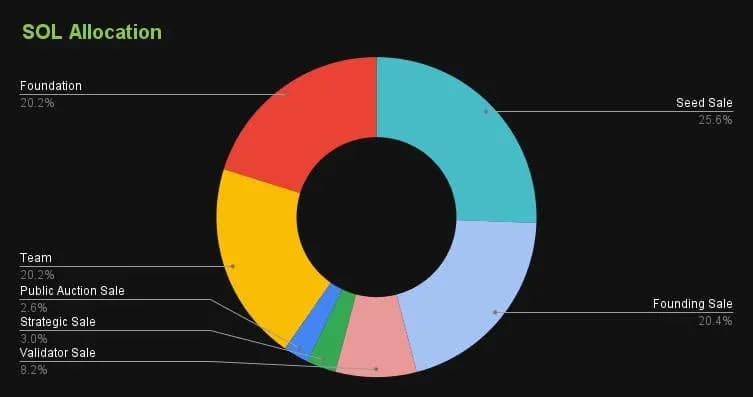
Load a Solana token's risk, locks, flow and holder count with one include-scoped REST read, then keep the panel current from WebSocket events instead of polling. Runnable Node and browser code with watchTokenIntelligence() from madeonsol-x402 4.3.0.
How to structure a Robinhood Chain (chain id 4663) trading terminal: one include-scoped REST snapshot per token, then price, risk, lock and candle events over one WebSocket. Runnable code with watchTokenIntelligence() from robinhood-chain-x402 0.21.0, plus the Ultra firehose trade-off.
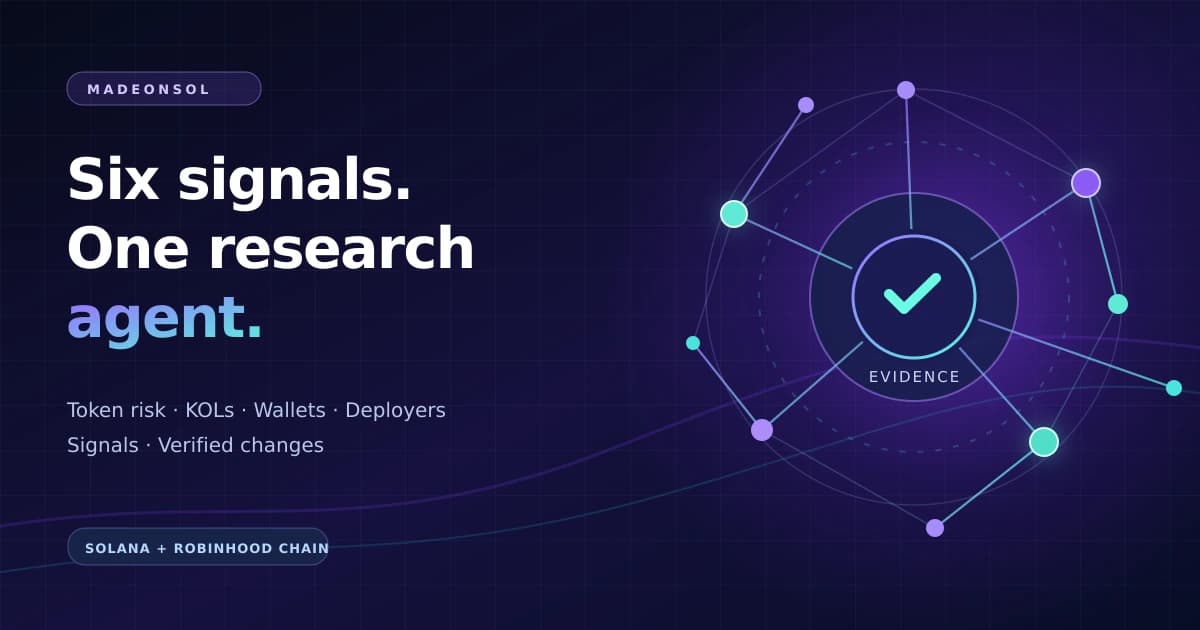
Design an evidence-backed memecoin research agent with six MadeOnSol intelligence actions: KOL discovery, token risk, deployer history, wallet analysis, signal reliability and cursor-based changes.
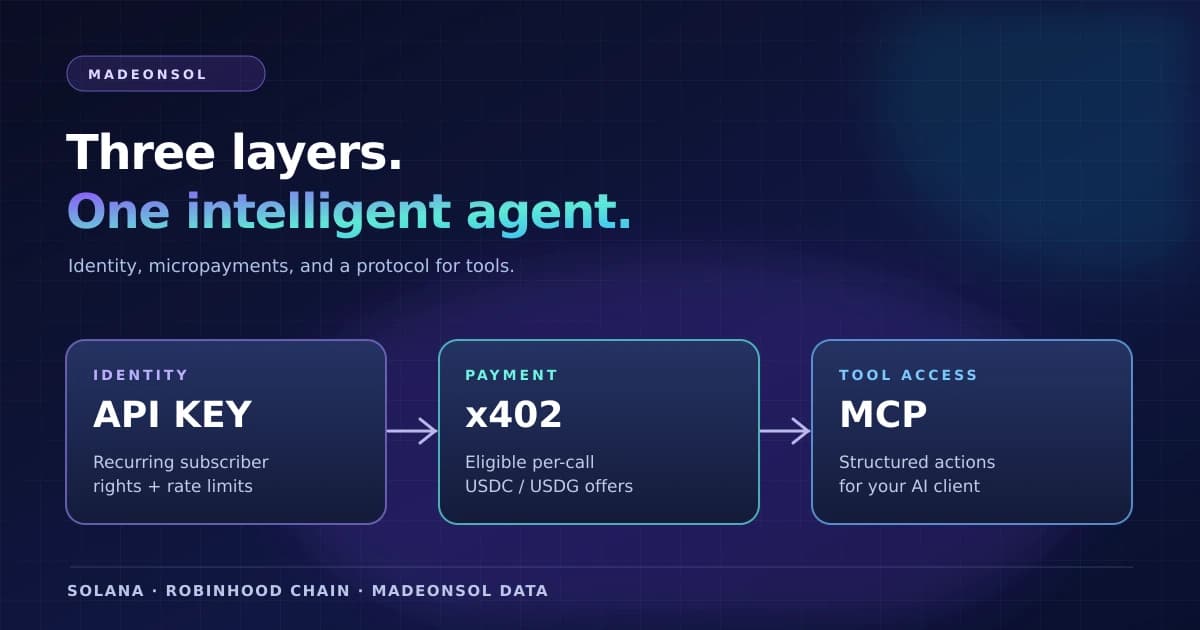
MCP connects your agent to tools; x402 pays for eligible API calls; subscriptions authorize sustained data access. Compare the real trade-offs, payment rails, costs, tier limits and failure modes for Solana and Robinhood Chain agents.
A read-only design for a Robinhood Chain wallet dashboard: MadeOnSol's indexed wallet swaps feed the activity view, Chainstack RPC receipts attach transaction evidence, and each field keeps track of where it came from.
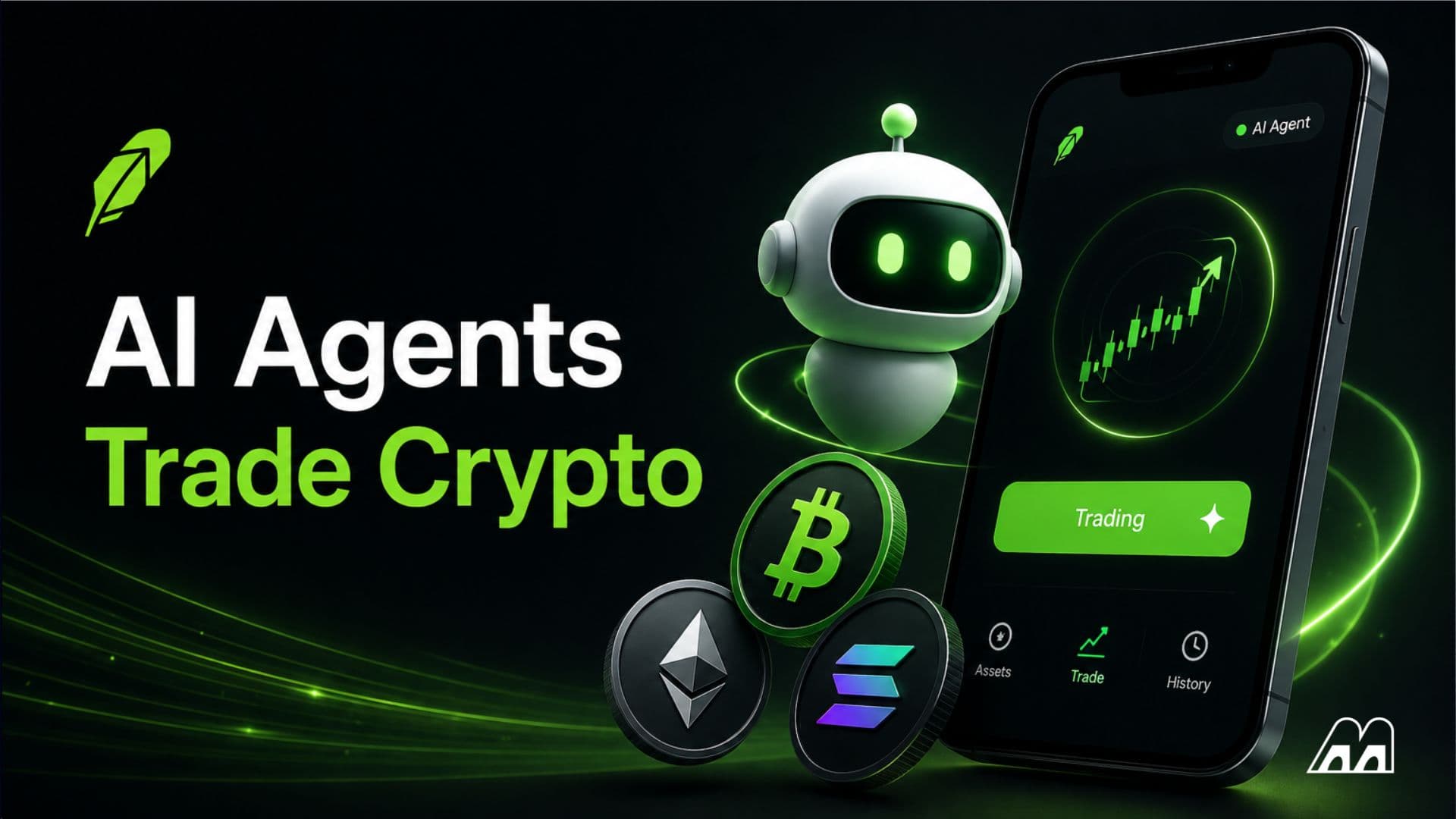
More than 70% of Solana DEX volume on peak launch days now comes from autonomous agents, not humans. Here's what shifted this year in MCP, x402, and agent tooling — and how MadeOnSol's infrastructure compares to what exchanges are shipping.

The most common reason AI agents fail against an API isn't missing data — it's undocumented rate limits and no machine-readable discovery. A concrete, dated checklist for what agent-ready actually means in 2026, using MadeOnSol's own build as the worked example.
Robinhood Chain (chain ID 4663) now has real API coverage — Bitquery, GoldRush, Mobula and Goldsky all index it. Here's what each actually gives you, sourced from their live docs, and where none of them go: KOL wallets, deployer reputation, and sniper detection.
One GET returns every buy and sell on a pump.fun token, newest first, with the executed price, the pool price at that slot, the wallet and the early-buyer rank. Cursor paging, buy/sell and wallet filters, and what the coverage block tells you before you trust the numbers.
One socket, three channels: sniper:deploys pushes every pump.fun launch a few hundred milliseconds before the chain confirms it, token:graduations pushes every bonding-curve completion, token:surges pushes young tokens running 3×, 6× or 8× against their launch cap. Handshake, real frames, filters, and what each channel does not tell you.
Two ways to follow the trades of 1,000+ tracked Solana KOL wallets: poll GET /api/v1/kol/feed with the next_since cursor, or subscribe to the kol:trades WebSocket channel. Real response fields, the per-KOL scores that ride on every row, and how to pick wallets from the leaderboard.

First live day of surge alerts, 28 Aug 2026: 138 pump.fun surges on 104 mints. Fires with no risk flag were above their fire price an hour later 60% of the time; fires flagged early_buyers_exiting, 6%.
Publish on MadeOnSol
We accept sponsored guest posts at /sponsored — from $99, editorial standards apply (we reject ~80% of drafts). The editorial blog itself stays sponsor-free: written by our team, no outside content.