Solana isn't just for trading memecoins and sniping launches. Beneath the speculative surface, there's a robust ecosystem of yield-generating opportunities that can put your SOL to work while you sleep.
Whether you have 10 SOL or 10,000, there are strategies that match your risk tolerance, time commitment, and capital size. This guide covers seven proven approaches to earning passive income on Solana in 2026, with realistic APY ranges and an honest assessment of the risks involved.
Strategy 1: Native SOL Staking
Expected APY: 6-8%
Risk Level: Low
Minimum: Any amount
Native staking is the foundation of Solana's security model and the simplest way to earn yield on your SOL. When you stake SOL with a validator, your tokens help secure the network and you earn a share of the inflation rewards.
How It Works
Solana uses a delegated proof-of-stake consensus mechanism. You delegate your SOL to a validator, who runs the hardware that processes transactions and produces blocks. In return, you receive a share of the staking rewards proportional to your stake.
Current Yields
As of early 2026, native staking yields approximately 6-8% APY depending on your chosen validator's commission rate. Solana's inflation rate has been gradually decreasing according to its disinflationary schedule, which slowly reduces staking yields over time. However, an increasing share of rewards now comes from priority fees and MEV tips — partially offsetting the inflation decline.
How to Stake
The easiest way is through your wallet. Both Phantom and Solflare have built-in staking interfaces where you can browse validators, compare commission rates, and delegate in a few clicks.
Key Considerations
- Unstaking period: Native staking has a warmup/cooldown period tied to Solana's epochs (roughly 2-3 days). Your SOL isn't liquid during this time
- Validator selection matters: Choose validators with high uptime, reasonable commission (5-10%), and strong track records. Avoid validators with 100% commission — they keep all rewards
- No smart contract risk: Native staking is built into the Solana runtime itself, not a third-party protocol. This makes it the lowest-risk yield option on Solana
Strategy 2: Liquid Staking (JitoSOL, mSOL, JupSOL)
Expected APY: 7-9%
Risk Level: Low-Medium
Minimum: Any amount
Liquid staking gives you staking rewards while keeping your SOL usable across DeFi. Instead of locking your SOL with a validator, you swap it for a liquid staking token (LST) that appreciates in value as staking rewards accrue.
How It Works
You deposit SOL into a liquid staking protocol and receive an LST in return. The protocol stakes your SOL across multiple validators, earns rewards, and those rewards increase the value of your LST over time. When you want your SOL back, you can either unstake (with the epoch delay) or simply swap your LST back to SOL on a DEX instantly.
Top Liquid Staking Options
Jito (JitoSOL) — The largest LST on Solana. JitoSOL earns both staking rewards and MEV tips, which typically push yields 0.5-1% above vanilla staking. Jito's validator set is optimized for MEV capture, giving JitoSOL holders an edge.
Marinade Finance (mSOL) — One of the original Solana LSTs. Marinade distributes stake across 400+ validators using an algorithmic delegation strategy that promotes network decentralization. mSOL is widely integrated across Solana DeFi.
JupSOL — Jupiter's liquid staking token, backed by the Jupiter team and integrated directly into the Jupiter ecosystem. It stakes with the SolanaFM validator and earns competitive yields.
Sanctum — Rather than a single LST, Sanctum is an LST infrastructure layer that supports dozens of LSTs and enables instant swaps between them. Sanctum's "Infinity" pool lets you provide liquidity across all LSTs simultaneously.
The Yield Advantage
Liquid staking typically yields 7-9% — slightly more than native staking because protocols like Jito capture additional MEV revenue. The real advantage, though, is composability: you can take your JitoSOL or mSOL and use it as collateral in lending protocols, provide liquidity in DEX pools, or deposit it in yield vaults for layered returns.
Risks
- Smart contract risk: Your SOL is held in protocol smart contracts. While major LST protocols have been audited and battle-tested, the risk isn't zero
- Depeg risk: In extreme market conditions, LSTs can temporarily trade below their underlying SOL value. This has happened historically but corrected quickly
- Validator risk: If validators in the LST's set get slashed or perform poorly, it affects all holders
Strategy 3: DeFi Lending (Kamino, MarginFi)
Expected APY: 2-15% (varies by asset)
Risk Level: Medium
Minimum: Any amount
Lending protocols let you deposit tokens and earn interest from borrowers. It's the DeFi equivalent of a savings account — except the rates are typically much higher than traditional finance.
How It Works
You deposit tokens (SOL, USDC, JitoSOL, etc.) into a lending pool. Borrowers put up collateral and borrow from the pool, paying interest that flows to depositors. Rates fluctuate based on supply and demand — when borrowing demand is high, rates increase.
Where to Lend
Kamino Finance — Kamino has emerged as Solana's leading lending protocol with over $2B in TVL. It offers lending, borrowing, and automated liquidity management in one platform. Kamino's Multiply product lets you leverage your LST exposure for amplified staking yields.
Kamino's lending rates vary by asset:
- USDC/USDT: 4-10% APY (higher during volatile markets when borrowing demand spikes)
- SOL: 2-5% APY
- JitoSOL/mSOL: 1-4% APY
- Smaller tokens: Can reach 15%+ but with higher risk
MarginFi — Another established Solana lending protocol with competitive rates and a points program that has attracted significant TVL.
Advanced: Looping
Experienced DeFi users can "loop" their deposits — deposit SOL, borrow USDC, swap to SOL, deposit again — to amplify their yield exposure. Kamino's Multiply product automates this process. While looping can boost APY to 15-20%, it also amplifies liquidation risk if SOL's price drops.
Risks
- Liquidation risk (for borrowers): If your collateral value drops below the required ratio, your position gets liquidated
- Smart contract risk: Lending protocols handle billions in TVL, making them high-value targets
- Rate volatility: APYs aren't fixed. A 10% rate today could be 2% tomorrow
- Oracle risk: Incorrect price feeds could trigger wrongful liquidations or enable exploits
Strategy 4: Liquidity Provision on DEXs
Expected APY: 10-100%+ (highly variable)
Risk Level: Medium-High
Minimum: Varies by pool
Providing liquidity to decentralized exchanges earns you a share of trading fees. It's one of the highest-yield strategies on Solana, but it comes with complexities that you need to understand.
How It Works
DEXs need liquidity to facilitate trades. When you provide liquidity, you deposit a pair of tokens (e.g., SOL/USDC) into a pool. Traders who swap between those tokens pay fees, and those fees are distributed to liquidity providers proportional to their share of the pool.
Where to Provide Liquidity
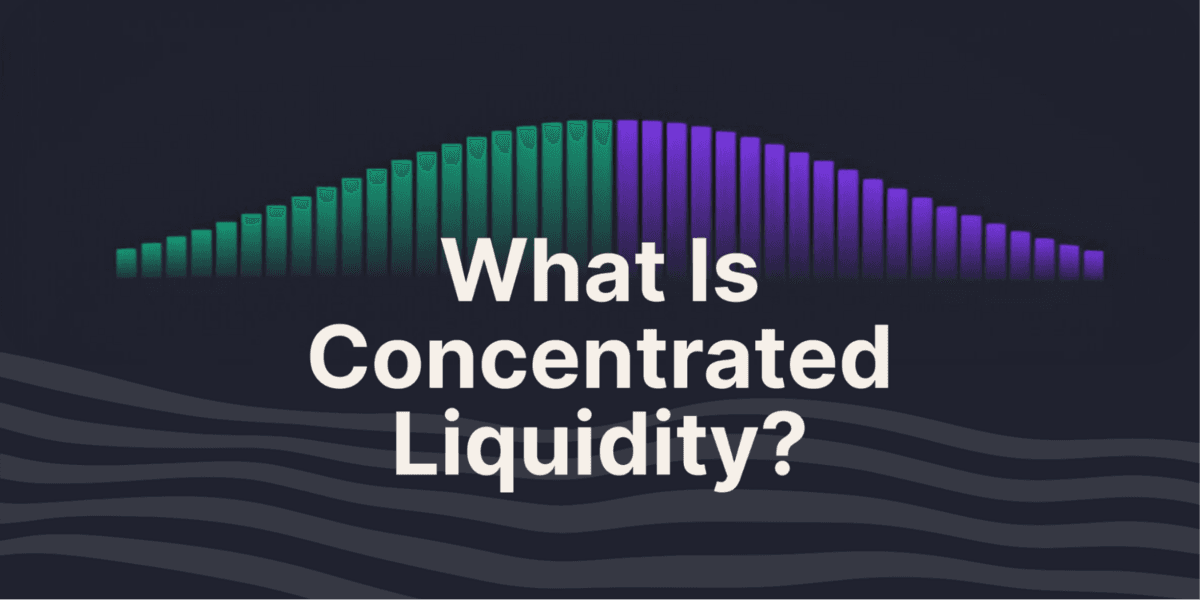
Meteora — Meteora's DLMM (Dynamic Liquidity Market Maker) pools are among the most popular on Solana. DLMM lets you concentrate your liquidity in specific price ranges for higher fee capture. During periods of high trading activity, DLMM pools on volatile pairs can generate extraordinary returns.
Meteora also offers standard AMM pools for a simpler, hands-off experience.
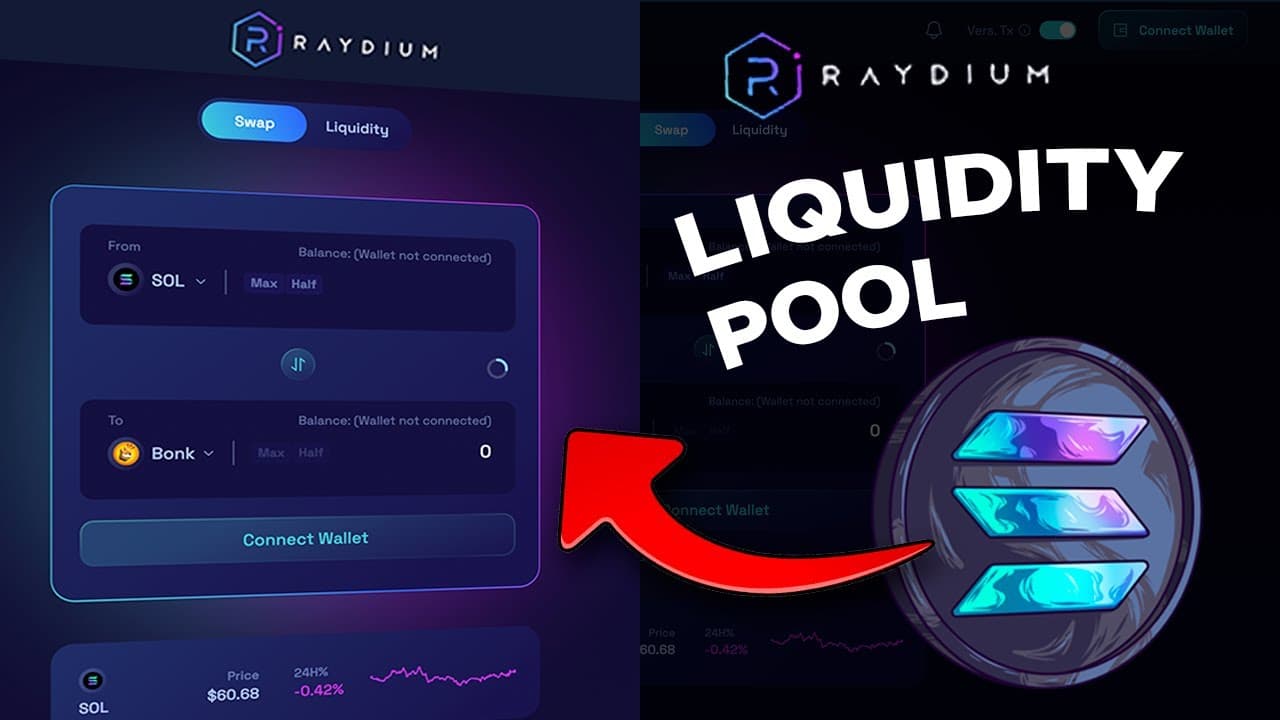
Raydium — Solana's largest DEX by TVL, offering both standard AMM pools and concentrated liquidity positions. Raydium pools are deeply liquid for major pairs.
Orca — Known for its clean interface and Whirlpool concentrated liquidity positions. Orca is particularly strong for stablecoin pairs and major token pairs.
Realistic Yield Expectations
The APY from LP provision depends enormously on the pool:
- Stablecoin pairs (USDC/USDT): 3-8% APY with minimal impermanent loss
- Major pairs (SOL/USDC): 15-40% APY with moderate impermanent loss risk
- Memecoin pairs: 100-1000%+ APY possible, but with extreme impermanent loss and rug risk
Understanding Impermanent Loss
Impermanent loss (IL) is the cost of providing liquidity when the price ratio of your deposited tokens changes. If SOL pumps 50% while you're LP-ing SOL/USDC, you end up with less SOL than if you had just held. The fees you earn need to exceed the impermanent loss for the strategy to be profitable.
For volatile pairs, IL can eat all your fee earnings and more. For stable pairs or correlated assets (like SOL/JitoSOL), IL is minimal.
Risks
- Impermanent loss: The primary risk for LPs. Can result in net losses during strong directional moves
- Smart contract risk: LP tokens are held in DEX contracts
- Rug pulls: For memecoin pools, the token itself could collapse to zero
- Active management: Concentrated liquidity positions (DLMM, Whirlpools) need to be rebalanced as prices move out of range