
Meteora DLMM Pools Explained (2026): How Concentrated LP Works
Meteora DLMM lets you provide liquidity in active price bins, not the whole range — earning 5-10x Raydium fees. How they work and current APRs.
MadeOnSol··Updated
Meteora DLMM lets you provide liquidity in active price bins, not the whole range — earning 5-10x Raydium fees. How they work and current APRs.

Meteora has quietly become one of the most important DEXes on Solana, largely because of its DLMM (Dynamic Liquidity Market Maker) pools. If you've looked into providing liquidity on Solana and been confused by terms like "bin steps," "concentrated liquidity," and "volatility strategies," this guide explains it all.
DLMM pools are how many of the most profitable liquidity providers on Solana earn their fees. Understanding how they work gives you an edge that most passive DeFi users don't have.
Updated May 2026: Meteora's product surface has expanded — DLMM is still the flagship, but DAMM v2 (Dynamic AMM with vault-backed yield) and DBC (Dynamic Bonding Curve, used by some launchpads) now coexist alongside it. We cover the differences below so you pick the right product for your strategy. We've also added a FAQ section covering the most common questions LPs ask us in 2026.
Meteora now ships three distinct pool products, and picking the wrong one is a common mistake new LPs make:
Throughout 2026, more launchpads have moved their bonding logic onto Meteora's DBC, so understanding which product a token sits on tells you whether you're buying liquidity that will stay (DLMM/DAMM) or migrate (DBC). If you track new launches, our Deployer Hunter flags which pool product a token graduates to.
Traditional liquidity pools (like standard Raydium AMM pools) spread your liquidity across the entire price range — from $0 to infinity. This means most of your capital sits unused, only becoming active if the price moves to extreme levels.
DLMM pools take a different approach: concentrated liquidity. You choose a specific price range to deploy your liquidity in, and your capital only earns fees when the token's price is within that range.
Tools mentioned
Live health scores, average ratings, and direct links on MadeOnSol.

Open-source DeFi analytics dashboard tracking TVL, yields, and protocol metrics across Solana

Solana NFT marketplace for digital art and collectibles

Real-time token data API and analytics for Solana traders

Concentrated liquidity pools with user-friendly interface on Solana

DeFi ecosystem directory with curated Solana project listings and analytics
Access Solana DeFi data via API
KOL trading intelligence, DEX trade streaming, and deployer analytics. Free tier: 200 requests/day.
from madeonsol_x402 import MadeOnSolClient

client = MadeOnSolClient(api_key="msk_your_key")

# KOL convergence signals — what are whales accumulating?
signals = client.kol_coordination(period="24h", min_kols=3)

# KOL PnL leaderboard
leaders = client.kol_leaderboard(period="7d")Keep reading
DeFi
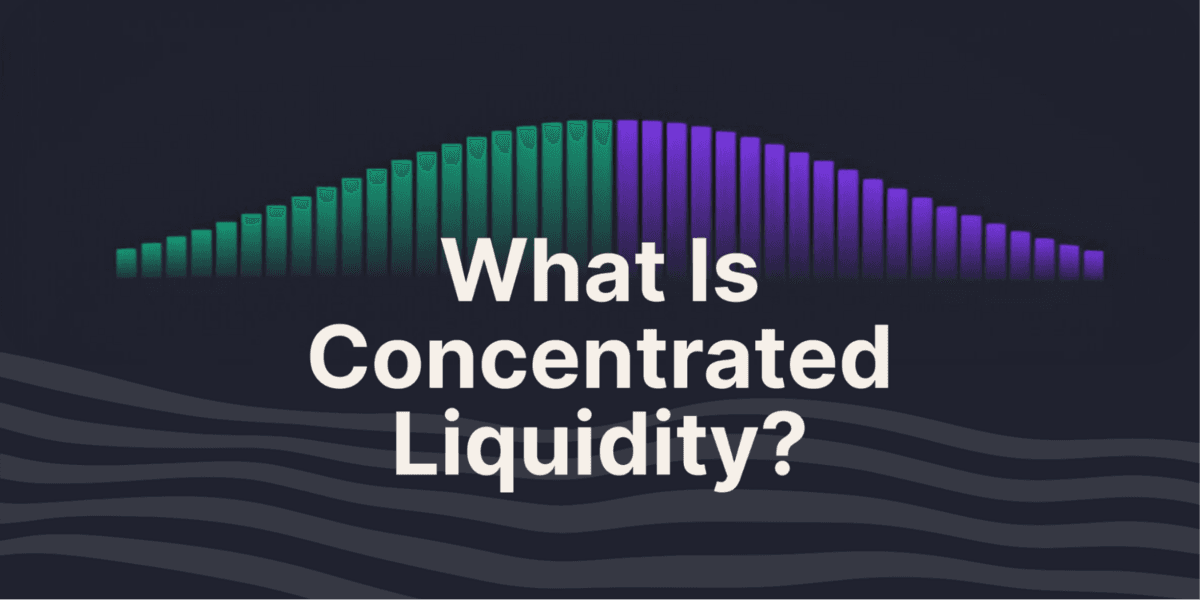
Master concentrated liquidity on Solana with this deep dive into Meteora DLMM, Orca Whirlpools, and Raydium CLMM. Learn range strategies, bin selection, impermanent loss management, and how to earn maximum fees as an LP.
Guides
Complete guide to Orca DEX and Whirlpools — Solana's concentrated liquidity protocol. Learn how to swap, provide liquidity, manage price ranges, and compare Orca vs Meteora DLMM vs Raydium CLMM.

Education
Learn how market making works on Solana, from AMMs and order books to concentrated liquidity. Understand the risks, rewards, and tools you need to provide liquidity effectively.
DeFi
Discover 7 proven ways to earn passive income on Solana in 2026 — from native staking and liquid staking to DeFi lending, LP provision, yield vaults, RWA yield, and DePIN node rewards. Realistic APY ranges included.
Guides
Step-by-step guide to earning yield as an LP on Solana. Covers Raydium, Orca, and Meteora — plus impermanent loss, concentrated liquidity, and pool selection.

API Guides
Tokens behave very differently depending on which DEX their primary liquidity lives on. PumpFun bonding-curve tokens are pre-graduation; PumpSwap is post-graduation; Raydium and Orca tokens have a different trader profile. The `primary_dex` filter on `/v1/tokens` lets you scan one venue at a time.
Enjoyed this article?
Real-time KOL trades, Pump.fun deployer intel, and 1,200+ ranked Solana & Robinhood Chain tools — free to explore.
Open the KOL TrackerThink of it like this:
The result: DLMM positions earn significantly more fees per dollar of capital deployed, because 100% of your capital is active within the price range where trading actually happens. DLMM is one implementation of a broader idea — our guide to concentrated liquidity on Solana covers the core mechanics that apply across Meteora, Raydium, and Orca.
Meteora divides the price range into discrete bins. Each bin represents a small price interval. Your liquidity is distributed across specific bins that you choose.
When the current trading price is in one of your bins, your liquidity is active and earning fees. When the price moves outside your bins, your liquidity is inactive (no fees, but also no impermanent loss during that time).
The bin step determines the size of each price bin:
For volatile assets (memecoins), larger bin steps make sense because prices move wildly. For stable pairs (USDC/USDT), tiny bin steps work because the price barely moves.
Every time someone swaps through a DLMM pool and their trade touches one of your bins, you earn a share of the trading fee. The fee is proportional to your share of liquidity in that specific bin.
Meteora's DLMM pools use dynamic fees — the fee rate adjusts based on market volatility. When the market is volatile (lots of price movement), fees are higher to compensate LPs for the increased risk. When it's calm, fees are lower.
This is a significant advantage over fixed-fee pools. During memecoin manias when volatility is extreme, DLMM fees can spike to capture the elevated risk.
Go to app.meteora.ag and connect your Phantom or other Solana wallet.
Browse available DLMM pools. For each pool, you'll see:
What to look for:
Meteora offers preset strategies for different goals:
Distributes your liquidity evenly across a price range. Simple and straightforward. Good for beginners or when you don't have a strong view on price direction.
Concentrates more liquidity near the current price and less at the edges. Earns more fees when price stays near current levels, but runs out of range faster if price moves significantly.
Concentrates liquidity on one side — useful if you want to primarily buy (bid) or sell (ask) at specific price levels. This is essentially a limit order with fee earning while you wait.
This is the most important decision. Your price range determines:
For volatile tokens (memecoins):
For stable pairs (SOL/USDC):
For correlated pairs (mSOL/SOL, JitoSOL/SOL):
Choose how much of each token to deposit. Meteora will show you the ratio needed based on your price range and the current price.
Approve the transaction in your wallet. Your position is now active and earning fees.
Once your position is live:
Impermanent loss (IL) is the difference between holding tokens in your wallet versus providing liquidity. It occurs when the price ratio of your token pair changes.
In DLMM pools, IL works differently than traditional AMMs:
The key insight: DLMM pools concentrate both your fee earnings AND your IL into a smaller range. If you manage your position well (choosing appropriate ranges and rebalancing), the higher fees can significantly outweigh IL.
Risk: Frequent rebalancing means transaction costs and potential IL locking.
Risk: Lower capital efficiency means lower returns, but much less management required.
Risk: Memecoins can drop 90%+. Your LP position can lose significant value if the token crashes. Only LP tokens you're willing to hold.
Risk: Lower returns than volatile pairs, but much safer. Think of it as a savings account yield.
These numbers fluctuate dramatically. Don't chase APY screenshots — they reflect a moment in time, not sustained returns. Capturing those first-few-hours yields means getting in the instant a pool opens — our guide on how to snipe new Raydium and Meteora pool launches covers how to detect and act on fresh pools.
Raydium also offers concentrated liquidity (CLMM). The core concept is similar, but:
Orca Whirlpools use a similar concentrated liquidity approach:
Check Birdeye or DEXScreener to see which DEX has the most volume for your target pair. More volume = more fees. Many tokens have pools on multiple DEXes, and the volume distribution changes over time.
Setting ranges too tight on volatile tokens: The price moves out of range quickly, and you stop earning fees while being stuck in an IL position
Ignoring impermanent loss: Fee APY looks amazing, but if IL exceeds fees, you'd have been better off just holding
LPing tokens you don't want to hold: If a memecoin crashes 80%, your LP position is now mostly that memecoin at a much lower price. Only LP tokens you'd be comfortable holding
Not claiming fees: Fees accumulate but aren't automatically compounded. Claim and re-add regularly for compound growth
Chasing the highest APY pool: The highest APY pools often have the highest risk. A 500% APY memecoin pool can lose you money faster than a 30% APY stable pool makes it
Both offer concentrated liquidity, but DLMM uses discrete bins (each bin = a small price interval) while Raydium CLMM uses continuous ticks like Uniswap v3. DLMM's bin model is more intuitive for choosing strategies, and Meteora's dynamic fee kicks in higher rates during volatility. Raydium CLMM has more TVL on certain blue-chip pairs. Most active LPs use both depending on the pair.
For SOL/USDC and similar major pairs, expect 20-100% APY during normal market activity, sometimes spiking higher when volatility lifts the dynamic fee component. Memecoin pools can flash 200-500%+ APY during pumps but those numbers don't sustain — they're a snapshot during one volatile day. Stable pairs (USDC/USDT) cluster around 5-15% APY with very low IL. Don't chase APY screenshots — they reflect a moment, not a forward return.
It depends on the bin step + range you choose. A wide-range position on a major pair can run for weeks without rebalancing. A tight-range position on a memecoin will go out of range within hours and stop earning until you redeploy. Pick the strategy that matches your time budget — there's no extra credit for tight ranges if you're not going to manage them.
When the price is inside your range, you experience IL similar to a Uniswap v3 LP, but your fee earnings are concentrated, so they often outweigh the IL on active pairs. When the price moves outside your range, your position is now 100% in the worse-performing token and your IL is "locked in" until you withdraw or the price comes back. The key risk: a token that drops 90% leaves your position 100% in that token at the depressed price.
Yes. The MadeOnSol Solana API exposes per-pool liquidity, price, and recent swaps for Meteora DLMM, DAMM, and DBC pools — same data we use to power KOL trade enrichment and deployer alerts. See the API docs for the /v1/token/{mint} endpoint which returns the active primary pool, dex, and live price.
The boring answer is the right one: start with SOL/USDC at a moderate range (±20-30%) using a 25-50 bps bin step. You'll get real fee revenue, light management, and a feel for how positions move. Once you've held a position for a few weeks and understand the dynamics, branch into volatile pairs or tight ranges.
Explore more Solana DeFi tools and liquidity platforms on MadeOnSol. Read our how to provide liquidity on Solana guide for a broader overview, or use the KOL tracker to see which Meteora pools the smart-money wallets are entering.