One of the most common questions in the Solana ecosystem is straightforward: how much does it actually cost to launch a token? The answer ranges from under $5 to over $50,000, depending entirely on your approach, ambitions, and how much effort you put into giving the token a real chance.
This guide breaks down every cost component involved in launching a token on Solana in 2026, from the bare minimum technical costs to the optional but often critical investments in liquidity and marketing. Whether you are launching a memecoin on Pump.fun, creating a DeFi protocol token via Raydium LaunchLab, or deploying manually through the Solana CLI, here is what you will spend.
1. Token Creation: The Mint Account
Every Solana token starts with a mint account, which is the on-chain record that defines your token's existence: its supply, decimal places, and the authorities that can mint or freeze tokens.
Cost: 0.02 SOL ($2 at ~$100/SOL)
This covers the rent-exempt deposit for the mint account. Solana requires accounts to hold a minimum SOL balance to remain on-chain (rent exemption). For a standard SPL token mint account, this is approximately 0.00145 SOL for the mint itself, plus the associated token account for the creator's wallet.
If you use the Solana CLI (spl-token create-token), you pay only this rent deposit plus a negligible transaction fee (0.000005 SOL). If you use a no-code tool like Pump.fun, this cost is bundled into the platform's flow.
A token without metadata is just a random address. Metadata gives your token its name, ticker symbol, description, and logo image — the information wallets and DEXs display to users.
Cost: 0.01-0.02 SOL ($1-$2)
Metaplex is the standard for token metadata on Solana. Creating a metadata account costs roughly 0.01 SOL in rent-exempt deposit. If you upload the token image to Arweave (permanent on-chain storage), that costs an additional small fee depending on file size — typically under $0.10 for a standard logo image.
Alternatives to Arweave include IPFS (via Pinata or similar services, some free tiers available) or simply hosting the image on a regular web server (less decentralized but works fine for most tokens).
Platforms like Pump.fun and LaunchLab handle metadata creation automatically as part of their launch flow, so you do not need to interact with Metaplex directly if you use those tools.
3. Pump.fun Launch: The Zero-Barrier Approach
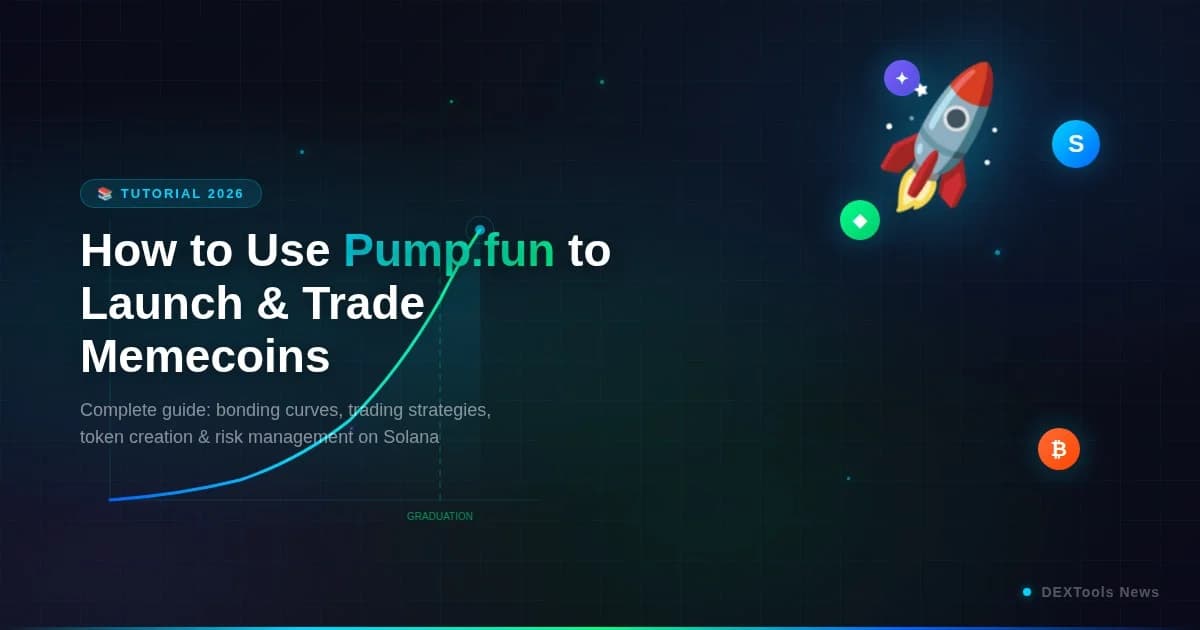
Pump.fun revolutionized token launches on Solana by making it free to create a token. There is no upfront creation fee. You fill in your token's name, symbol, description, and image, and Pump.fun deploys it to a bonding curve at no cost beyond the standard transaction fee.
Token creation cost: ~0.02 SOL (transaction fee + rent)
The real cost on Pump.fun is the trading fee. Every buy and sell on the bonding curve incurs a 1% fee paid to the platform. This is not a launch cost per se — it is an ongoing cost borne by all traders of the token. But if you are the first buyer of your own token (which most launchers are), that 1% applies to your initial purchase.
Bonding curve graduation cost: When a token's bonding curve fills (reaches approximately 85 SOL in market cap), it automatically migrates to a PumpSwap liquidity pool (pump.fun's own AMM; before March 2025 graduates went to Raydium). Pump.fun charges a migration fee of approximately 1.5 SOL from the bonding curve proceeds. This is not paid by the creator directly but comes from the curve's accumulated liquidity.
Effective cost for a Pump.fun launch:
| Component | Cost |
|---|
| Token creation | ~0.02 SOL |
| Your initial buy (1% fee on trade) | Variable |
| Graduation (from bonding curve funds) | ~1.5 SOL |
| Total out-of-pocket for creator | ~0.02 SOL + initial buy |
This makes Pump.fun the cheapest way to launch a token on Solana. The trade-off is that you start with a bonding curve rather than a full DEX pool, you have limited control over tokenomics, and the 1% ongoing trading fee affects all traders.
4. Raydium Pool Creation: The Traditional Route
If you want to skip the bonding curve and launch directly on a major DEX, Raydium is the most common choice. Creating a Raydium AMM pool requires creating an associated OpenBook market (order book) and then initializing the liquidity pool.
OpenBook market creation: 2-3 SOL ($200-$300)
This is the largest fixed cost of a traditional Raydium launch. The OpenBook market requires rent-exempt deposits for several accounts: the market account, bids account, asks account, event queue, and request queue. The exact cost depends on account sizes you choose, but standard configurations run 2-3 SOL.
Raydium pool initialization: 0.4 SOL ($40)
Once the OpenBook market exists, initializing the Raydium AMM pool requires a small additional deposit.
Effective cost for a direct Raydium launch:
| Component | Cost |
|---|
| Token creation + metadata | ~0.04 SOL |
| OpenBook market | ~2-3 SOL |
| Raydium pool initialization | ~0.4 SOL |
| Initial liquidity (see section 6) | Variable |
| Total (excluding liquidity) | 2.5-3.5 SOL ($250-$350) |
5. Raydium LaunchLab: The Middle Ground
Raydium LaunchLab is Raydium's answer to Pump.fun — a bonding curve launch platform integrated with Raydium's ecosystem. Tokens start on a customizable bonding curve and migrate to a Raydium AMM pool upon graduation.
Token creation cost: ~0.02 SOL
LaunchLab's creation process is similar to Pump.fun. The key differences are in the fee structure and customization options:
- Trading fee: 1% on bonding curve trades (same as Pump.fun)
- Graduation: Automatic migration to Raydium AMM pool when the curve fills
- Customization: LaunchLab offers more control over curve parameters and initial token distribution compared to Pump.fun
The cost profile is nearly identical to Pump.fun for creators. The difference is primarily in where the token ends up after graduation (Raydium rather than Pump.fun's default pool) and the fee split mechanics.
6. Initial Liquidity: The Variable That Matters Most
Creating a token is cheap. Making it tradeable in a meaningful way requires liquidity, and this is where costs range from trivial to substantial.
For Pump.fun/LaunchLab launches: Your "initial liquidity" is your first buy on the bonding curve. This could be as little as 0.5 SOL ($50) or as much as 50+ SOL ($5,000+). The bonding curve provides initial price discovery, and additional liquidity comes from other buyers.
For direct Raydium pool launches: You need to seed the pool with both tokens. The standard approach is to deposit your token and SOL (or USDC) in equal value. The amount determines your starting liquidity depth and, consequently, how much slippage traders will experience.
Liquidity ranges in practice:
| Liquidity Amount | Typical Use Case |
|---|
| $500-$2,000 | Minimum viable — expect high slippage, suitable only for micro-cap experiments |
| $2,000-$10,000 | Small launch — functional trading but still significant slippage on larger orders |
| $10,000-$50,000 | Solid launch — reasonable trading experience for most retail traders |
| $50,000-$200,000 | Professional launch — smooth trading for most order sizes |
| $200,000+ | Major launch — institutional-grade liquidity |
Keep in mind that initial liquidity is not a sunk cost in the same way as account creation fees. If you provide liquidity, those funds are still in the pool working for you (though subject to impermanent loss). You can remove liquidity later, though doing so on a token you launched will destroy confidence in the project.
Liquidity locking: Serious launches lock their initial liquidity for a set period (usually 6-12 months or permanently) to prove to buyers that the team will not rug pull. Locking itself has minimal cost (a small transaction fee), but it means those funds are inaccessible for the lock duration. These same liquidity and distribution mechanics are exactly what buyers scrutinize in our guide to evaluating Solana token presales and fair launches.