Solana has been running on the same core consensus mechanism since launch. It works, but it has limits that anyone who has traded during a memecoin frenzy or a major airdrop has felt firsthand: failed transactions, delayed confirmations, and network congestion that makes fast-paced trading painful.
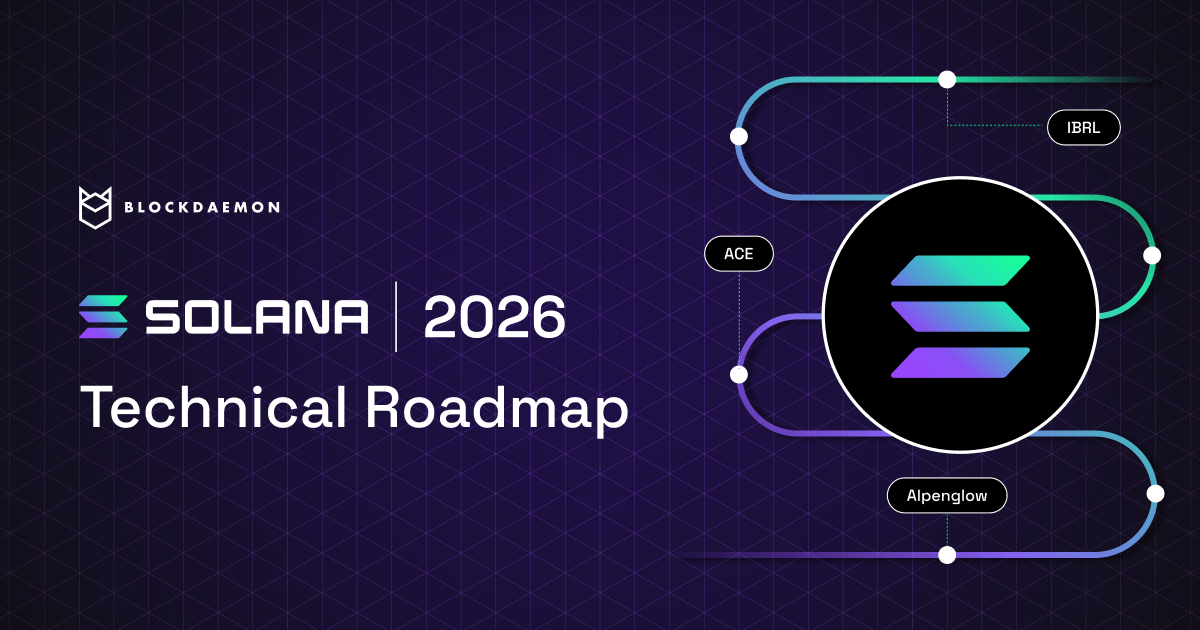
Alpenglow is Solana's answer to those problems. It is the most significant consensus-level upgrade in Solana's history, replacing the current Tower BFT protocol with a fundamentally redesigned approach to how the network agrees on blocks. Alongside it, the Firedancer validator client from Jump Crypto introduces true client diversity to Solana for the first time.
This article breaks down what is changing, why it matters, and what it means for traders, developers, and everyday users.
How Solana Consensus Works Today
To understand what Alpenglow fixes, you need a basic picture of how Solana currently reaches agreement on blocks.
Solana uses Tower BFT, a modified version of the classic PBFT (Practical Byzantine Fault Tolerance) consensus protocol. Tower BFT is built around a concept called "vote lockouts" -- when a validator votes on a block, it gets locked into that vote for an exponentially increasing number of slots. The deeper a block gets in the chain, the harder it becomes for a validator to switch away from it.
This design has served Solana well, but it comes with a few pain points:
- Finality takes too long. A transaction is considered "confirmed" after 31 blocks of votes (~12-13 seconds) and fully "finalized" after the maximum lockout period. For a chain that produces blocks every 400ms, waiting over 12 seconds for confidence feels slow.
- Heavy load causes problems. When the network gets hammered with transactions (think: a major token launch on Pump.fun or a Jupiter airdrop), block producers can struggle to keep up. The voting overhead compounds under stress.
- Synchronization gaps. Validators that fall behind have a hard time catching up efficiently. The recovery process is not optimized for the throughput Solana demands.
- Leader schedule rigidity. The current system assigns block production to leaders in fixed slots. If a leader is slow or offline, that slot is wasted.
These aren't theoretical concerns. Anyone who has watched a transaction spin for 30+ seconds during a memecoin rally, or seen "block height exceeded" errors on a snipe attempt, has experienced these limitations directly.
What Is Alpenglow?
Alpenglow is a new consensus protocol designed from the ground up for Solana's architecture. Rather than patching Tower BFT, the Solana research team (led by Lefteris Kokoris-Kogias and the Anza team) built a new protocol that takes Solana's unique strengths -- high throughput, continuous block production, parallel execution -- and gives them a consensus layer that can actually keep up.
The key components:
Votar: A New Voting Protocol
At the heart of Alpenglow is Votar, a streamlined voting mechanism that replaces Tower BFT's lockout-based voting. Instead of exponential lockouts that slowly accumulate finality, Votar uses a more direct approach:
- Single-round finality. Validators can finalize blocks in a single round of voting under normal conditions. This means transactions reach full finality in roughly 150-200 milliseconds instead of 12+ seconds.
- Optimistic fast path. When the network is healthy (which is most of the time), blocks are confirmed almost instantly. The protocol only falls back to slower multi-round consensus when there are actual disagreements or faults.
- Reduced message complexity. Fewer messages need to fly between validators to reach agreement, which cuts down on network bandwidth consumed by consensus overhead.
Rotor: Improved Block Propagation
Rotor is the block propagation component. It redesigns how blocks spread across the network:
- Faster block distribution. Blocks reach all validators more quickly and reliably, even when the network is under heavy load.
- Better recovery. Validators that fall behind can catch up more efficiently without needing to replay the entire chain of missed blocks.
- Reduced latency variance. The difference between best-case and worst-case block propagation times gets much smaller, which is critical for time-sensitive trading operations.
Quorum Certificates
Alpenglow introduces quorum certificates -- compact cryptographic proofs that a supermajority of validators agreed on a block. This is a cleaner model than Tower BFT's implicit finality through accumulated lockouts:
- Finality is explicit and provable
- Light clients can verify finality without tracking the full vote history
- Cross-chain bridges can verify Solana state more efficiently
What Is Firedancer?
Firedancer is a completely independent Solana validator client built by Jump Crypto's engineering team. This is separate from Alpenglow but deeply connected to the same goal: making Solana faster and more resilient.
Why a Second Client Matters
Since launch, Solana has had essentially one validator client: the original Agave client (formerly known as the Solana Labs client). Every validator on the network runs the same codebase. This creates a single point of failure -- if there is a bug in the client, it can take down the entire network. And it has, multiple times.
Firedancer is written from scratch in C/C++ (the original client is Rust). This means:
- A bug in one client won't crash the other. If Agave has an issue, Firedancer validators keep producing blocks. The network stays up.
- Performance competition. Two independent teams optimizing their own implementations pushes both to be faster and more efficient.
- Architectural validation. Building the same protocol in a completely different language and architecture catches specification ambiguities and edge cases.
Firedancer's Performance Edge
Jump Crypto's team has deep expertise in high-frequency trading infrastructure. They built Firedancer with the same engineering philosophy:
- Optimized networking. Firedancer uses kernel-bypass networking (similar to what HFT firms use) to minimize the latency of receiving and sending packets.
- Parallel processing. Designed from scratch for multi-core CPUs, with careful attention to cache efficiency and memory layout.
- Demonstrated throughput. In testing, Firedancer has shown the ability to handle over 1 million transactions per second -- far beyond current network demands, but providing massive headroom for growth.
Firedancer validators have already been running on mainnet in a non-voting capacity, and the transition to full block production is part of the broader Alpenglow rollout.
Impact on Traders
If you trade on Solana -- whether sniping tokens on Pump.fun, swapping on Jupiter, or providing liquidity on Raydium -- Alpenglow changes your experience in several concrete ways.
Faster Confirmations
The move from ~12 second finality to sub-second finality is the biggest practical change. What this means in practice:
- Snipe transactions settle faster. When you're competing for a new token, the time between your transaction landing and being confirmed shrinks dramatically. Less time in limbo means less uncertainty.
- Swap confirmations are near-instant. You'll see your Jupiter swap confirmed in your wallet almost immediately instead of watching a spinner.
- Reduced "block height exceeded" errors. Faster finality means your transaction's blockhash stays valid longer relative to the confirmation time, reducing timeout failures.
More Reliable Execution During High Volume
The biggest pain points for traders happen during network congestion. Alpenglow's improved block propagation and reduced consensus overhead mean:
- Fewer dropped transactions during token launches and high-activity events
- More consistent block times even under extreme load
- Less variance in priority fee effectiveness -- when blocks are more reliable, your Jito tip works more predictably
MEV Dynamics
Faster finality changes the MEV landscape. With sub-second finality:
- Sandwich attack windows shrink. Less time between transaction submission and finality means less opportunity for adversarial reordering.
- Jito bundle execution becomes more predictable. Faster consensus means bundles land more reliably in the intended block.
- Arbitrage becomes more competitive. The speed advantage of faster consensus means more participants can compete for arbitrage opportunities, which generally tightens spreads and improves prices for regular traders.
Impact on DeFi
DeFi protocols on Solana benefit significantly from faster finality and better block production:
- Liquidations become more timely. Lending protocols can liquidate undercollateralized positions faster, reducing bad debt and improving protocol health.
- Oracle updates land quicker. Price feeds from Pyth and Switchboard reach consensus faster, reducing the window where DeFi protocols operate on stale prices.
- Cross-program composability improves. Complex DeFi transactions that span multiple programs (swap + stake + deposit) are less likely to partially fail due to state changes between instructions.
- LP profitability on Raydium and other AMMs. Faster finality reduces the latency advantage of sophisticated traders over passive liquidity providers, potentially making LP positions more profitable for regular users.
Impact on Fees
Alpenglow does not directly change Solana's fee structure, but it indirectly affects what you pay:
- Priority fees may decrease on average. When block production is more reliable and blocks aren't being missed, there is less urgency to overpay for inclusion. Less competition for scarce block space means lower tips.
- Fee spikes during congestion become less severe. Better performance under load means the network doesn't bottleneck as hard, reducing the peak priority fees needed to land a transaction.
- Base fees remain the same. Solana's base fee (0.000005 SOL per signature) is not changing with Alpenglow. The savings come from the priority fee side.
That said, if Solana's improved performance attracts significantly more usage (which is the goal), increased demand could offset fee reductions. More users competing for block space could keep priority fees at current levels or even push them higher -- but with a much better user experience in return.
Timeline and Rollout
Alpenglow is being rolled out incrementally, not as a single big-bang upgrade:
- Firedancer on mainnet -- Firedancer validators are already participating on mainnet. The transition from non-voting to voting and block-producing nodes is happening gradually throughout 2026.
- Votar consensus activation -- The new voting protocol requires a supermajority of validators to upgrade. This is expected to activate on mainnet in mid-to-late 2026, following extensive testnet validation.
- Rotor propagation -- Block propagation improvements are being rolled out alongside the consensus changes.
The incremental approach is intentional. Solana learned from past outages that rushing protocol changes creates risk. Each component is tested independently before activation.
What You Need to Do
If you are a regular Solana user or trader: nothing. Alpenglow is a validator-level upgrade. Your wallet, your tokens, your DeFi positions -- none of these are affected. You do not need to migrate, re-stake, or take any action.
If you are a developer building on Solana:
- Transaction confirmation logic may need updating. If your app currently waits for "finalized" commitment level (which takes 12+ seconds today), you may want to revisit your confirmation flow once Alpenglow's faster finality is live.
- RPC responses will change slightly. The confirmation status progression will behave differently with the new consensus. Monitor Solana's developer documentation for specifics.
- WebSocket subscriptions for confirmations should work the same but will fire faster.
If you are a validator: you will need to upgrade your client software when the new version is released. Follow the Solana validator communications channels for upgrade instructions and timelines.
The Bigger Picture
Alpenglow is not just a performance upgrade. It represents Solana's evolution from a single-client, single-consensus chain into a multi-client network with a purpose-built consensus layer. This is the kind of infrastructure work that doesn't make for exciting tweets, but it is the foundation that everything else -- trading, DeFi, NFTs, payments -- depends on.
For traders, the practical takeaway is simple: transactions will be faster, more reliable, and potentially cheaper. The network will handle load better during the events that matter most. And with Firedancer providing client diversity, the days of network-wide outages from a single bug should be behind us.
If you want to explore the Solana tools that will benefit most from these improvements, browse the full MadeOnSol directory -- from trading tools to DeFi protocols to analytics platforms.