Technical analysis is the practice of reading price charts to identify patterns, trends, and potential trade opportunities. On Solana, where tokens can move 500% in an hour or collapse to zero in minutes, being able to read a chart is not optional -- it is a survival skill.
This guide covers the core concepts of technical analysis as they apply specifically to Solana tokens. The principles work across all markets, but Solana's unique characteristics -- fast block times, extreme volatility on low-liquidity tokens, and prevalent pump-and-dump schemes -- require adapting traditional TA to a faster and more chaotic environment.
Candlestick Basics
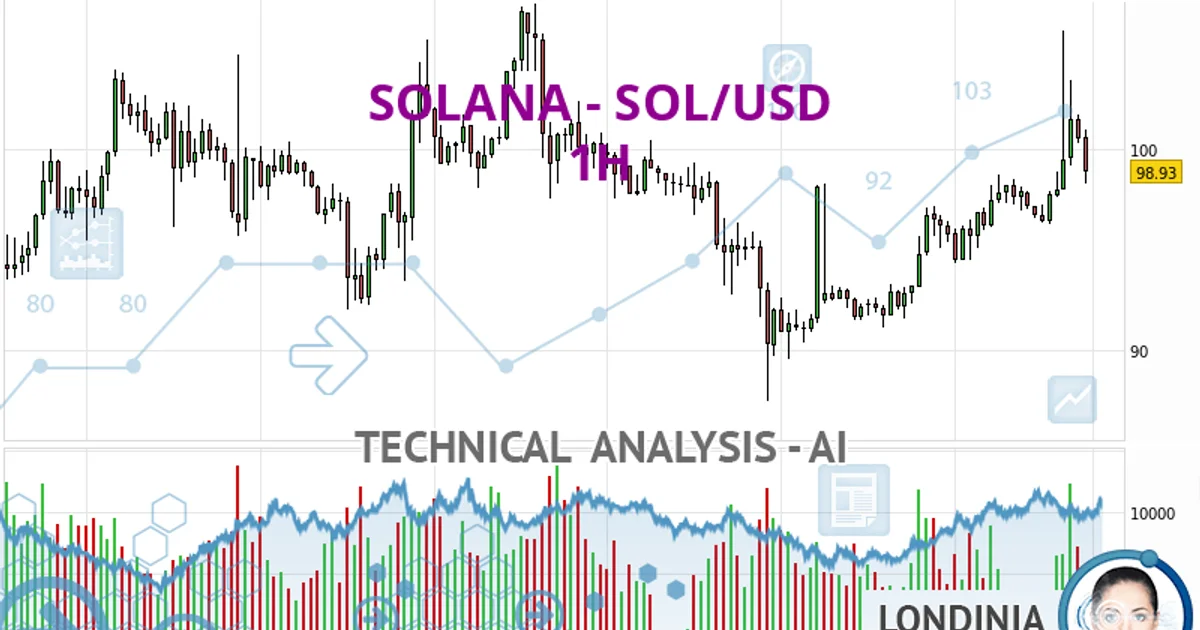
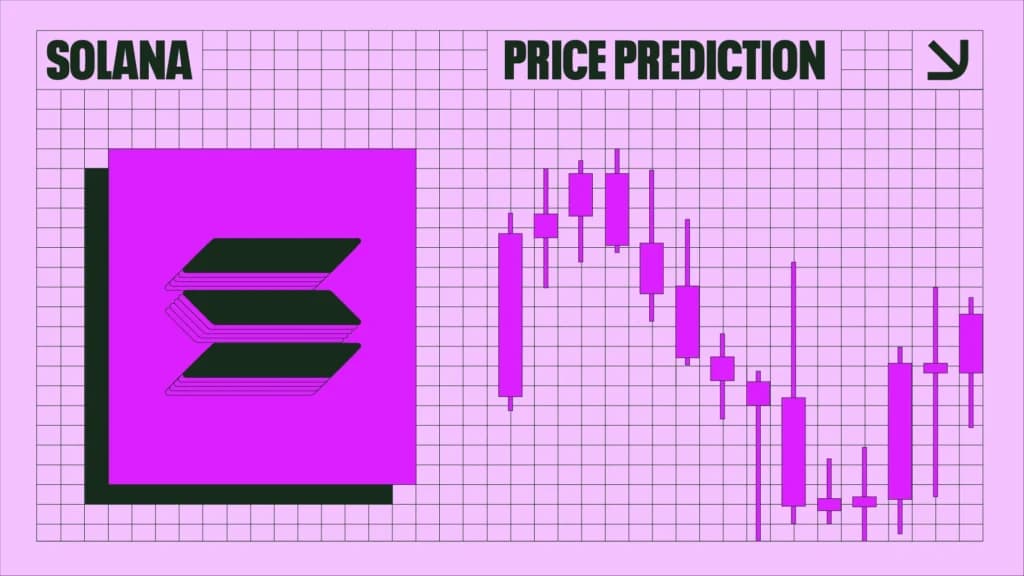
Candlestick charts are the standard way to visualize price action. Each candle represents a specific time period and shows four data points: Open, High, Low, and Close (OHLC).
Reading a Single Candle
A green (or white) candle means the price closed higher than it opened -- a bullish period. A red (or black) candle means the price closed lower than it opened -- a bearish period.
The thick part of the candle is the "body," showing the range between open and close. The thin lines extending above and below are "wicks" (or shadows), showing the highest and lowest prices reached during that period.
Long body, short wicks: Strong directional movement. Buyers (green) or sellers (red) were in firm control during the entire period.
Short body, long wicks: Indecision. The price moved significantly in both directions but ended up near where it started. This often signals a potential reversal.
Long upper wick: Sellers pushed the price back down after buyers tried to push higher. Bearish signal, especially after an uptrend.
Long lower wick: Buyers stepped in after sellers pushed the price down. Bullish signal, especially after a downtrend.
Choosing Timeframes
The timeframe you use depends on your trading style:
- 1-minute and 5-minute charts: For active trading on new Solana tokens. Useful for entries and exits on memecoins within the first hours of trading. Extremely noisy -- only for experienced traders.
- 15-minute and 1-hour charts: The sweet spot for most Solana token trading. Shows enough detail for timing entries while filtering out noise.
- 4-hour and daily charts: For swing trades and established tokens. Best for identifying broader trends on tokens like SOL, JUP, BONK, or RAY.
For Solana memecoins specifically, the 5-minute and 15-minute charts are where most actionable patterns form. These tokens often have their entire lifecycle compressed into hours or days, making higher timeframes less useful.
If candlesticks, volume bars, and the basic anatomy of a chart are still new to you, start with our gentler walkthrough on how to read a Solana token chart for beginners before going deeper here.
Volume Analysis
Volume is arguably more important than price action itself. It tells you how many participants are behind a price move, which determines whether the move is likely to sustain or fade.
Why Volume Matters
High volume on a price increase: Many buyers are participating. The move has conviction behind it and is more likely to continue.
Low volume on a price increase: Few buyers are driving the price up. The move lacks broad participation and is more likely to reverse. This is one of the most reliable warning signs on Solana tokens.
High volume on a price decrease: Strong selling pressure. Likely to continue lower unless volume dries up, which could signal seller exhaustion.
Volume spike at support/resistance: When price reaches a key level and volume spikes, the level is being actively contested. This often produces a decisive move in one direction.
Solana-Specific Volume Considerations
On low-liquidity Solana tokens, volume can be misleading. Wash trading (a single entity trading with itself to inflate volume) is common on new tokens. Look for these red flags:
- Volume that looks artificially consistent (same amounts at regular intervals)
- High volume with minimal price impact (suggests wash trading)
- Volume concentrated in a few very large transactions rather than many smaller ones
Tools like DEXScreener and Birdeye show both total volume and transaction counts. A token with $1M in volume from 50 transactions is very different from $1M in volume from 5,000 transactions.
Support and Resistance
Support and resistance are price levels where buying or selling pressure has historically been strong enough to reverse or pause a trend.
Identifying Support
Support is a price level where a token has previously stopped falling and bounced. The more times a price level has held as support, the stronger it is considered. When a token drops to a level where many people previously bought, those holders often buy more (averaging down) while new buyers see it as a "cheap" entry.
On Solana tokens, common support levels include:
- Previous bounce points: Where the price reversed upward before
- Round numbers: Psychological levels like $0.01, $0.10, $1.00
- Launch price or bonding curve graduation price: For Pump.fun tokens, the price at which the token graduated to PumpSwap often acts as a strong support level
- High-volume price zones: Areas where significant trading occurred, visible as thick horizontal bands on a volume profile
Identifying Resistance
Resistance is a price level where a token has previously stopped rising. Sellers tend to concentrate at these levels -- either taking profits or opening short positions.
Common resistance levels on Solana tokens:
- Previous all-time highs: The most watched resistance level for any token
- Previous support that broke: When support breaks, it often becomes resistance (traders who bought at that level want to sell at breakeven)
- Round numbers: Same psychological effect as support
- Large sell walls visible in the order book: Some DEXs show limit order clustering
How Support and Resistance Break
No support or resistance level holds forever. When a level breaks, it often leads to an accelerated move. A break below support triggers stop losses and panic selling, pushing the price to the next support level. A break above resistance triggers FOMO buying and short covering, pushing the price higher.
On Solana tokens, these breaks happen fast. A support level that held for hours on a memecoin can break and result in a 50% drop within minutes. This is why using stop losses (or at minimum, having a mental stop) is critical.
Moving Averages
Moving averages smooth out price data to reveal the underlying trend. They are calculated by averaging the closing prices over a specific number of periods.
Simple Moving Average (SMA) vs Exponential Moving Average (EMA)
SMA gives equal weight to all prices in the period. A 50-period SMA on a 1-hour chart averages the last 50 closing prices (50 hours of data). SMAs are smoother and slower to react.
EMA gives more weight to recent prices, making it more responsive to current price action. Most active traders prefer EMAs because they react faster to trend changes.
Key Moving Averages
20 EMA: Short-term trend indicator. Price staying above the 20 EMA suggests a healthy uptrend. Pullbacks to the 20 EMA in an uptrend are often buying opportunities.
50 SMA/EMA: Medium-term trend. Widely watched by traders. The 50 MA often acts as dynamic support in uptrends and dynamic resistance in downtrends.
200 SMA: Long-term trend indicator. The "gold standard" of trend analysis. Price above the 200 SMA is generally considered bullish; below it, bearish. Primarily useful for established tokens with enough trading history.
Golden Cross and Death Cross
A golden cross occurs when the 50 MA crosses above the 200 MA. This is traditionally a bullish signal indicating the medium-term trend is turning up.
A death cross is the opposite -- the 50 MA crosses below the 200 MA. Bearish signal.
For Solana memecoins, these crossovers are less reliable because most tokens do not have enough history for a meaningful 200 MA. Focus on the 20 and 50 EMAs for shorter-lived tokens.
RSI (Relative Strength Index)
RSI measures the speed and magnitude of recent price changes to evaluate whether a token is overbought or oversold. It ranges from 0 to 100.
How to Read RSI
- RSI above 70: Overbought. The token has risen rapidly and may be due for a pullback. This does not mean it will reverse immediately -- strong trends can stay overbought for extended periods -- but it signals caution for new entries.
- RSI below 30: Oversold. The token has fallen rapidly and may be due for a bounce. Again, not a guaranteed reversal signal, but an area to watch for potential buying opportunities.
- RSI around 50: Neutral. No strong directional bias.
RSI Divergence
One of the most powerful RSI signals is divergence:
Bullish divergence: Price makes a lower low, but RSI makes a higher low. This suggests selling momentum is weakening even though the price is still falling. Often precedes a trend reversal upward.
Bearish divergence: Price makes a higher high, but RSI makes a lower high. Buying momentum is weakening despite higher prices. Often precedes a reversal downward.
On Solana tokens, bearish RSI divergence on the 15-minute or 1-hour chart is one of the most reliable warning signs that a pump is losing steam.
MACD (Moving Average Convergence Divergence)
MACD shows the relationship between two EMAs and helps identify trend direction, momentum, and potential reversals.
Components
- MACD line: The difference between the 12-period EMA and the 26-period EMA
- Signal line: A 9-period EMA of the MACD line
- Histogram: The visual difference between the MACD line and signal line
How to Use MACD
Bullish signal: MACD line crosses above the signal line. The histogram turns positive (bars above zero). This suggests upward momentum is increasing.
Bearish signal: MACD line crosses below the signal line. The histogram turns negative. Downward momentum is increasing.
Histogram shrinking: Even before a crossover, if the histogram bars are getting shorter, momentum is weakening. This is an early warning sign.
MACD works best on higher timeframes (1-hour and above) for Solana tokens. On 1-minute or 5-minute charts, it generates too many false signals due to the extreme noise in memecoin price action.
How to Spot Pump-and-Dumps on Charts
This is where Solana-specific chart reading becomes critical. Pump-and-dump schemes follow recognizable patterns, and learning to identify them can save you from devastating losses.
The Classic Pump-and-Dump Pattern