Getting into a Solana token early can be the difference between a 2x and a 100x. But "early" does not mean "blindly." The Solana ecosystem has evolved well beyond the days of anonymous Telegram presales with zero accountability. Today, there are structured platforms, on-chain fair launches, and bonding curve mechanisms that give traders real ways to participate early — if they know where to look and what to avoid.
This guide breaks down how token presales and fair launches work on Solana, the platforms that host them, and the evaluation framework you need to separate legitimate opportunities from traps.
Understanding the Launch Landscape on Solana
Before diving into strategies, you need to understand the different ways tokens come to market on Solana. Each model has different risk profiles, entry mechanics, and exit dynamics.
Fair Launches (Bonding Curves)
Fair launches use automated bonding curves where anyone can buy tokens at a price determined by a mathematical formula. There is no presale allocation, no VC round, no insider pricing. Everyone buys from the same curve. Price goes up as more people buy, down as they sell.
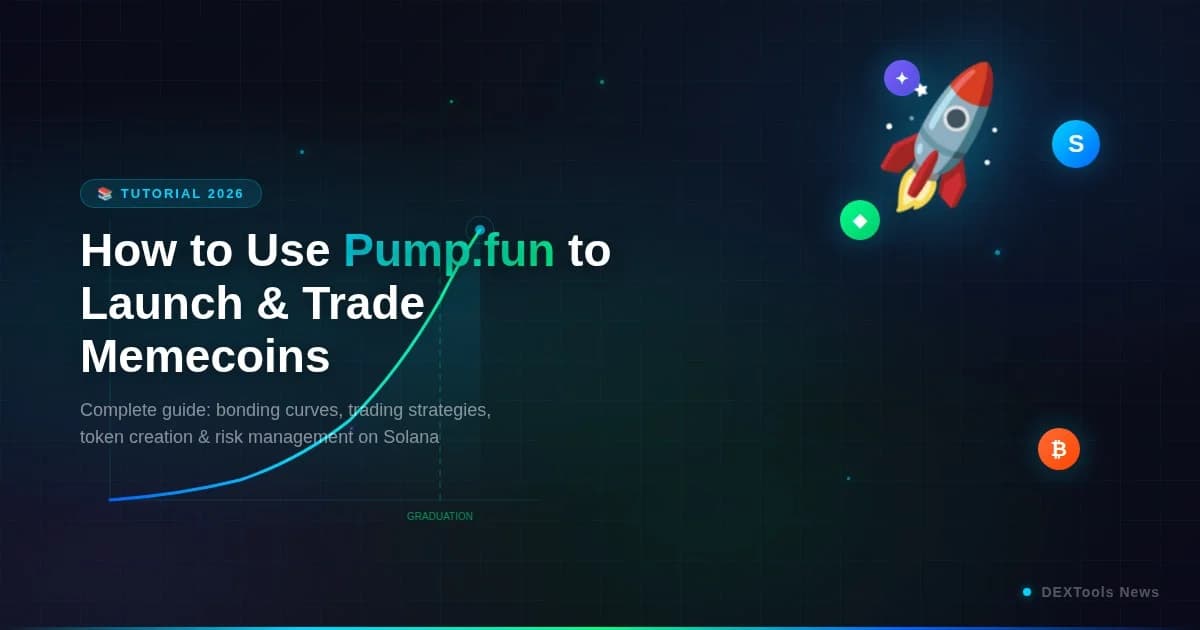
Pump.fun popularized this model on Solana. When someone creates a token on Pump.fun, the bonding curve starts at a tiny market cap (around $5K-$7K). Early buyers get in cheapest. Once the curve reaches its graduation threshold (roughly 85 SOL raised — SOL-denominated, so the USD market cap floats), the token migrates to PumpSwap, pump.fun's own AMM, with real liquidity.
LaunchLab by Raydium offers a similar bonding curve mechanism but with more customization. Creators can set different curve parameters, choose their initial liquidity destination, and configure graduation thresholds. LaunchLab tokens graduate directly to Raydium pools.
Curated Presales and Launchpads
Believe takes a different approach. Rather than an open bonding curve where anyone can create a token, Believe curates projects and provides a structured presale environment. This adds a layer of filtering that raw bonding curve platforms lack — though it also means fewer opportunities and potentially less upside on the most speculative plays.
IDO-Style Launches
Some projects still use traditional Initial DEX Offering mechanics where tokens are sold at a fixed price during a defined window, then liquidity is seeded on a DEX. These are less common on Solana now than fair launches, but they still exist for more established projects raising through platforms like AcceleRaytor (Raydium's launchpad) and Jupiter's LFG launchpad — our Jupiter LFG launchpad guide covers how to participate in those token sales.
Private/Seed Rounds
Venture-backed projects often have private rounds before any public launch. As a retail participant, you typically cannot access these directly. However, knowing that a token had private rounds — and at what valuation — is critical for evaluating fair value at public launch.
How to Find Presales and Fair Launches
Finding opportunities before the crowd is half the battle. Here is where to look.
On-Platform Discovery
The most direct approach is monitoring launch platforms themselves:
- Pump.fun has a feed of every new token created in real-time. Thousands launch daily, so filtering is essential. Sort by recent, watch for ones gaining traction (replies, buyers, market cap movement).
- LaunchLab shows active bonding curves on the Raydium interface. Newer, so typically fewer launches but often higher average quality.
- Believe surfaces curated launches. Smaller volume but higher signal-to-noise ratio.
Aggregator Monitoring
Use analytics platforms to spot tokens gaining momentum early:
- Birdeye has trending token feeds and new pair alerts. Filter by chain (Solana), age (under 24h), and sort by volume or price change.
- DEXScreener shows new pairs as they form. The "New Pairs" section with filters for Solana is one of the fastest ways to spot graduated tokens.
- GMGN excels at showing smart money flows into new tokens. If wallets with strong historical PnL are buying something that just launched, that is a signal worth investigating.
Social Monitoring
Twitter/X remains the primary announcement channel for Solana launches. Follow project accounts, ecosystem influencers, and KOL wallets. Many presales are announced exclusively on social media before appearing on any platform.
Telegram groups focused on Solana alpha often share early launch intel. Be cautious — these channels also frequently shill scams. Always verify independently.
Evaluating a Presale or Fair Launch
Finding opportunities is easy. Separating the 1% worth participating in from the 99% that will lose you money is the hard part. Here is a systematic evaluation framework.
Team and Background
Who is behind this? This is the single most important question. Look for:
- Doxxed team members with verifiable backgrounds. LinkedIn profiles, GitHub contributions, previous projects. Anonymous teams are not automatically bad, but they add significant risk.
- Previous projects. Has this team shipped before? Did their previous tokens rug? Check deployer wallet history on Solscan.
- Locked or burned liquidity. Is the team using Squads multisig for treasury management? Are liquidity tokens locked or burned? Unlocked liquidity is an exit waiting to happen.
Tokenomics Red Flags
Study the token distribution before buying:
- Insider allocation above 20% is a warning sign. If the team, advisors, and VCs hold a combined 40-50% of supply, retail is the exit liquidity.
- No vesting schedule on team/VC tokens. Tokens that unlock immediately at launch will create sell pressure. Look for 6-12 month cliffs with 12-24 month linear vesting as a minimum.
- Hidden wallets. Use on-chain analysis to check if the deployer funded multiple wallets before launch. Bundled launches where one entity controls many wallets that bought early are a major red flag.
- Concentrated holders. If the top 10 wallets hold over 50% of circulating supply (excluding known contracts like DEX pools), the token is vulnerable to coordinated dumps.
Smart Contract and Technical Due Diligence
For tokens beyond simple memecoins:
- Is the contract verified? Can you read the source code on Solscan?
- Freeze authority. Does the token creator still have freeze authority? This means they can freeze your tokens at any time. For legitimate projects, freeze authority should be revoked or held by a multisig.
- Mint authority. Can new tokens be minted? Retained mint authority means unlimited dilution risk. Check if it has been revoked.
- Metadata mutability. Can the token name, symbol, or URI be changed? Mutable metadata can be used to bait-and-switch.
Market Structure Analysis
Before entering a position, evaluate the current market dynamics:
- Bonding curve position. On Pump.fun, how far along is the curve? Buying at 80% of graduation means limited upside before the mechanics change. Buying at 10-20% means more room but more risk of the token never graduating.
- Volume authenticity. Is volume organic or wash-traded? Compare unique buyers vs total transactions. A token with 1000 transactions but only 15 unique wallets is likely botted.
- Holder growth rate. Healthy tokens show steady holder growth. Sudden spikes followed by plateaus suggest coordinated pumps.