
Topic
Use the MadeOnSol API and Solana data APIs — KOL trades, deployer intel, the DEX firehose, and more.
26 articles
DexScreener's free API has 9 endpoints, no historical data, no WebSocket, a 30-result search cap, and a ToS that bans building competing products. If you've hit any of those walls, here's what the MadeOnSol API gives you instead.
The MadeOnSol Deployer Hunter API gives you programmatic access to 900K+ indexed Pump.fun token deployers (75K+ reputation-scored) by historical bonding rate, tier, and trajectory — plus real-time alerts when elite deployers launch. Here's the full endpoint surface.

Every KOL trade and copy-trade signal MadeOnSol emits carries `market_cap_usd_at_trade` and `price_usd_at_trade` — the market cap and USD price at the exact swap moment, stamped from our in-memory mc-tracker. No round-trip to Dexscreener, no spot-lag drift, no wrong-pool phantom price.
The `/v1/kol/coordination` endpoint returns clusters of KOLs buying the same token in a tight window. But `kol_count` alone is misleading — some of those KOLs are already net-sellers. The `exited_count` and `holders_count` fields tell you who's still in the trade. Here's how to use them as a copy-trade entry filter.

Every `/v1/token/{mint}` response carries `is_blacklisted` and `blacklist_category`. The categories — stablecoin, wrapped_sol, lst, rug-flagged — flag tokens that match a mint suffix or look right in a sniper scan but should never be bought. Filter at the data layer, not client-side.
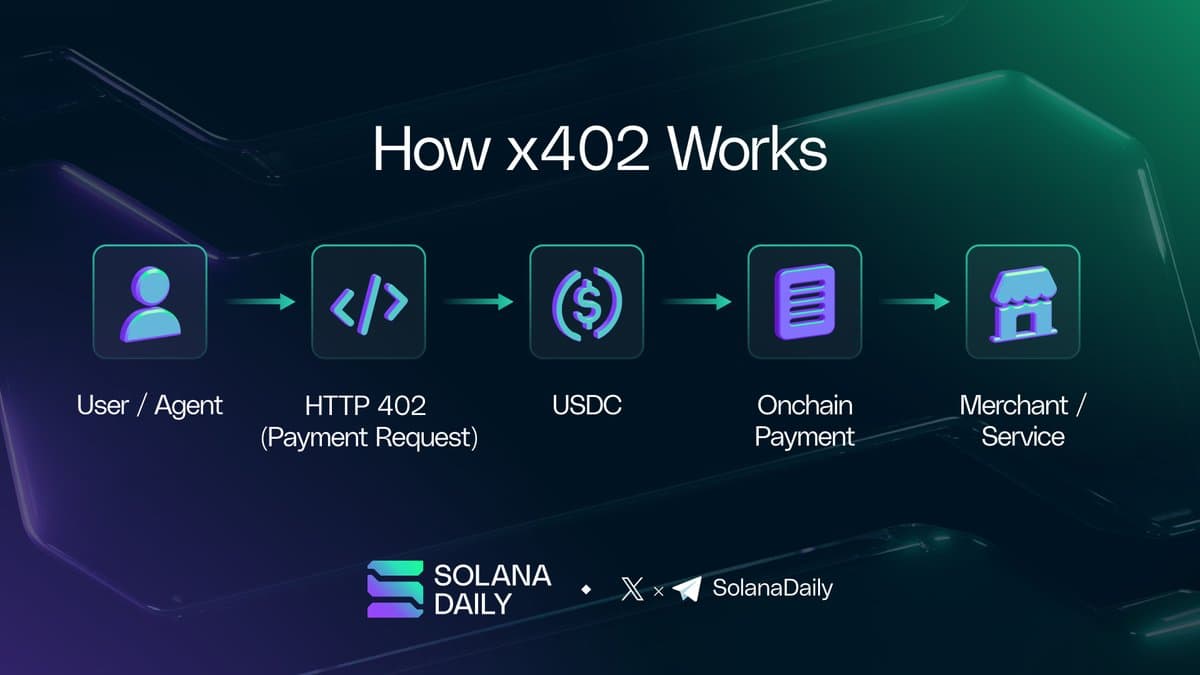
A walk-through of wiring an autonomous AI agent to MadeOnSol's x402 endpoints. The agent pays $0.005 USDC per KOL trade lookup from its own Solana wallet — no API key, no signup, no monthly subscription. Production-ready in under 20 lines.

Tokens behave very differently depending on which DEX their primary liquidity lives on. PumpFun bonding-curve tokens are pre-graduation; PumpSwap is post-graduation; Raydium and Orca tokens have a different trader profile. The `primary_dex` filter on `/v1/tokens` lets you scan one venue at a time.

Skip GMGN, Photon, and Bullx UI scrapers. The MadeOnSol `/api/v1/tokens` endpoint exposes a 12-filter discovery surface — MC bands, liquidity, primary DEX, authority revoke, LP burn, organic volume, MEV share, 1h MC velocity — so you can build your own scanner with exactly the filters you care about.
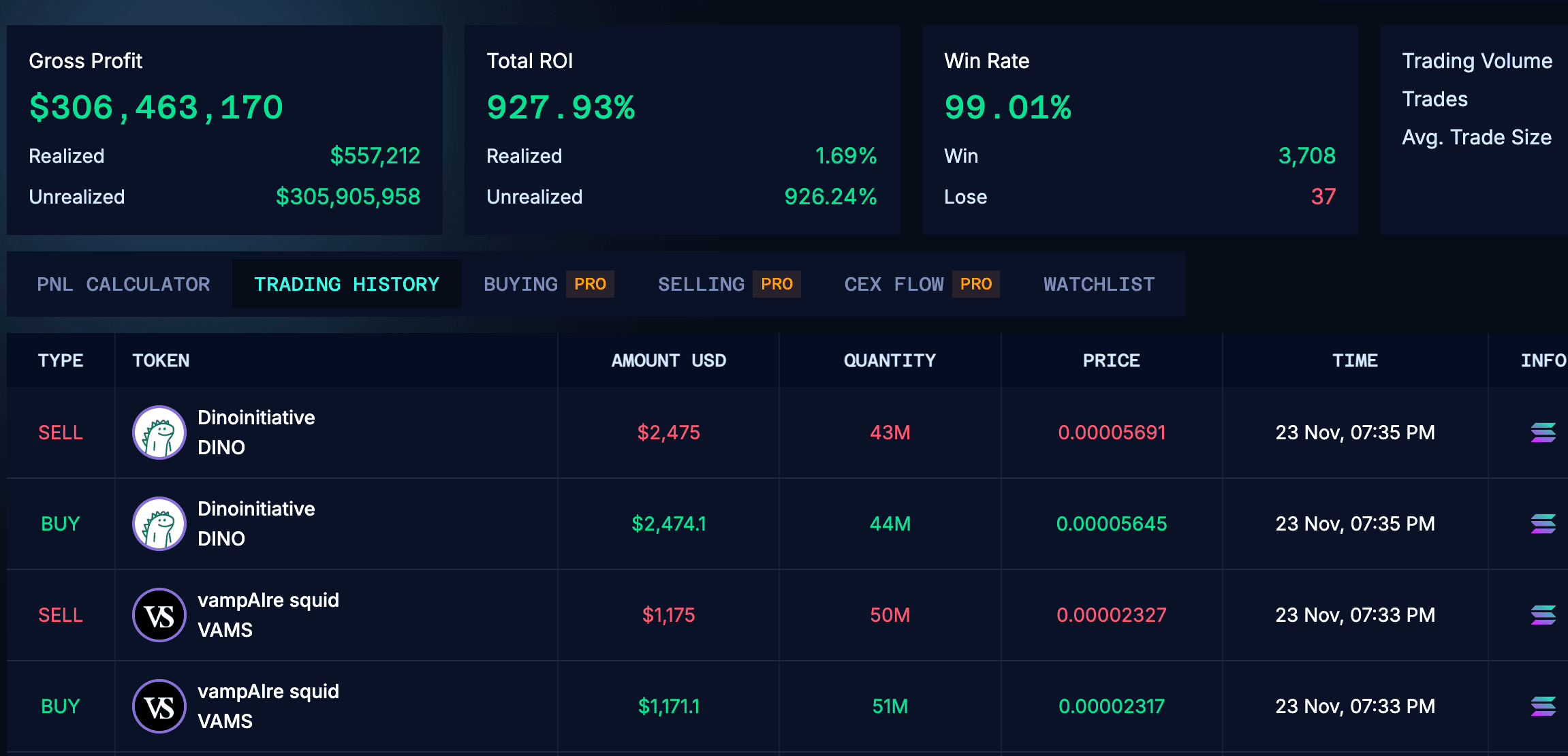
A 70% winrate looks great until you notice the 30% losses are 3× the size of the 70% wins. The MadeOnSol KOL leaderboard exposes `profit_factor` and percentile ranks alongside winrate — the right metrics for selecting wallets to copy-trade or follow.
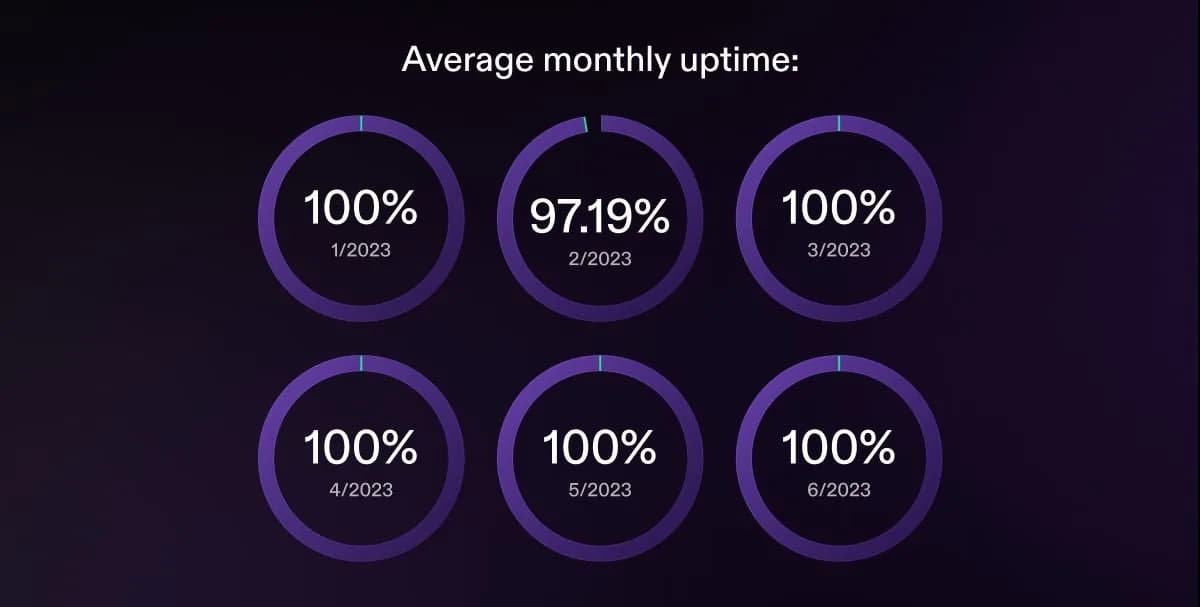
The MadeOnSol `/api/v1/status` endpoint is public, no-auth, JSON-formatted, and returns per-service health for five core services plus 24h and 7d uptime percentages. Drop it into your monitoring stack and you'll know within seconds when the KOL tracker or DEX firehose has degraded.
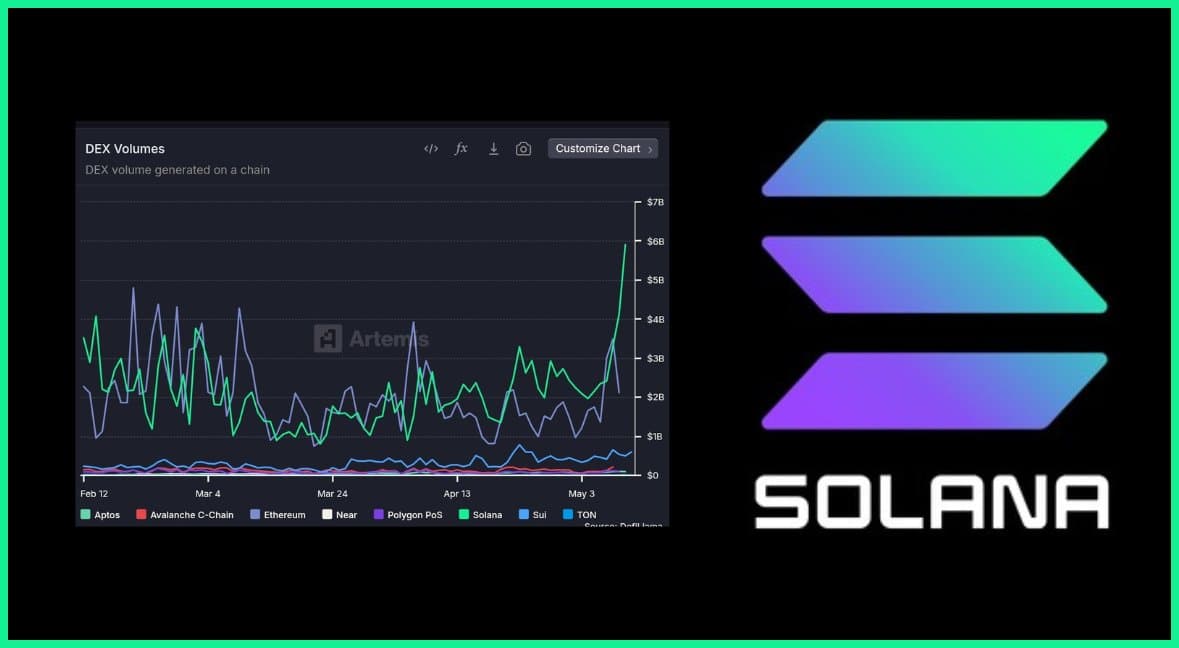
Every token endpoint on the MadeOnSol API returns `mc_change_pct` and `volume_usd` over 5m, 15m, 1h, 2h, and 4h windows — sourced from CONFIRMED-commitment swap history, so the windows are reorg-safe by construction. Here's what each window is good for, and how to wire them into a momentum scanner.
Most Solana volume figures conflate organic trader flow with MEV bot wash — sandwich bots double-count every victim swap on the same pool. MadeOnSol separates them on the way in: every swap is tagged organic or mev-suspect, and the API exposes both `organic_volume_usd` and `mev_volume_pct` per window.
Two batch endpoints on the MadeOnSol API — `POST /v1/token/batch` and `POST /v1/tokens/batch/buyer-quality` — let you score or enrich up to 50 mints in a single round-trip. Faster than serial polling, gentler on rate limits, and the buyer-quality batch shares the same 5-minute LRU cache as the single-mint endpoint.
Most API clients learn about rate limits by getting 429'd. The MadeOnSol `/v1/me` endpoint gives you the same numbers in a structured response — daily quota used and remaining, burst window used and remaining, plus per-feature usage counts. Read it once per minute and your bot polices itself.

A coordination cluster where 6 KOLs bought a $40K-cap token is a completely different signal from one where the same 6 KOLs bought at $2M cap. The MadeOnSol API stamps `market_cap_usd_at_first_buy` on every cluster — and lets you filter coordination and first-touches by entry-cap band.
Price, market cap, 24h volume, deployer reputation, and KOL smart-money activity — every field you need to decide on a Solana mint, in a single unauthenticated DB-hosted response. Here's exactly what it returns and how to use it.
A leaderboard tells you a KOL's win rate. The `/kol/{wallet}/pnl` endpoint tells you the shape of how they got there — daily equity curve, max drawdown, profit factor, and every closed position in the window. Here's how to actually use it.
Hold-time distribution, fast-close percentages, and hourly activity patterns tell you how a Solana KOL actually trades. The `/kol/{wallet}/timing` endpoint exposes that raw behavior, and `mv_kol_scores` uses it to auto-tag every wallet.
Stream tokens from `/api/v1/stream/token` are now rotated server-side and pushed in-band as a `token_refresh` frame — healthy connections are no longer hard-closed at 24h. You still need a reconnect loop for network drops and restarts. Here's the pattern that works in Node, Python, and Rust.
Which pairs of Solana KOLs buy the same tokens at nearly the same time? The `/kol/pairs` endpoint returns the affinity matrix — shared token count plus agreement rate — so you can spot coordinated clusters, bot groups, and genuinely independent alpha.
Who bought a Solana token in the first 20 non-deployer slots — and what are their historical win rates, bundle flags, and KOL identities? The `/tokens/{mint}/cap-table` endpoint returns the enriched early cohort in one call.
The official MadeOnSol Rust SDK ships on crates.io. Full API surface parity with the TypeScript SDK, built on tokio + reqwest + rustls — no OpenSSL, cross-compiles cleanly, and the right fit for latency-sensitive Solana trading bots.

Rank every KOL that bought a Solana token by how fast they got in. Seconds-after-first, strategy tags, winrates, and percentile ranks — so you know whether the earliest buyer was also the sharpest.
An upgrade to the MadeOnSol /kol/coordination endpoint: peak-density windows, net-flow-aware exit detection, a 0–100 composite score, and a new push-alert API that fires within ~1s of a qualifying trade via HMAC-signed webhooks and WebSocket.
The `/kol/compare` endpoint takes up to five Solana KOL wallets and returns their side-by-side stats plus every token 2+ of them bought in the last 30 days. Here's how to use it to pick your copy-trade roster.

MadeOnSol ships two KOL token feeds — `/kol/tokens/hot` and `/kol/tokens/trending`. They look similar at a glance and return overlapping mints, but they answer very different questions. Use the wrong one and your signal pipeline fires late or not at all.
Browse other topics