How to Use Pump.fun: Complete Beginner Guide (2026)
Learn how to use Pump.fun from start to finish. This guide covers creating tokens, buying and selling on the bonding curve, graduation mechanics, fees, risks, and safety tips for navigating the biggest memecoin launchpad on Solana.
MadeOnSol··Updated · 13 min read
Disclosure: This article contains affiliate links. If you sign up through them, MadeOnSol may earn a commission at no extra cost to you. This never affects our rankings, ratings, or reviews.
In March 2025, Pump.fun launched PumpSwap, its own AMM (automated market maker) to replace the previous system of migrating graduated tokens to Raydium. With PumpSwap:
Graduated tokens migrate to PumpSwap pools instead of Raydium
The migration is instant and feeless for the token creator
PumpSwap uses a constant-product AMM model similar to Uniswap
Trading fees on PumpSwap are 0.25%, split between liquidity providers and the protocol
PumpSwap was created so Pump.fun could keep the trading activity and fee revenue within its own ecosystem rather than sending it to third-party DEXs. Tokens that graduated before PumpSwap launched still have their liquidity on Raydium.
Understanding the Risks
Pump.fun is high-risk by design. The low barrier to entry means anyone can create a token, including bad actors. Here are the primary risks you need to understand.
The most common scam is a simple "dev dump." A creator launches a token, generates hype on social media, and then sells their entire holding once the price rises. Because the bonding curve amplifies price movements, a large sell can crash the price by 80% or more in seconds.
Watch for these red flags:
Creator holds a large percentage of the supply (check on DexScreener or Birdeye)
Multiple wallets that all bought early and are connected to the same entity (bundled launches)
No social media presence, website, or community
Copied branding or names from existing popular tokens
Bundled Launches
Some creators use "bundling" to disguise their holdings. They create a token and simultaneously buy from multiple wallets in the same transaction bundle. This makes it look like there are many early buyers when it is actually one person controlling multiple wallets. Use the Deployer Hunter tool on MadeOnSol to research deployer wallet history and identify patterns.
Bot Activity
Many tokens on Pump.fun are traded heavily by bots. Sniper bots buy within milliseconds of a token launch, and MEV bots can front-run your transactions. This means that by the time you see a token trending, bots may already hold significant positions and could dump on you.
Low Graduation Rate
Tools mentioned
Compare features and read reviews.
Live health scores, average ratings, and direct links on MadeOnSol.
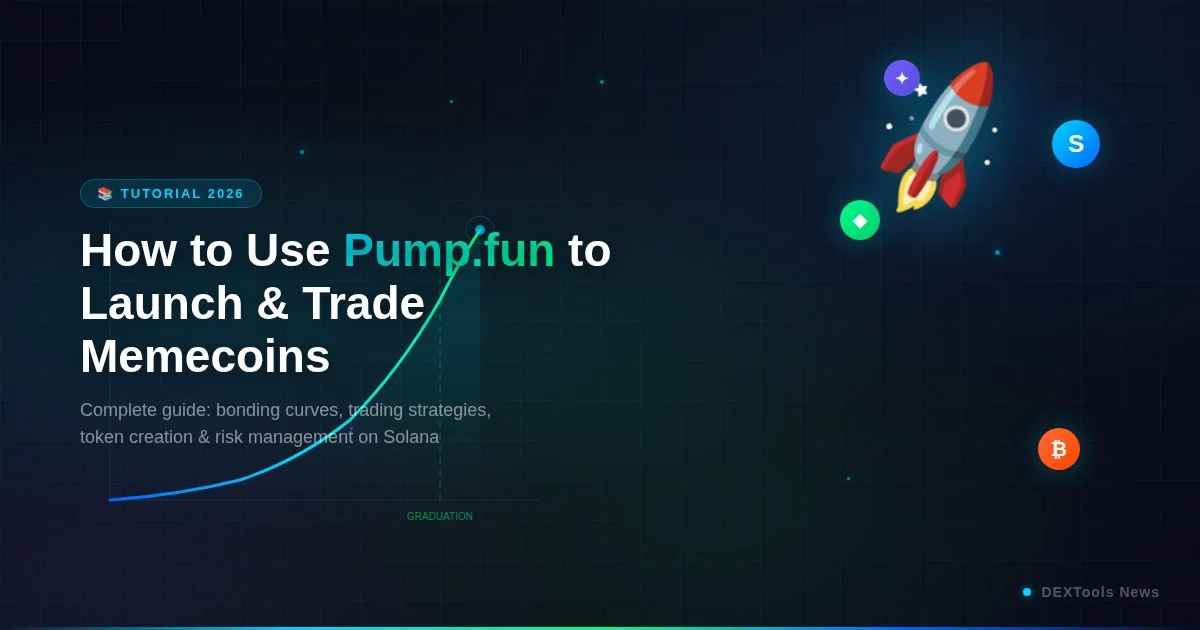
Pump.fun is the largest token launchpad on Solana, responsible for well over 10 million token launches since its inception. It allows anyone to create a tradeable Solana token in under a minute with no coding, no upfront liquidity, and minimal cost. If you have been around the Solana ecosystem at all, you have seen Pump.fun tokens everywhere.
This guide walks you through everything you need to know: what Pump.fun actually is, how its bonding curve works, how to create and trade tokens, what graduation means, and how to protect yourself from common scams.
What Is Pump.fun?
Pump.fun is a token creation and trading platform built on Solana. It removes the traditional barriers to launching a token. On a normal DEX, creating a token requires deploying a smart contract, providing liquidity, and managing a liquidity pool. On Pump.fun, you fill out a form, submit the launch transaction (Pump.fun currently lists coin creation itself at 0 SOL/USDC, apart from network costs), and your token is live and tradeable within seconds.
The platform uses a bonding curve instead of a traditional liquidity pool. This means there is no need for the creator to provide initial liquidity. The bonding curve acts as an automated market maker with a fixed mathematical formula that determines the token price based on how much SOL has been deposited.
Pump.fun has become the default launchpad for Solana memecoins. While many tokens launched on the platform are short-lived, some have graduated to major DEXs and reached significant market capitalizations. The platform's simplicity is both its greatest strength and its biggest risk factor.
How the Bonding Curve Works
Every Pump.fun token starts on a bonding curve. Understanding this mechanism is essential before you buy or create anything.
The Basics
Pump.fun's launch contracts use a bonding-curve reserve model. The exact virtual/real reserve accounting is protocol state, so this guide no longer hard-codes the old '800M curve + 200M reserved' simplification as if it described every current launch. As buyers purchase tokens with SOL, the price increases along a predetermined mathematical curve. As sellers sell tokens back, the price decreases.
There is no order book, no market makers, and no liquidity pool during this phase. The bonding curve itself is the counterparty for every trade.
Price Discovery
The bonding curve makes early buyers pay very little per token. As more SOL flows in, each successive purchase costs more. The first buyer might pay a fraction of a cent per token, while later buyers near the top of the curve pay substantially more. This creates a natural incentive to buy early, but also means early sellers can crash the price significantly.
Graduation Threshold
When approximately 85 SOL (the threshold is SOL-denominated, so the equivalent USD market cap floats with SOL price) has been deposited into the bonding curve, the token "graduates." At graduation:
The bonding curve closes and no more buys or sells happen through it
Liquidity is automatically migrated to a DEX (historically Raydium, now PumpSwap for newer tokens)
A proper liquidity pool is created with the deposited SOL and the reserved 200 million tokens
The token becomes tradeable on the open market like any other Solana token
Creating a token is straightforward. Here is the step-by-step process.
Step 1: Connect Your Wallet
Go to pump.fun and connect a Solana wallet. Phantom and Solflare are the most commonly used options. Make sure you have SOL in your wallet for the creation fee and any initial buy.
Step 2: Fill in Token Details
Click the "Start a New Coin" button. You will need to provide:
Token name: The display name of your token
Ticker symbol: The trading symbol (e.g., BONK, WIF)
Description: A brief description of your token
Image: A logo or meme image for your token (this becomes the token's icon everywhere)
You can also add optional links to Twitter, Telegram, and a website.
Step 3: Creation Is Free
Pump.fun dropped its token creation fee to 0 SOL — you only pay Solana's standard network transaction fee to send the create transaction. (Older guides may still cite a ~0.02 SOL creation fee; that was removed.) The lack of any real cost is part of why so many tokens get created daily.
Step 4: Optional Initial Buy
During creation, you have the option to make an initial purchase of your own token. Many creators do this to establish an initial position. Be aware that if you buy a large percentage of the supply at creation, tools like RugCheck will flag this as a risk indicator, and buyers will see your concentrated holding.
Step 5: Token Goes Live
Once the transaction confirms, your token is immediately live and tradeable on Pump.fun. Other users can find it on the Pump.fun homepage, in the "new" feed, or through the token's direct link.
How to Buy Tokens on Pump.fun
Buying tokens on the bonding curve is the most common activity on Pump.fun.
Finding Tokens
Pump.fun's homepage shows a feed of tokens sorted by activity, market cap, or creation time. You can also:
Browse the "King of the Hill" section for tokens approaching graduation
Filter by newly created tokens
Search for specific tokens by name or contract address
Follow links shared on social media (always verify the contract address)
Executing a Buy
Click on a token to open its trading page
Enter the amount of SOL you want to spend
Set your slippage tolerance (default is usually fine for smaller buys; increase for fast-moving tokens)
Click "Buy" and confirm the transaction in your wallet
The transaction should confirm within seconds on Solana. Your tokens will appear in your wallet immediately.
Fees
Pump.fun charges a 1.25% total fee on every buy and sell transaction on the bonding curve (split between the token's creator and the protocol). This is separate from Solana's network transaction fee (which is negligible at roughly $0.001). So if you buy 1 SOL worth of tokens, about 0.0125 SOL goes to fees.
How to Sell Tokens on Pump.fun
Selling works the same way as buying but in reverse. On the token's trading page, switch to the "Sell" tab, enter the amount of tokens (or percentage of your holdings) you want to sell, and confirm the transaction.
The same 1.25% fee applies to sells as well. Keep in mind that selling large amounts relative to the total curve progress will move the price significantly downward.
After Graduation
Once a token graduates, you can no longer sell on Pump.fun's bonding curve. Instead, you trade on the DEX where the token migrated. You can use aggregators like Jupiter or trading platforms like Photon to buy and sell graduated tokens. (BullX, previously mentioned alongside Photon, paused its trading app in June 2026 to rebuild a next-gen version — wallet and withdrawal access still work, but it isn't executing new trades.)
The vast majority of Pump.fun tokens never graduate. They stall on the bonding curve and eventually become inactive. Only a small single-digit percentage of all created tokens reach the graduation threshold. Buying into a token that never graduates means you are stuck holding something with no DEX liquidity and declining interest.
Safety Tips for Using Pump.fun
Given the risks, here are practical steps to protect yourself.
Do Your Research Before Buying
Before buying any token on Pump.fun:
Check the deployer wallet -- Use MadeOnSol's Deployer Hunter to see the creator's launch history. If they have a track record of creating tokens that dump immediately, stay away. Our Pump.fun deployer stats for March 2026 show just how wide the gap is between elite and rising deployers.
Scan the token -- Run the contract address through RugCheck to check for risks like concentrated holdings, mutable metadata, or missing social links.
Check holder distribution -- Look at the top holders on DexScreener or Birdeye. If a few wallets hold more than 20-30% of the circulating supply, the risk of a coordinated dump is high.
Verify social presence -- Legitimate projects typically have a Twitter account, Telegram group, or website. No social presence is a major red flag.
Manage Your Position Size
Never put more into a single Pump.fun token than you can afford to lose completely. These are speculative trades with a high failure rate. Many experienced traders allocate small amounts (0.1-0.5 SOL) per trade and look for large multiples on the rare winners.
Set Exit Targets
Decide before you buy at what price you will take profits. It is easy to get caught up watching a number go up and miss the window to sell. Many traders take out their initial investment once a token doubles or triples, then let the remaining position ride as "house money."
Use Trading Tools
Dedicated trading interfaces like Photon offer features that Pump.fun's native interface lacks: limit orders, auto-sell triggers, better charts, and faster execution. These tools can help you react more quickly in fast-moving markets. (BullX offered similar features but paused its trading app in June 2026 — confirm it's back before relying on it.)
Watch for Copycat Tokens
When a token is trending, scammers create dozens of tokens with similar or identical names and images. Always verify you are looking at the correct contract address. Copy the address directly from a trusted source rather than searching by name.
Common Mistakes Beginners Make
Buying tokens just because they are on the homepage. Pump.fun's homepage shows tokens with recent activity, not necessarily tokens with good fundamentals. Trending tokens have often already made their biggest move.
Not accounting for fees and slippage. Between the 1.25% Pump.fun fee on buy, the 1.25% fee on sell, and slippage in both directions, you need a token to move roughly 5-10% just to break even on a round trip.
Chasing tokens near graduation. Tokens approaching the graduation threshold are exciting, but the price near the top of the bonding curve is at its most expensive. Graduation itself often triggers a sell-off as early holders take profits.
Ignoring deployer history. The single most predictive factor for whether a Pump.fun token will succeed or rug is the deployer's track record. Always check it.
Finding More Solana Trading Tools
Pump.fun is just one part of the Solana trading ecosystem. For a comprehensive overview of every tool available, from DEX aggregators and analytics platforms to sniping bots and portfolio trackers, browse the full Solana tools directory on MadeOnSol.
Whether you are creating tokens, trading on bonding curves, or analyzing deployer wallets, having the right tools makes a significant difference in your results. Start with the basics covered in this guide, use the safety practices consistently, and build your toolkit as you gain experience.
Summary
Pump.fun has made token creation and early-stage trading accessible to everyone on Solana. The bonding curve mechanism provides instant liquidity without requiring the creator to fund a pool, and graduation to a DEX gives successful tokens a path to broader markets.
However, accessibility cuts both ways. The same ease of creation that enables legitimate projects also enables scams. Success on Pump.fun requires more than just clicking buy. It requires research, risk management, and a clear understanding of the mechanics at play.
Use the tools linked throughout this guide to research before you trade, manage your positions carefully, and never invest more than you can lose.
Pump.fun's current first-party fee page is the source of truth. Coin creation is listed at 0 SOL/USDC, graduation to PumpSwap costs 0.015 SOL, and bonding-curve trades currently total 1.25% (0.30% creator + 0.95% protocol). Canonical PumpSwap fees become market-cap-dependent after graduation, and Pump.fun added USDC-paired launches in May 2026. The fixed graduation concept remains, but USD equivalents move with SOL and protocol parameters can change.