The DEX vs CEX debate on Solana looks different in 2026 than it did even a year ago. Solana DEXs have improved dramatically in execution quality, fee efficiency, and user experience. Meanwhile, CEXs have added more Solana tokens and improved their Solana integration. The right choice depends on what you trade, how much you trade, and how much you value self-custody.
This guide compares the two approaches across every dimension that matters.
The Core Trade-Off
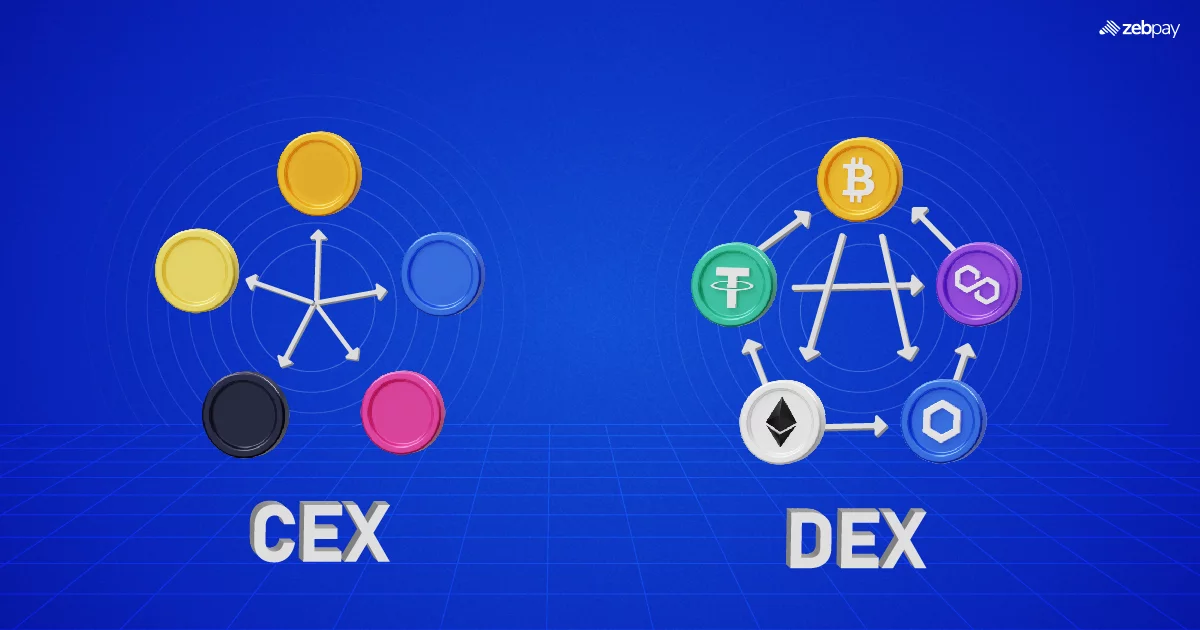
DEXs (Decentralized Exchanges): You keep custody of your tokens. You trade directly from your wallet. No KYC. Access to every token on Solana. But you're responsible for your own security, and the UX requires more crypto knowledge.
CEXs (Centralized Exchanges): You deposit tokens to the exchange's custody. They handle order matching, settlement, and security. KYC required. Familiar interface if you've used any trading platform. But you don't control your keys, and token selection is limited to what the exchange lists.
Neither is universally better. Let's break down each factor.
Token Availability
This is the clearest DEX advantage.
DEX Token Access
On Jupiter, you can trade any token that has a Solana liquidity pool. That's hundreds of thousands of tokens. New memecoins launched minutes ago on Pump.fun? Tradable. Obscure DeFi governance tokens? Tradable. Anything with any liquidity on Raydium, Orca, Meteora, or any other Solana AMM — Jupiter aggregates it all.
This matters because the biggest opportunities on Solana often come from tokens that aren't listed on any CEX. By the time a memecoin reaches Binance or Coinbase, the early gains are long gone.
CEX Token Listings
Binance lists roughly 400+ tokens total across all chains, with maybe 30-50 Solana-native tokens. Coinbase is even more selective. Backpack Exchange has been more aggressive with Solana token listings but still covers only a fraction of what's available on-chain.
Kraken and other major exchanges have expanded their Solana token selection, but the listing process takes weeks to months. By definition, CEXs can only offer tokens that pass their listing review. If you've decided a CEX fits your needs, our comparison of MEXC vs Binance vs Bybit for Solana traders breaks down which exchange wins on fees and listings.
Verdict: If you trade anything beyond the top 50 Solana tokens, DEXs are your only real option.
Fees
Fee comparison is more nuanced than it appears.
DEX Fee Structure
Trading on Solana DEXs involves multiple fee layers:
- AMM swap fee: 0.25-0.30% on standard Raydium pools, varies on concentrated liquidity pools
- Jupiter routing fee: Jupiter charges 0% on most routes (they make money from limit order and DCA fees)
- Network transaction fee: ~$0.00025 base fee per transaction
- Priority fees: $0.01-0.50 depending on network congestion
- Jito tips: Optional, $0.01-0.50 for MEV-protected execution
A typical swap on Jupiter costs roughly 0.25-0.35% all-in for the trade fee, plus a few cents in network fees. For a $1,000 trade, that's about $2.50-3.50 in total fees.
CEX Fee Structure
Centralized exchange fees vary by tier:
| Exchange | Maker Fee | Taker Fee | Notes |
|---|
| Binance | 0.10% | 0.10% | Lower with BNB discount |
| Backpack Exchange | 0.08% | 0.10% | Lower at higher tiers |
| Coinbase | 0.40% | 0.60% | Coinbase Advanced is cheaper |
| Kraken | 0.16% | 0.26% | Volume-based discounts |
For that same $1,000 trade on Binance, you'd pay about $1.00 as a taker. On Coinbase (standard), you'd pay $6.00.
But there are hidden CEX costs:
- Withdrawal fees: Withdrawing SOL from Binance costs a flat fee (~0.01 SOL). Withdrawing tokens costs varying amounts
- Spread: The gap between buy and sell prices on less liquid pairs. On CEXs, low-liquidity Solana tokens can have wide spreads
- Deposit time: Depositing SOL to a CEX takes several minutes. During fast-moving markets, this delay has a cost
Verdict: For major tokens with high CEX liquidity (SOL, JUP, BONK), CEX maker fees are typically cheaper. For everything else, DEXs are competitive or better because the AMM provides consistent liquidity without wide spreads.
Execution Speed
DEX Speed
Solana transactions confirm in 1-2 seconds. When you swap on Jupiter, the token is in your wallet almost instantly. For time-sensitive trades (sniping, memecoin trading, arbitrage), this speed is a genuine advantage.
The entire flow — submit transaction, execute on-chain, tokens in wallet — takes about 2-5 seconds under normal conditions. With priority fees or Jito tips, you can reliably get sub-second execution.
CEX Speed
CEX order matching is fast (milliseconds for the order match), but settlement is internal. You see the trade reflected in your balance instantly, but the tokens never leave the exchange's custody.
Where CEXs can feel slower:
- Deposits: Getting SOL or tokens from your wallet to the exchange takes 2-10 minutes (waiting for transaction confirmations)
- Withdrawals: Same delay in reverse, plus potential manual review holds
- Listing delays: When a hot token is trending, CEXs can't list it in real-time
For perp trading specifically, Solana still has active on-chain venues such as Jupiter Perps, while Drift is rebuilding after its April 2026 exploit and should not be treated as a live venue today. But DEX perp execution includes on-chain confirmation time that CEXs don't have.
Verdict: DEXs are faster for spot trading because there's no deposit/withdrawal friction. CEXs have faster order matching for limit orders but the total flow (deposit → trade → withdraw) is slower.
Custody and Security
This is the most important consideration for many traders.
DEX Self-Custody
When you trade on Jupiter or Raydium, tokens stay in your wallet (or move directly between your wallet and the AMM pool). You control your private keys. Nobody can freeze your account, block your withdrawal, or access your funds without your key.
The trade-off: you're responsible for everything. Lost seed phrase? Funds gone. Approved a malicious contract? Funds potentially drained. Sent tokens to the wrong address? No customer support to reverse it.
Use a wallet like Phantom with proper security: hardware wallet integration for large holdings, transaction simulation before signing, and revoke unnecessary token approvals regularly.
CEX Custody
When you deposit to Binance, Backpack, or Coinbase, the exchange holds your tokens. You're trusting them to:
- Keep your funds safe from hacks
- Remain solvent and not misuse your deposits
- Allow you to withdraw when you want to
- Not freeze your account without justification
Major exchanges have improved their security significantly, but exchange hacks and insolvencies do happen. The FTX collapse in 2022 demonstrated the risk of centralized custody. Backpack Exchange has been transparent about proof of reserves, but the fundamental custody risk exists with any CEX.
Verdict: DEXs win on custody for anyone who values self-sovereignty. CEXs provide convenience but require trust in the exchange operator.