Robinhood Chain is a public blockchain launched by the brokerage Robinhood, live on mainnet since July 1, 2026. It is an Ethereum Layer 2 (L2) built with Arbitrum's technology, designed to bring tokenized stocks and real-world assets on-chain for 24/7 trading. Within two weeks of launch it also became one of the busiest memecoin venues in crypto — a twist nobody at Robinhood planned for.
This guide explains what Robinhood Chain actually is, how it works under the hood, and everything a trader or builder needs to get oriented.
The Basics: Robinhood Chain at a Glance
| Property | Value |
|---|
| Type | Ethereum Layer 2 (Arbitrum Orbit) |
| Chain ID | 4663 |
| Gas token | ETH |
| Settlement layer | Ethereum L1 |
| Mainnet launch | July 1, 2026 |
| Public RPC | rpc.mainnet.chain.robinhood.com |
| Block explorer | robinhoodchain.blockscout.com |
| Soft confirmations | ~100 milliseconds |
Robinhood Chain is fully EVM-compatible. Any smart contract written in Solidity or Vyper deploys without modification, and standard Ethereum tooling — Hardhat, Foundry, ethers.js, viem, and Wagmi — works out of the box.
How Robinhood Chain Works
It's an Arbitrum Orbit Layer 2
Robinhood Chain runs on the Arbitrum Nitro stack as an "Orbit" chain — meaning it is its own dedicated Layer 2 that settles down to Ethereum. Transactions are executed on Robinhood Chain and then batched and posted to Ethereum L1 using blob data, inheriting Ethereum's security for final settlement.
Roughly 10% of Robinhood Chain's fees flow to the Arbitrum ecosystem, with a large share going to the treasury controlled by ARB token holders — a standard arrangement for chains built on Arbitrum's Orbit framework.
The Sequencer and Why There Is No Mempool
Every Arbitrum-based chain uses a sequencer — the service that receives transactions and decides their order. Robinhood Chain uses a plain first-come, first-served (FCFS) model: transactions are ordered strictly by the time they arrive at the sequencer, and priority fees do not let you jump the queue.
A critical consequence for traders: there is no public mempool. On Ethereum mainnet, pending transactions sit in a public waiting room where bots can see and front-run them. On Robinhood Chain, transactions go straight to the sequencer's private queue and are ordered on arrival. This changes how "sniping" works — it becomes a pure latency race to the sequencer rather than a gas-bidding war. If you want the mechanics, our guide on Solana mempool monitoring covers the same problem on a different no-mempool chain.
Once the sequencer processes a transaction it emits a "soft confirmation" almost instantly (targeting ~100ms). That soft confirmation is reliable as long as the sequencer is honest, and becomes final once the batch is posted to Ethereum.
What Robinhood Chain Was Built For: Tokenized Stocks
The original purpose of Robinhood Chain is tokenized real-world assets — putting equities like Apple, Tesla, and NVIDIA on-chain as tradable tokens that settle 24/7 rather than only during market hours. On the block explorer you will find tokens such as AAPL, TSLA, NVDA, and SPCX labelled as Robinhood Tokens, representing on-chain exposure to those equities.
This is the same broad trend playing out across crypto. If you want the wider context on how tokenized equities work, the two backing models (asset-backed versus synthetic), and the risks, see our guide to tokenized stocks and RWAs.
The Twist: Robinhood Chain Became a Memecoin Machine
Robinhood Chain is permissionless — any developer can deploy a contract without Robinhood's approval. So within hours of mainnet, an uninvited memecoin economy appeared on a chain built for stocks.
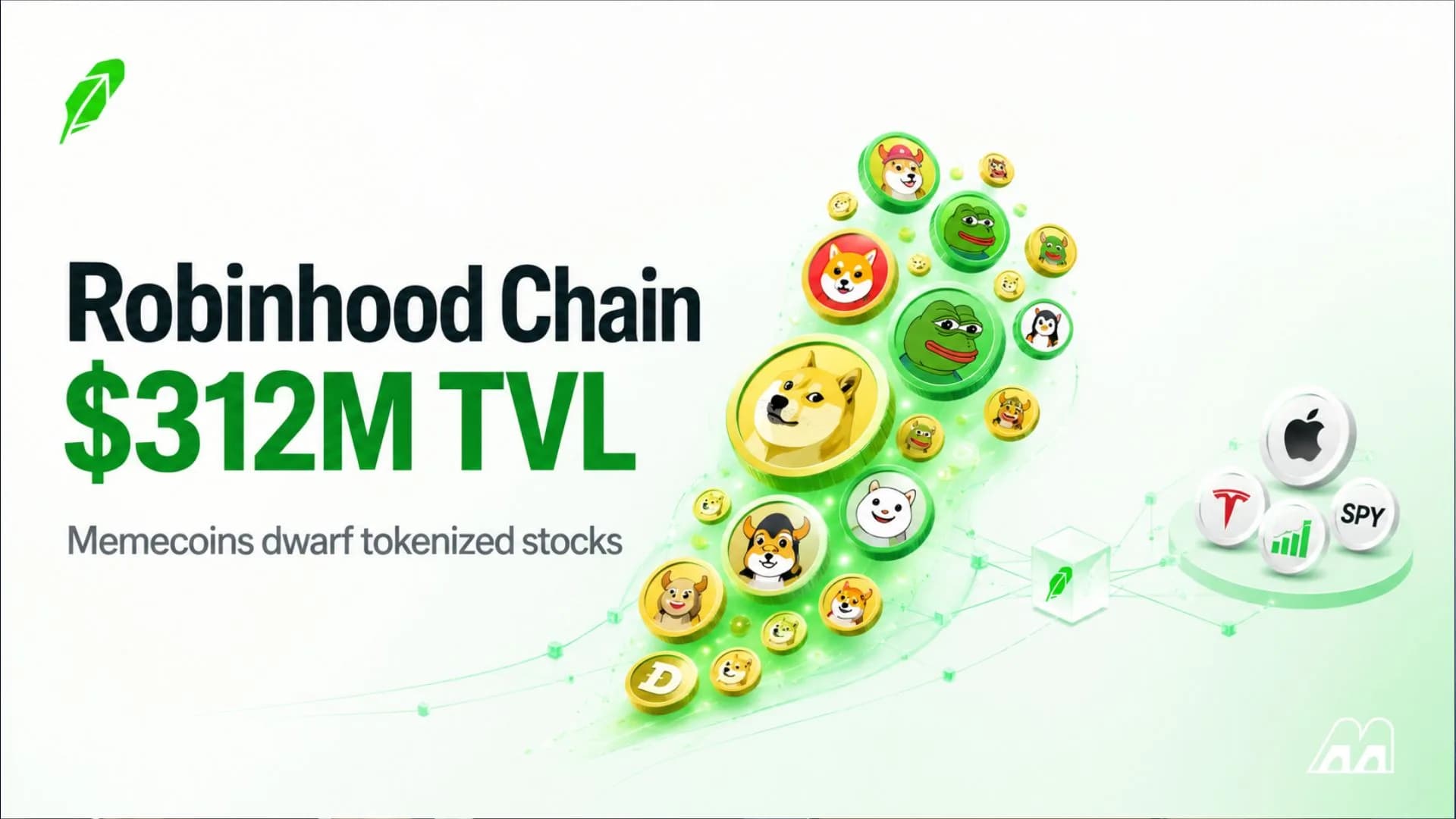
By July 8, Robinhood Chain was recording over $560 million in daily DEX volume, with a single memecoin — CASHCAT — accounting for a large chunk of it and peaking above a $400M market cap. Daily transaction counts climbed from under a million in launch week to a peak above 10 million, and have held in the millions since.
We cover this in depth in Robinhood Chain memecoins: the CASHCAT takeover, and the launchpad powering many of these tokens in hood.fun explained.
The Ecosystem
DEXes. Uniswap (v2, v3, and v4) plus UniswapX are live on Robinhood Chain, so most memecoin and token liquidity lives in Uniswap pools once a token graduates from a launchpad.
Launchpads. Bonding-curve launchpads modelled on pump.fun have appeared — hood.fun is the most visible, using a constant-product curve that graduates tokens into a locked Uniswap pool. Others include NOXA and Hood Launcher, each with slightly different parameters.
Bridges. Because Robinhood Chain settles to Ethereum, you fund a wallet by bridging in. LayerZero is the official bridge partner, and third-party routes via deBridge, Relay, and Across are live. Our step-by-step bridging guide walks through moving funds from Ethereum, Solana, and other chains.
How to Get Started on Robinhood Chain
- Set up an EVM wallet. Any Ethereum wallet works — the network details are chain ID 4663, RPC
rpc.mainnet.chain.robinhood.com, gas token ETH.
- Bridge in some ETH for gas and trading (see our bridging guide).
- Explore the ecosystem — tokenized stocks for RWA exposure, Uniswap for swaps, launchpads for new memecoins.
- Use the explorer at robinhoodchain.blockscout.com to inspect tokens, wallets, and transactions.
Is Robinhood Chain Safe?
Robinhood Chain inherits Ethereum's settlement security as an Arbitrum Orbit L2, which is a strong foundation. But two caveats matter for traders: