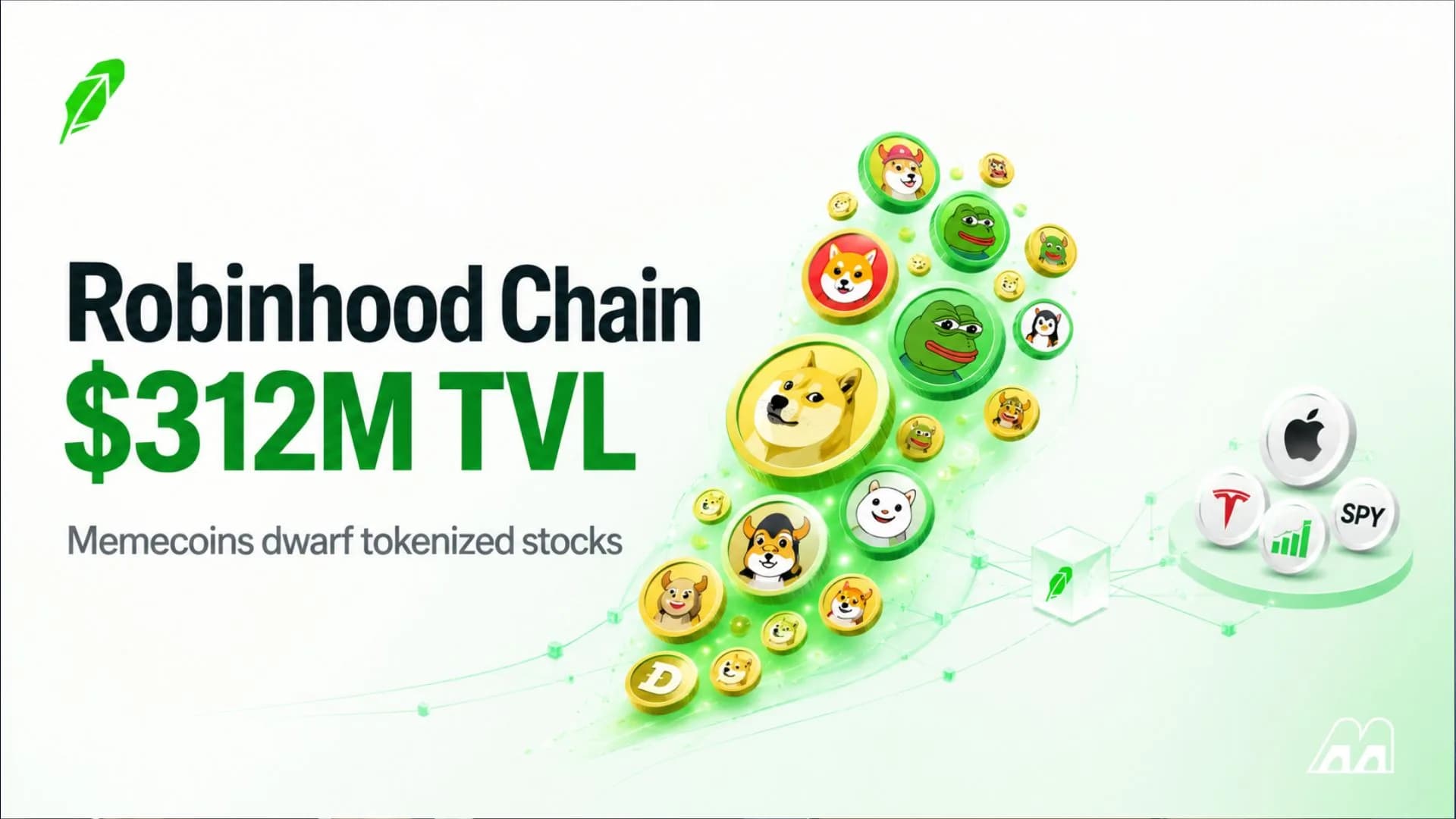
hood.fun is a fair-launch token launchpad on Robinhood Chain, modelled closely on Solana's pump.fun. It lets anyone create a memecoin that trades immediately along a bonding curve, then "graduates" into a Uniswap pool once enough is raised. This guide explains how it works, the numbers that matter, and how it compares to what Solana traders already know.
For the wider context, see our complete guide to Robinhood Chain and the memecoin scene there.
What Is a Bonding-Curve Launchpad?
A bonding-curve launchpad removes the need for a creator to seed liquidity. Instead of pairing a new token against ETH in a pool, the launchpad uses a mathematical curve where the price rises automatically as people buy and falls as they sell. Every buy pushes the price up along the curve; there is always liquidity because the contract itself is the counterparty.
If you want the underlying math in depth, our bonding curves explained guide covers it fully. The short version below is specific to hood.fun.
How hood.fun's Bonding Curve Works
According to hood.fun's own documentation, its launchpad uses a constant-product curve with virtual reserves — the same x·y=k math that powers Uniswap. Key parameters:
- Total supply: 1,000,000,000 tokens per launch.
- On the curve: 800,000,000 (80%) are sold along the bonding curve.
- Reserved for the pool: 200,000,000 (20%) are set aside to seed the DEX pool at graduation.
- Graduation target: roughly 6.5 ETH raised, at which point the token graduates.
Because the curve uses virtual reserves, the price is deterministic from the very first trade — the earlier you buy, the lower your entry along the curve. This is exactly the dynamic that makes early launchpad buying so competitive.
Graduation: From Curve to Uniswap
When the last token on the curve is sold and the raise target is hit, the token graduates. At that point:
- The liquidity accumulated on the curve, plus the reserved 20% of supply, is used to seed a Uniswap pool.
- The LP position is permanently locked, so the founding liquidity cannot be pulled.
- Trading continues on Uniswap for open price discovery.
This "graduate into a locked DEX pool" pattern is the same idea as pump.fun's graduation to PumpSwap on Solana — a milestone that signals a token has cleared its launch phase. We break down the Solana version in pump.fun graduation and the bonding curve.
| Aspect | pump.fun (Solana) | hood.fun (Robinhood Chain) |
|---|
| Chain | Solana | Robinhood Chain (EVM L2) |
| Curve math | Constant-product virtual reserves | Constant-product virtual reserves |
| Graduation venue | PumpSwap | Uniswap |
| Raise to graduate | Denominated in SOL | ~6.5 ETH |
| Ordering | Leader/slot based | Sequencer FCFS, no mempool |
The mechanics are nearly identical; the plumbing is EVM instead of Solana. For a trader, the biggest practical difference is the execution environment — Robinhood Chain has no public mempool, so getting an early fill is a latency race to the sequencer rather than a priority-fee auction.
Other Launchpads on Robinhood Chain
hood.fun is the most visible launchpad, but it is not the only one. NOXA, Hood Launcher, and others also operate on Robinhood Chain, each with slightly different curve parameters and graduation targets. No single launchpad has been confirmed as dominant — the landscape is still forming, so check the specific parameters of whichever platform a token launched on rather than assuming they all match hood.fun.
Trading hood.fun Tokens Safely
The launchpad model does not remove risk — it changes its shape:
- Locked LP is not a guarantee of safety. A locked pool prevents a liquidity rug, but the deployer can still dump their own early-bought supply.
- Most launches fail. As on pump.fun, the large majority of tokens never sustain value. Our analysis of why most launchpad tokens fail in the first hour applies directly.
- Verify before buying. Check the contract, the deployer's history, and how supply is distributed. A single wallet holding a huge share of the curve is a warning sign.
The Bottom Line
hood.fun brings the pump.fun playbook to Robinhood Chain: a constant-product bonding curve, an 800M/1B split, a roughly 6.5 ETH graduation into a locked Uniswap pool. If you have traded Solana launchpads, the model will feel immediately familiar — just remember the parameters are hood.fun-specific and other launchpads on the chain differ.
MadeOnSol's deployer intelligence and trade tracking — the tools we built for pump.fun on Solana — are live for Robinhood Chain launchpads now. Explore the , or get it via the API on any of our — one key, both chains, same price.