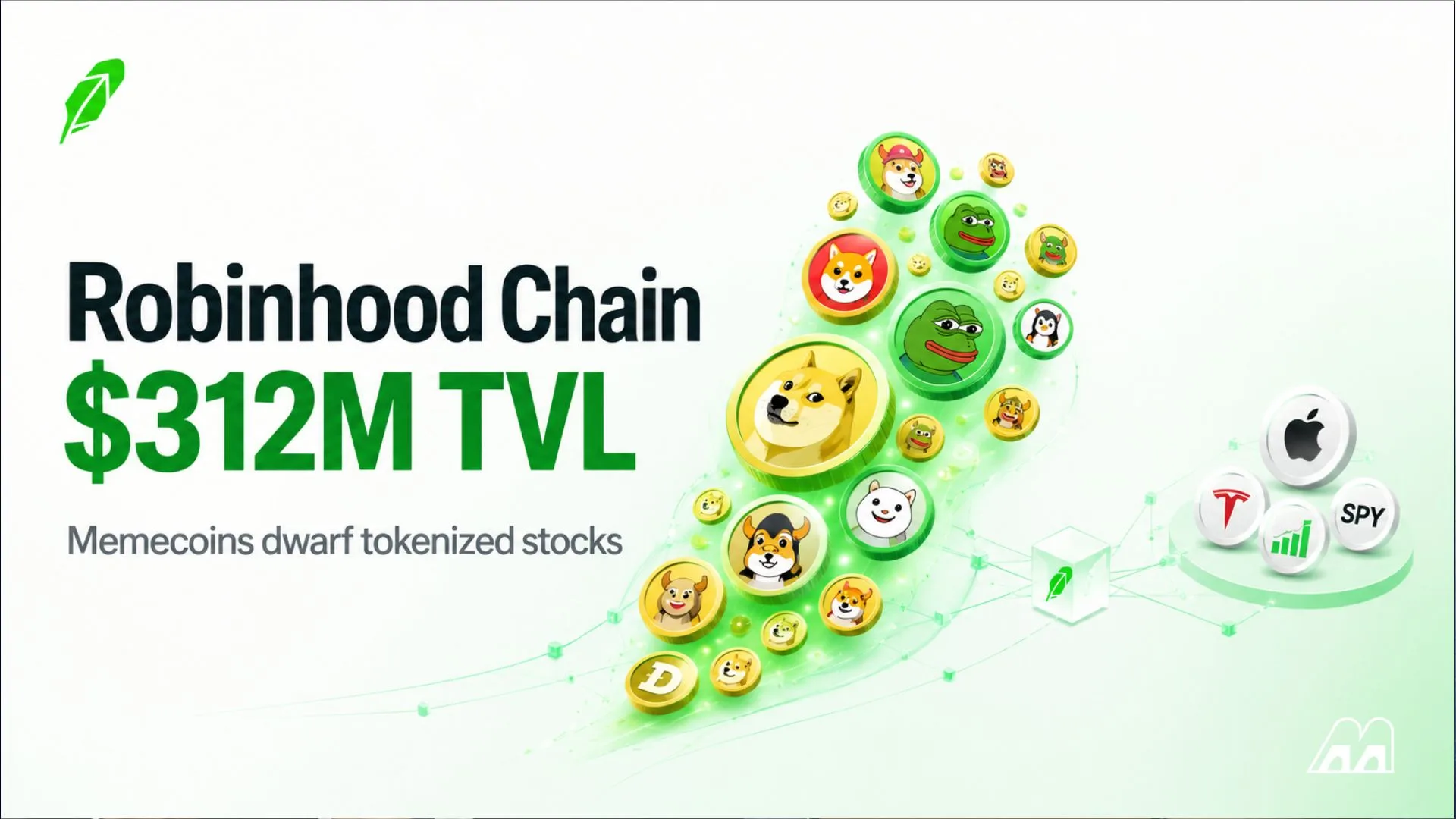
Robinhood Chain looks like a memecoin casino, but its serious wallets are not trading memecoins. As of mid-July 2026, among human "alpha" wallets on the chain, only 23% are mostly-memecoin — while 66% mostly trade non-launchpad assets: stablecoins, tokenized stocks, and blue-chips. The chain was built for tokenized real-world assets, then a launchpad frenzy made it look like a meme machine — but when you segment the wallets by what they actually trade, two-thirds of the alpha crowd is on the RWA side of the house. Here's what the on-chain behavior reveals.
The split, at a glance
| Human alpha wallet segment (as of mid-July 2026) | Share |
|---|
| Mostly memecoin | 23% |
| Mostly non-launchpad assets (stables, tokenized stocks, blue-chips) | 66% |
The remainder are mixed or unclassified. The headline is the gap: the memecoin narrative dominates the timeline, but only about one in four alpha wallets is primarily playing memecoins. The quiet majority is trading the assets Robinhood Chain was actually designed for.
The chain built for stocks that became a meme machine
Robinhood Chain is an Arbitrum Orbit L2 (chain id 4663, gas in ETH) — see our Robinhood Chain explainer. Its reason for existing is tokenized real-world assets: equities, index products, and the kind of regulated instruments Robinhood's brand is built around. But launchpads move fast, and within weeks the chain's visible activity was a memecoin frenzy, documented in our Robinhood Chain memecoins piece.
That surface impression is exactly what the wallet data corrects. When you classify human alpha wallets by their dominant trading behavior, 66% mostly trade non-launchpad assets — stables, tokenized stocks, and blue-chips — and only 23% are mostly-memecoin. The meme meta generates the deploy count and the noise (we mapped where those tokens launch), but it does not describe where the smart, non-bot money spends its time. The chain built for stocks is, underneath the memes, still mostly trading stock-like assets.
Why "human alpha wallet" is the right lens
Two filters make this segmentation meaningful. First, human: EVM chains are dense with atomic-arbitrage bots and market-maker fleets whose asset mix tells you nothing about intent. We remove them — the same bot filter that leaves 509 profitable human wallets on Robinhood Chain after stripping 499 fleets. Second, alpha: wallets with a real, profitable track record, not tourists making one trade.
Segmenting those wallets by asset class is what produces the 23/66 split. It's a statement about how the chain's most capable non-bot traders actually allocate — and they allocate mostly outside the launchpad casino. If you're only watching memecoin deploys, you're watching the loud 23% and missing the 66% that moves real size in stables, tokenized equities, and blue-chips. Our guide to tokenized stocks and RWAs covers that asset side in depth.
The wallet-behavior split lines up with what we see in the KOL migration. As of mid-July 2026, 221 Solana KOLs are now active on Robinhood Chain across 331 wallets, holding roughly 479 ETH combined. (We cite ETH deliberately — RHC settles in ETH, and we don't attach a precise USD figure to a moving price.) Those KOLs didn't bridge over only to buy memecoins; their holdings span meme bags and tokenized stocks, as we detailed in Solana KOLs on Robinhood Chain.
Put together, the picture is consistent: the memecoin meta is real and loud, but the chain's capital — whether you measure it by native alpha wallets or by migrated Solana KOLs — has one foot firmly in the non-launchpad, RWA side. That's the trade the chain was built for, and the data says it's winning on volume of serious wallets even while memecoins win on volume of tokens.
MadeOnSol now exposes a dedicated GET /api/v1/rhc/equities surface for Robinhood Chain tokenized stocks/ETFs. Identity is verified from the issuer beacon rather than token name alone, because copycat contracts can use the same branding. That makes "tokenized stocks vs memecoins" a data-quality distinction as well as a trading distinction: never classify an RHC token as an official equity from its symbol/name only.
The chain also now exposes LP events, holders, risk and token-lock/vesting data. Those newer surfaces are useful when comparing the very different liquidity/risk profiles of meme assets and tokenized equities.