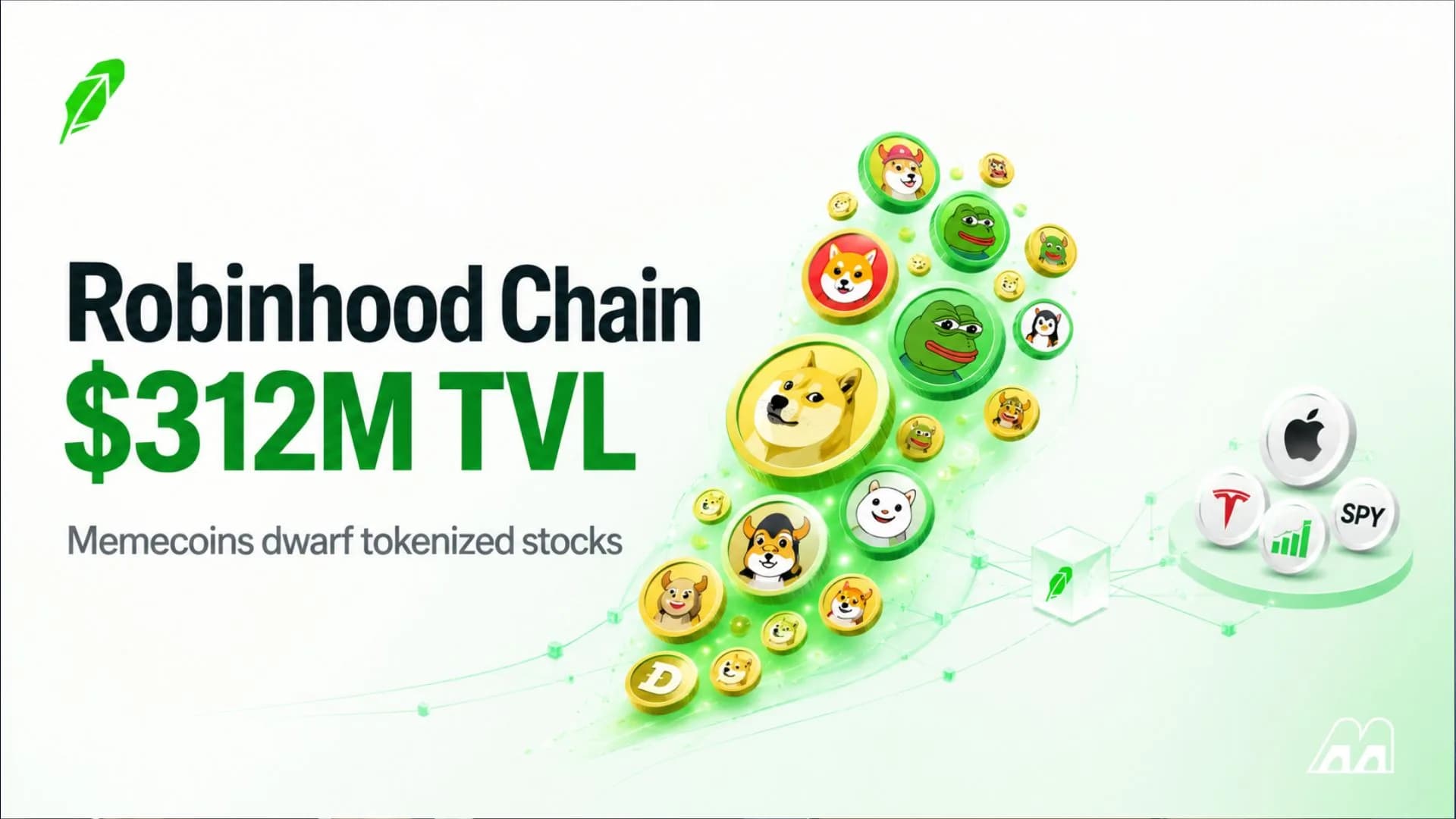
RHC is an ETH-gas Arbitrum L2 with a private FCFS sequencer and no mempool; Solana is a shred-level latency race. Here's how the two chains compare for memecoin traders — and why one key covers both.
MadeOnSol··Updated · 8 min read
Building a product on Solana or Robinhood Chain data?
Skip the Geyser pipeline — embed KOL flow, deployer reputation, and the all-DEX firehose over REST, WebSocket, or webhooks. The Business tier (€400/mo) is the self-serve embed license at 500k calls/day — Enterprise adds white-label & redistribution.
The signal that only a dual-chain view gives you: KOL migration
Here is the edge that neither a Solana-only nor an RHC-only trader can see: KOL migration. EVM addresses are identical across every EVM chain, but more importantly, the known Solana KOLs and smart-money wallets we already track have begun operating on RHC — and because we index both chains, we can watch a wallet's Solana reputation and then catch its first moves on RHC.
When a wallet with a proven Solana track record starts buying early on an RHC curve, that is a higher-confidence signal than any RHC-native metric alone, because the wallet's edge is already validated on data we've held for far longer. This is only visible if you sit on both chains at once. We document the migration itself in Solana KOLs on Robinhood Chain. The general discipline of reading proven wallets carries over from Solana, where we lay it out in how to read Solana smart money.
The honest answer is that this is not an either/or, and framing it that way is the mistake. The two chains have different liquidity depth, different fee units, and different degrees of crowding — and those conditions shift week to week. A trader who can see both simultaneously can route attention to wherever the fresh flow and the migrated smart money are, rather than being locked to one venue's cycle.
What does not change between chains is the intelligence layer: new-token discovery, deployer reputation, curve/price feeds, and smart-money wallet scoring. We provide all of it as data — we surface information and scores, we do not execute trades or hold custody — across Solana and RHC. And crucially, one API key covers both chains at the same price. You do not buy a Solana product and an RHC product; you buy one intelligence feed that spans them.
FAQ
Is Robinhood Chain better than Solana for memecoins?
Neither is strictly better — they differ in structure. RHC is an ETH-gas Arbitrum L2 with a private FCFS sequencer and Uniswap liquidity; Solana is a low-fee L1 with Raydium/PumpSwap liquidity. Both lack a public mempool, so both reward speed and information over gas. The advantage is watching both and routing to wherever the flow is.
Does Robinhood Chain have a mempool like Ethereum?
No. RHC (chain id 4663) uses a private first-come-first-served sequencer, so pending transactions are never publicly visible and cannot be front-run out of a public pool. This is closer to Solana's model than to Ethereum L1's public mempool, which is why the sniping game on RHC is a latency race, not a gas auction.
Tools mentioned
Compare features and read reviews.
Live health scores, average ratings, and direct links on MadeOnSol.
Building a product on Solana or Robinhood Chain data?
MadeOnSol isn't an RPC or another generic token API — it's Solana & Robinhood Chain memecoin intelligence that's painful to build in-house, pulled from dual-region gRPC shred streams and our own Robinhood Chain node, pushed to your app as events land.
Signals you'd otherwise build
KOL & smart-money flow from 2,000+ labeled wallets, deployer reputation, coordination clusters, linked-wallet entity resolution, and an all-DEX firehose.
Embed it in your product
The Business tier (€400/mo, self-serve) licenses you to display MadeOnSol data inside your own product — 500k calls/day, 10 WS + 5 firehose connections. Enterprise above adds white-label & redistribution rights and custom endpoints.
Evaluate first, commit later
Test everything on a free ULTRA key — no commitment. If it fits, we scope volume or white-label pricing.
For a memecoin trader, Robinhood Chain (RHC) and Solana solve the same problem with different machinery. RHC is an Arbitrum Orbit L2 (chain id 4663), settles to Ethereum, pays gas in ETH, and orders trades through a private first-come-first-served (FCFS) sequencer with no public mempool. Solana is an L1 with sub-second slots, pays fees in SOL, and — with no public mempool either — is fundamentally a latency race decided at the shred level. Liquidity graduates into Uniswap on RHC and into Raydium or PumpSwap on Solana. The trading logic rhymes; the plumbing, the fee economics, and the venues differ. This is the side-by-side from a dual-chain data vantage.
The glance table
Dimension
Robinhood Chain
Solana
Architecture
Arbitrum Orbit L2, settles to Ethereum
Layer 1
Chain id / gas token
4663 / ETH
mainnet / SOL
Ordering
Private FCFS sequencer
Leader/slot, no priority-based reordering guarantees
If you want the full architecture writeup rather than the trader's summary, start with Robinhood Chain explained.
Ordering: no mempool on either, but for different reasons
The headline similarity is that neither chain has a public mempool a bot can front-run out of. The reasons differ.
On RHC, the sequencer is a single private service that accepts transactions and orders them strictly by arrival time. Priority-fee bidding does not buy you a better slot in the queue — paying more ETH gas gets your transaction included, not included earlier. So the entire "sniping" contest collapses into one variable: who reached the sequencer first. There is no pending pool to watch, no gas-auction game theory, and no MEV bundle market of the Ethereum L1 kind.
On Solana, ordering is decided by the current leader within a slot, and while priority fees improve inclusion odds under contention, the real determinant of being first is how quickly your transaction reaches the leader — which is why serious Solana infrastructure operates at the shred level rather than the RPC level. The net effect is the same conclusion on both chains: We spell out the RHC version of this in , and the general no-mempool problem in .
RHC pays gas in ETH because it settles to Ethereum, and as an Arbitrum Orbit chain a share of its fees flows to the Arbitrum ecosystem. For a trader this means fee cost tracks ETH's price and L2 gas dynamics — cheap relative to Ethereum L1, but denominated in a more expensive asset than SOL.
Solana fees are paid in SOL, are famously low per transaction, and spike via priority fees only under heavy contention. The practical takeaway is not "one is cheaper" in the abstract — it is that your fee unit differs, so your PnL accounting differs. On RHC you burn ETH to trade ETH-quoted pairs; on Solana you burn SOL to trade SOL-quoted pairs. Any cross-chain strategy has to normalise for that.
Venues: Uniswap vs Raydium/PumpSwap
Once a memecoin graduates off its bonding curve, it lands in a different AMM depending on the chain. On RHC that is Uniswap — v2, v3, and increasingly v4, with some launchpads (like Clanker) deploying straight into v4 pools. On Solana, graduated pump.fun tokens land in PumpSwap, and much of the broader ecosystem's liquidity sits in Raydium.
This matters for two reasons. First, the pool math differs: Uniswap v3/v4 concentrated liquidity behaves differently from Raydium's constant-product pools, which affects slippage and how you read depth. Second, your data pipeline has to speak both dialects — decoding a Uniswap v4 swap and a PumpSwap swap are different parsing jobs. A single dashboard that claims to cover both chains is quietly running two indexers. We cover which venues actually matter on each chain in our launchpad breakdowns, including where tokens launch on Robinhood Chain.
What DEX do Robinhood Chain memecoins trade on?
Graduated RHC memecoins trade on Uniswap (v2, v3, and v4), whereas graduated Solana pump.fun tokens trade on PumpSwap, with Raydium holding much of the wider ecosystem's liquidity. The AMM math differs — Uniswap concentrated liquidity versus Raydium constant-product — which affects slippage and depth reads.
Can one tool track both Solana and Robinhood Chain?
Yes. Because we index both chains, one API key covers Solana and RHC at the same price, including the cross-chain KOL-migration signal that neither a Solana-only nor RHC-only view can see. EVM addresses are shared across chains, which also enables cross-EVM wallet and deployer lookups.
Bottom line
Robinhood Chain and Solana are two roads to the same destination: get in before the crowd, on a chain where no public mempool means speed beats gas. RHC swaps SOL fees for ETH gas, Raydium/PumpSwap for Uniswap, and a Solana leader for a private Arbitrum sequencer — but the trader's discipline, and the intelligence stack underneath it, is identical. The real unlock is seeing both at once, especially the migration of proven Solana wallets onto RHC. One key covers both chains at the same price — see pricing.
Access this data via x402 (USDG)
Everything above is available programmatically — and AI agents can pay for it per call with no API key. MadeOnSol's Robinhood Chain endpoints are keyless via x402: an agent pays a few cents in USDG on Robinhood Chain (or USDC on Solana) and gets the data back in about a second. Free discovery at https://madeonsol.com/api/x402/rhc, full reference on the Robinhood Chain x402 page. Prefer a flat monthly plan — both chains bundled? See madeonsol.com/pricing.
September 2026 refresh
Robinhood Chain coverage has expanded materially since this comparison was written: MadeOnSol now tracks RHC KOL first-touches/coordination, deployers, live DEX trades, LP events, locks/vesting, wallet PnL and verified tokenized equities. Solana still has a much longer on-chain trading history and broader launchpad/DEX ecosystem; Robinhood Chain should not be described using Solana's exact liquidity/launch assumptions.
For builders, the two chains also have different payment/data rails: MadeOnSol's RHC x402 endpoints accept USDG on chain (with a $0.04 minimum on that leg) or USDC on Solana, while the Solana x402 catalog uses the Solana rail.