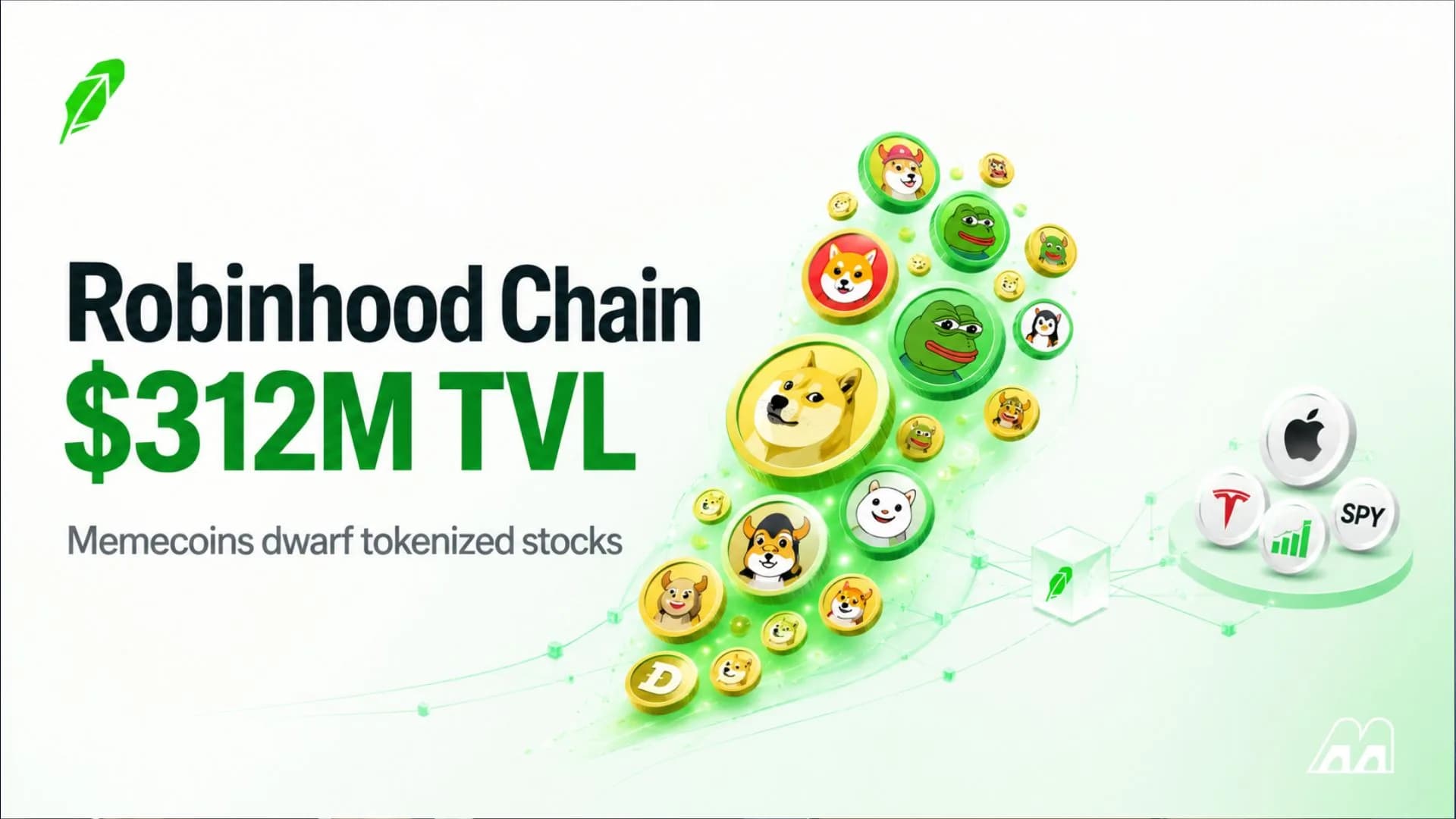
The rhc-intelligence dataset, included with an active Business subscription, is a downloadable CSV of Robinhood Chain intelligence indexed from genesis — block zero, 2026-04-30. It bundles three joined layers for every token and wallet on the chain: deployer reputation, smart-money scores, and token lifecycle (deploy → curve → graduation → post-graduation behavior). The distinguishing fact is not the size of the file. It is the start date. Robinhood Chain launched on April 30, 2026, and we have been running a self-hosted node ingesting it since the first blocks. There is no competitor with a genesis-complete history of this chain, because the chain has only existed for weeks and almost nobody indexed it early.
This is a buy-the-file post about that dataset. If you want the live product instead — real-time alerts, the API, on-site tools — start at the Robinhood Chain hub. If you want the whole downloadable-datasets catalog, see the datasets overview. What follows is what is in the CSV and why the genesis window is the moat.
What the dataset is
| Field | Value |
|---|
| SKU | rhc-intelligence |
| Access | Included with Business |
| Coverage start | 2026-04-30 (chain genesis) |
| Format | CSV.gz, identity-scrubbed, SHA-256 checksummed |
| Layers | deployer reputation · smart-money scores · token lifecycle |
| Source | our self-hosted Robinhood Chain node |
| Sample | free 5,000-row sample before purchase |
| Also in | full-access bundle (all 4 sets) |
Robinhood Chain is an Arbitrum Orbit L2 (chain id 4663, gas in ETH) with a private, first-come-first-served sequencer and no public mempool. That architecture matters for how the data is built: there is no mempool to snapshot, so the only way to reconstruct what happened is to have been connected to the sequencer feed as blocks were produced. History you did not capture live is history you cannot backfill from a mempool archive, because there was never a mempool. That is precisely why a genesis-anchored index is scarce — you either indexed from the start or you have a hole.
The three layers, and why they're joined
Most on-chain exports give you one primitive: a table of trades, or a list of tokens. The value of rhc-intelligence is that the three layers are pre-joined on the same keys, so you can go from a token to its deployer's full track record to the wallets that traded it in one file, without stitching sources yourself.
Deployer reputation
Every token on Robinhood Chain is attributed to the address that deployed it, and every deployer carries a computed reputation: how many tokens they have launched, how many graduated off the bonding curve, and their survival and runner rates afterward. This is the RHC counterpart to our Solana deployer work — the same discipline we describe in the Pump.fun deployer analysis, ported to an EVM L2. On a chain this young, deployer reputation is the single most useful rug-screen you have, because a large share of deployers are serial spam factories minting and abandoning tokens in bulk.
Smart-money scores
Every externally-owned account is scored on realized net-ETH PnL and flagged for bot-like behavior, so you can separate atomic-arb and market-maker fleets from wallets that are actually trading directional and winning. Because EVM addresses are identical across every EVM chain, this layer also lets you cross-reference RHC wallets against the same address on Solana bridges, Base, or Ethereum — the technique behind our finding that Solana KOLs are already trading on Robinhood Chain.
Token lifecycle
Each token carries its full arc: deploy time, launchpad, bonding-curve progress, graduation status, and post-graduation trading. Lifecycle is what turns a static list into a study — you can ask which deployers produce tokens that survive, which launchpads graduate at what rate, and how wallet cohorts behave before versus after a graduation event.
Why "genesis-complete" is the whole pitch
New chains are indexed late. By the time an analytics vendor decides a chain is worth the engineering, weeks or months of early blocks have already gone by, and those early blocks are where the origin stories live — which deployer was first, which wallets were early and profitable, which launchpad seeded the initial liquidity. If your history starts on the day you decided to care, every reputation score you compute is missing the founding period.
We did not decide late. The Robinhood Chain expansion was scoped before launch, the node was synced from genesis, and ingestion has run continuously since 2026-04-30. That gives the dataset a property that cannot be bought back later: a complete deployer track record from each deployer's very first launch, and a complete wallet history from each wallet's first trade. A reputation score is only as trustworthy as the fraction of history it saw. Ours saw all of it.
This is also why the dataset is priced and framed as a first-mover product rather than a live scoreboard. Chain totals — token counts, graduation counts, trade counts — move every hour and would be stale before the file downloaded. The durable value is the from-block-zero coverage guarantee, not a snapshot number. When the next vendor finally indexes RHC, they will start from their own late date; your copy of this file will still contain the genesis window they can never reconstruct.
What you'd use it for
- Rug-screening on a new chain. Score any RHC launch by its deployer's complete history before you touch it — the highest-signal filter available while the chain is young.
- Cross-chain wallet discovery. Join RHC smart-money addresses to the same EVM address elsewhere to find who is early on a chain most desks are not watching yet.
- Model training on a clean origin. A labelled dataset that begins at genesis is rare; there is no survivorship gap where the early, failed, or spam actors were pruned before you saw them.
- Baseline research. Cite a fixed, checksummed early-history snapshot of an entire L2 — see the research-integrity guide for the reproducibility angle.
If your question is "compute it myself or buy the file," the same math we run for Solana applies here and then some: an EVM L2 index from genesis means a synced node, a sequencer feed captured live, and joined reputation attribution — the full buy-vs-build breakdown covers where each side wins. For a brand-new chain, "build" also has to include a time machine, which is the part nobody can buy.
FAQ
What is the rhc-intelligence dataset?
It is a CSV of Robinhood Chain intelligence, included with an active Business subscription — , smart-money scores, and token lifecycle for every token and wallet — indexed from the chain's genesis on 2026-04-30 by our self-hosted node. It ships as identity-scrubbed CSV.gz with a SHA-256 checksum and a free 5,000-row sample.
rhc-intelligence is a genesis-complete snapshot of an entire L2 — deployer reputation, smart money, and token lifecycle, joined on shared keys and indexed from block zero on 2026-04-30. The moat is not the row count; it is the start date. On a chain with no mempool to backfill from, the founding window is a scarce, non-reproducible asset, and this is the only file that has all of it. Grab the free sample at /datasets/rhc-intelligence, or take it with the three Solana sets in the full-access bundle — all included with Business.