How to Detect Fake Volume and Bot Activity on Solana
Learn how to spot wash trading, fake volume, and bot manipulation on Solana tokens. Protect yourself using Birdeye, DEXScreener, RugCheck, and on-chain analysis techniques.
MadeOnSol·· 9 min read
Build with MadeOnSol API
KOL tracking, deployer intelligence, DEX streaming, and webhooks. Free API key — 200 requests/day.
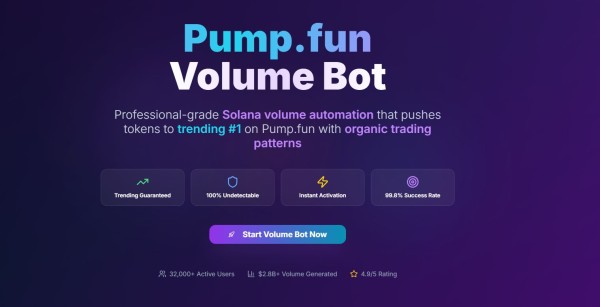
Fake volume is one of the most pervasive problems in Solana token trading. Bots execute thousands of transactions between wallets controlled by the same entity, creating the illusion of organic demand where none exists. For traders relying on volume as a signal, this manipulation leads to buying into tokens that have no real market interest and watching them collapse once the bot activity stops.
Understanding how to detect fake volume and bot activity is not optional if you trade on Solana. It is a core survival skill. This guide covers the mechanics of volume manipulation, the red flags to watch for, the tools that help you verify legitimate activity, and practical techniques for protecting yourself.
How Fake Volume Works on Solana
Fake volume, also called wash trading, is the practice of buying and selling an asset with yourself to inflate trading volume artificially. On Solana, this is particularly easy and cheap to execute because transaction fees are fractions of a cent.
The Basic Wash Trading Setup
A typical wash trading operation works like this:
The operator creates dozens or hundreds of Solana wallets
They fund these wallets from a single source (often through intermediate wallets to obscure the origin)
Bots execute rapid buy and sell transactions between these wallets
The token's volume metrics spike, attracting real traders who interpret high volume as genuine interest
Once real buyers enter, the operator sells their actual holdings into the manufactured demand
The cost of running this on Solana is remarkably low. At roughly $0.00025 per transaction, an operator can execute 100,000 wash trades for about $25 worth of SOL. Compare this to Ethereum where the same operation might cost thousands of dollars in gas.
Why Fake Volume Attracts Real Buyers
Volume is one of the primary metrics traders use to evaluate tokens. High volume suggests:
Strong market interest and demand
Better liquidity for entering and exiting positions
Potential for price momentum
When traders see a token on trending lists sorted by volume, they assume other market participants have validated the token through their trading activity. Wash trading exploits this assumption entirely.
Red Flags That Indicate Fake Volume
Learning to spot fake volume requires looking beyond the top-level numbers. Here are the most reliable indicators.
1. Volume-to-Liquidity Ratio
This is the single most important metric for detecting wash trading. Compare 24-hour volume to the token's total liquidity:
A token with $10,000 in liquidity and $5,000,000 in daily volume is physically implausible without manipulation. Real traders would face massive slippage trying to trade that volume through such thin liquidity.
2. Transaction Pattern Analysis
Real trading activity is messy and irregular. Bot activity follows patterns:
Uniform transaction sizes -- bots often trade the same amounts repeatedly. Real traders buy and sell in varied amounts.
Clockwork timing -- transactions occurring at exact intervals (every 3 seconds, every 10 seconds) indicate automation rather than human activity.
Round numbers -- a stream of buys for exactly 0.1 SOL, 0.5 SOL, or 1.0 SOL is suspicious. Real traders rarely trade in such precise amounts.
No price impact -- high volume with almost no price movement suggests transactions are being executed in offsetting pairs.
Check the token's holder distribution for these warning signs:
Wallet clusters -- groups of wallets that were all created around the same time, funded from similar sources, and hold similar token amounts
Circular flows -- wallet A buys, sells to wallet B, which sells to wallet C, which sells back to wallet A
Few unique holders despite high volume -- if a token has millions in volume but fewer than 200 unique holders, the volume is likely concentrated among a small group of related wallets
Top holders are all recent wallets -- established, aged wallets are harder to fake than freshly created ones
4. Buy/Sell Ratio Anomalies
Legitimate tokens have a natural mix of buys and sells driven by different market participants. Watch for:
Near-perfect 50/50 buy-sell ratios -- real markets skew one direction or another based on sentiment
Identical buy and sell counts -- in blocks of time, the exact same number of buys and sells is unnatural
All transactions from new wallets -- if most trading activity comes from wallets with no prior history, the activity is manufactured
Birdeye provides comprehensive trading data for Solana tokens. For fake volume detection, use these features:
Trader analysis -- see how many unique wallets are trading and their individual volumes. If 5 wallets account for 90% of volume, investigate further.
Transaction history -- scroll through recent trades and look for the patterns described above (uniform sizes, clockwork timing, round numbers).
Holder analytics -- examine the distribution of holders and identify suspicious clusters.
Birdeye's trade list is particularly useful because it shows individual transactions with wallet addresses, allowing you to trace whether the same wallets are trading back and forth.
DEXScreener
DEXScreener is another essential tool for evaluating token legitimacy. Key features for bot detection:
Liquidity vs. volume comparison -- DEXScreener displays both metrics prominently, making the ratio calculation straightforward.
Price chart patterns -- wash-traded tokens often show a distinctive "flatline" pattern where volume is high but price barely moves, followed by sudden dumps when real money enters.
Maker count -- the number of unique addresses that initiated trades. Low maker count relative to volume is a red flag.
Boosts and paid promotions -- DEXScreener shows when tokens have paid for trending placement, which correlates with manipulation campaigns.
RugCheck
RugCheck provides automated security analysis for Solana tokens. While its primary focus is on smart contract risks (mint authority, freeze authority, LP locks), many of its risk signals correlate with tokens that also engage in volume manipulation:
Top holder concentration -- if insiders hold a large percentage of supply, they have the resources to run wash trading operations
LP status -- unlocked liquidity combined with high volume is a particularly dangerous combination
Token authority risks -- tokens where the creator retained mint or freeze authority are more likely to be manipulation vehicles
Use RugCheck as a first-pass filter before spending time on deeper volume analysis.
Advanced Detection Techniques
Following the Funding Trail
The most definitive way to confirm wash trading is tracing the funding source of active trading wallets. If you see 50 wallets all actively trading a token:
Pick several of the most active wallets
Trace their funding history back -- where did they get their SOL?
If multiple active trading wallets were all funded from the same source wallet (or from a small cluster of source wallets), the activity is coordinated
Solana explorers like Solscan and SolanaFM allow you to trace transaction histories. This process is manual and time-consuming but provides near-certain confirmation of wash trading.
Time-of-Day Analysis
Real trading activity follows geographic patterns. Tokens with legitimate global interest have volume distributed across all hours, with peaks during US and Asian market hours. Wash-traded tokens often show:
Perfectly uniform volume across all hours (bots run 24/7 without human patterns)
Volume that starts and stops abruptly at the same time each day (indicating a bot being turned on and off)
Sudden volume spikes that coincide with trending list update intervals
Comparing On-Chain and Aggregator Data
Cross-reference volume data between different sources. Check the volume reported on Birdeye against DEXScreener against direct on-chain data. Significant discrepancies can indicate that some aggregators are double-counting wash trades or that the token is being traded on phantom pools.
Protecting Yourself from Fake Volume
Knowing how to detect fake volume is half the equation. Here is how to protect yourself in practice.
Build a Pre-Trade Checklist
Before buying any token, run through these checks:
Volume-to-liquidity ratio -- is it reasonable (under 10x for most tokens)?
Unique trader count -- are there at least 100+ distinct wallets trading?
Transaction patterns -- do recent trades look organic?
This takes 2-3 minutes and will save you from the majority of manipulation schemes.
Do Not Chase Trending Lists
Trending token lists sorted by volume are the primary hunting ground for wash traders. They manipulate volume specifically to appear on these lists and attract attention. Treat any token that appears on a trending list as suspicious until you verify the volume is legitimate.
Watch for the Dump Pattern
Even if you miss the wash trading signals initially, you can often exit before the dump by watching for these signs:
Bot activity suddenly stops (volume drops 90% in a short period)
Large sells from wallets that were previously only buying
Liquidity being removed from the pool
Social media promotion intensifying right as on-chain metrics deteriorate
Use Multiple Data Sources
Never rely on a single tool or metric. Cross-reference Birdeye, DEXScreener, and RugCheck. Check the token's social presence. Look at the deployer's history. The more angles you examine, the clearer the picture becomes.
The Bigger Picture
Fake volume is not a Solana-specific problem, but Solana's low fees make it cheaper and easier to execute at scale. As the ecosystem matures, better detection tools and analytics platforms are making it harder for manipulators to operate undetected.
The most effective defense is education. Traders who understand how wash trading works and know what to look for are far less likely to become victims. Volume is a useful metric, but only when it represents genuine market interest. Learning to distinguish real volume from manufactured volume is one of the most valuable skills you can develop as a Solana trader.