Cypherock X1 Review: The Seedless Hardware Wallet (2026)
Cypherock X1 replaces the seed phrase with key shards split across a vault and four cards. Here's how the seedless model works, whether it fits Solana holders, and an honest look at the tradeoffs.
MadeOnSol··Updated · 8 min read
Disclosure: This article contains affiliate links. If you sign up through them, MadeOnSol may earn a commission at no extra cost to you. This never affects our rankings, ratings, or reviews.
Strengths
No seed phrase — eliminates the biggest single point of failure in self-custody
2-of-5 recovery — lose up to 3 components and still recover; one stolen card is useless to a thief
Great for inheritance/estate planning — distribute cards to trusted parties
Weaknesses
No mobile app — desktop-only cySync, a real friction point for mobile-first Solana users
SPL token / staking / NFT support unconfirmed — verify before relying on it
Tiny 0.96" screen that reportedly washes out in sunlight
No battery — must stay tethered via USB-C
Managing 4 physical cards is its own logistics burden
Thin reputation base — Trustpilot ~4.3 but on only ~35 reviews, with some shipping/support-delay complaints
Who the X1 Is For
Long-term holders who want to eliminate seed-phrase risk and have loss-resilient, inheritance-friendly storage
SOL savers parking funds for the long haul (not active SPL/NFT traders)
Anyone who's lost sleep over where their seed phrase is written down
Not ideal for: active Solana traders who need mobile access and full SPL/NFT support — a Ledger paired with Phantom is more practical for daily on-chain activity.
The Cypherock X1 solves a real problem elegantly: it removes the seed phrase, the single weakest link in self-custody, and replaces it with a resilient 2-of-5 shard model that tolerates loss and resists theft. The Keylabs audit and reproducible vault firmware back up the security claims. For long-term cold storage — especially if inheritance or "what happens if I lose the backup" keeps you up at night — it's one of the most thoughtfully designed wallets on the market.
For active Solana trading, it's a weaker fit: desktop-only, no confirmed SPL/NFT depth, and the four-card logistics aren't built for daily use. Match the tool to the job — X1 for savings, a mobile hot wallet + Ledger for trading.
Tools mentioned
Compare features and read reviews.
Live health scores, average ratings, and direct links on MadeOnSol.
Every hardware wallet asks you to do the same scary thing: write down a 12- or 24-word seed phrase and protect it forever. Lose it, and your funds are gone. Let someone photograph it, and your funds are gone. Cypherock X1 is built to eliminate that single point of failure entirely — there is no seed phrase to write down.
It's a genuinely different security model. Here's how it works, whether it's right for Solana holders specifically, and where it falls short.
The Core Idea: No Seed Phrase, Just Shards
Instead of one seed phrase, the X1 splits your wallet's master secret into 5 cryptographic shards using Shamir's Secret Sharing, distributed across 1 X1 Vault + 4 X1 Cards. No single device or card ever holds the complete key.
Recovery is 2-of-5: you need any two of the five components to access funds. That has two big consequences:
You can lose up to 3 of the 5 components and still recover your wallet.
A thief who steals one card — or just the vault — gets nothing. They can't derive the key from a single shard.
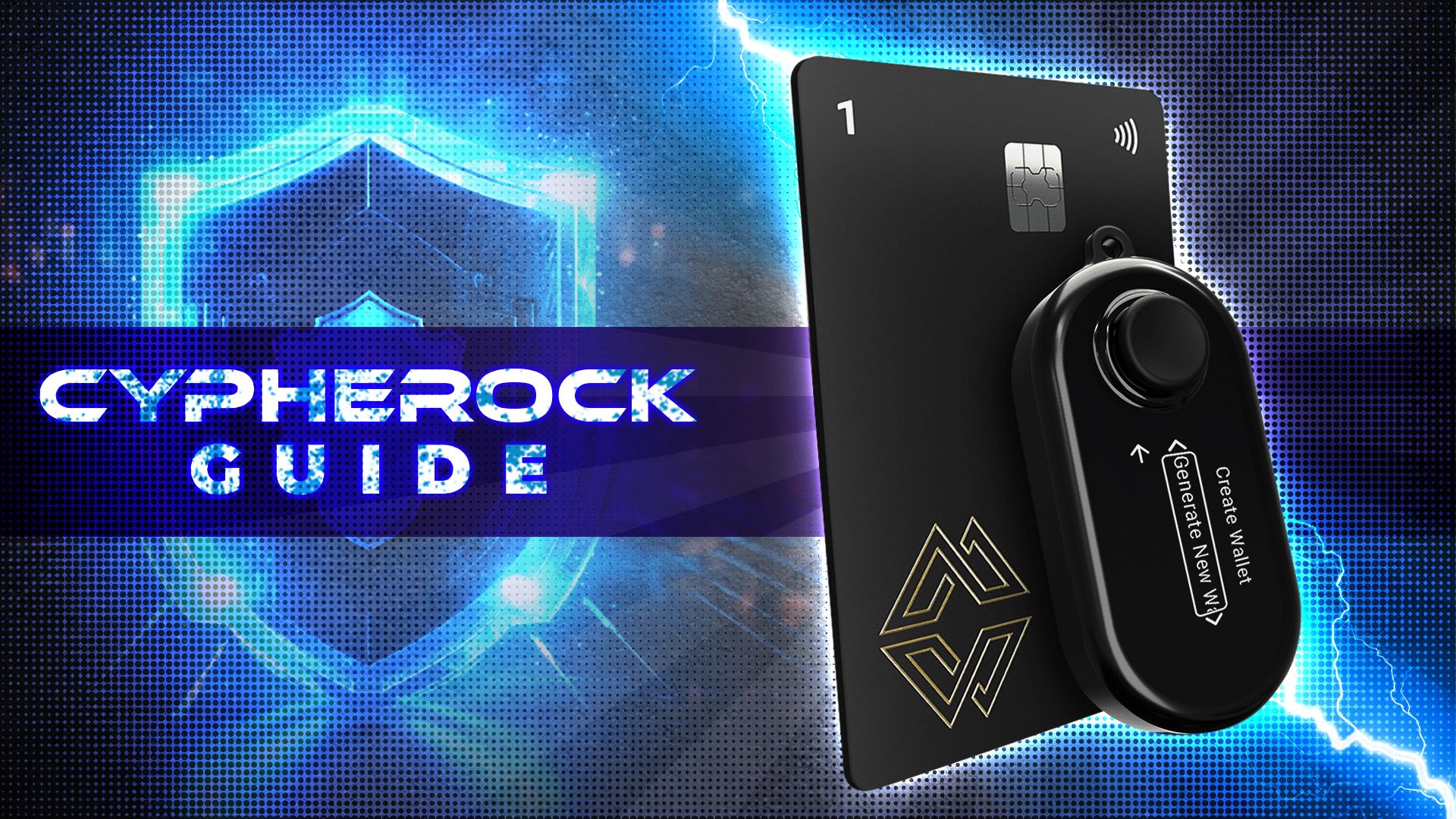
To transact, you tap any one of the four cards against the vault over NFC (card + vault = the two components needed). There's no phrase to type, phish, or leak.
This is different from competitors' optional Shamir backups (like Trezor's): on the X1, the sharded model is the default, primary storage scheme, shipped as physical smartcards rather than written shares.
The Hardware
X1 Vault — a handheld device with a 0.96" OLED screen and a 5-way joystick for on-device verification. Dual-chip design with a Microchip ATECC608A secure element. Never stores the complete key.
Connectivity — USB-C to the vault, NFC between cards and vault. No Bluetooth, no Wi-Fi — effectively air-gapped except for the wired USB-C link.
No battery — the vault is powered only when plugged in via USB-C.
Solana Support — Read This If You're a SOL Holder
This is the part that matters most for a Solana audience, and where I'll be direct:
SOL is supported natively — you can manage your SOL balance and send/receive through the cySync desktop app, which reads directly from the Solana blockchain. If you receive funds often, mapping a memorable .sol domain via Solana Name Service to your cold-storage address makes sharing it far safer than copying the raw key.
But SPL token, staking, and NFT support is not clearly documented.Cypherock's Solana integration confirms SOL transfers and balance fetching; it does not clearly spell out SPL token support, staking, or NFTs. If your Solana activity is SPL tokens, memecoins, staking, or NFTs, verify current cySync support directly before buying — don't assume it's there.
Combined with Cypherock's current desktop and mobile CySync apps, this makes the X1 a better fit for long-term SOL cold storage than for active Solana trading. If you're a degen moving SPL tokens daily, a Phantom + Ledger setup is more practical, paired with a self-custody trading venue like the one in our JTX review of Jito's self-custody spot exchange. If you're parking SOL for the long haul and want the strongest loss-resilience, the X1's model is compelling.
Supported Assets Overall
Cypherock's marketing cites "18,000+ assets," but its own pages range from "1,000+" to "9,000–10,000+." Cypherock's current public product/support materials now consistently advertise roughly 18,000+ supported assets, so the older 9,000–10,000 fallback is no longer the better current figure.
All tiers share identical security hardware — the differences are accessories, warranty, and support level. The $99 Basic gives you the full seedless security model.
Independently audited by Keylabs — a firm known for finding vulnerabilities in Ledger and Trezor.
Reproducible open-source vault firmware — WalletScrutiny certifies the X1 vault firmware as reproducible (passed all 12 tests).
EAL6+ card secure elements + ATECC608A vault.
One honest caveat: there's a community criticism that the X1 Cards' firmware is closed-source while the vault firmware is open — some call this a "half-measure." I couldn't fully verify it against an authoritative source, so flag it as something to check if fully open-source hardware is a hard requirement for you.
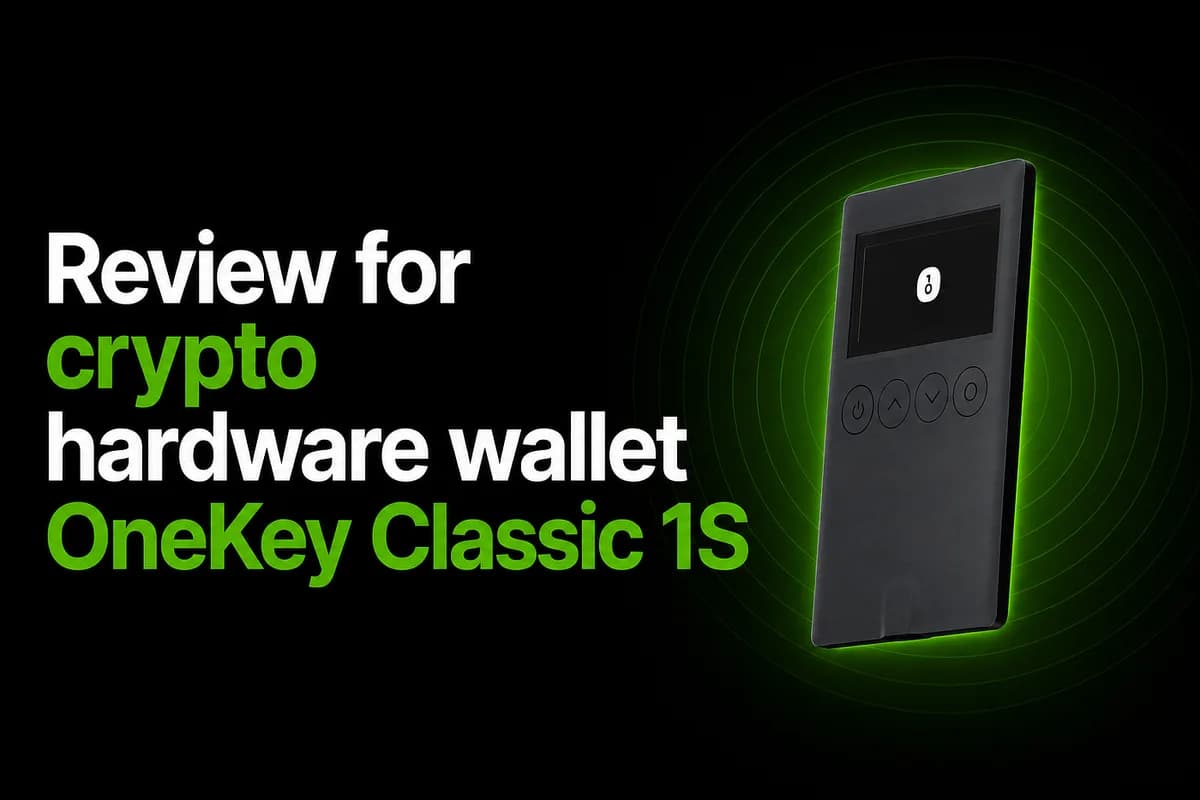
If you'd rather keep the familiar seed-phrase model but still want open-source firmware and an EAL6+ secure element at a lower price, the OneKey Classic 1S is a compelling $99 alternative.
No. That's its core differentiator. Your key is split into 5 shards (Shamir Secret Sharing) across 1 vault and 4 cards, with 2-of-5 recovery. There's no seed phrase to write down or lose.
Does Cypherock support Solana?
Yes for SOL — you can manage SOL balances and transfers via the cySync desktop app. SPL token, staking, and NFT support is not clearly documented, so verify in cySync before relying on it.
How much does the Cypherock X1 cost?
Three tiers: X1 Basic $99, X1 Standard $179, X1 Pro $249. All share the same security hardware; higher tiers add accessories, longer warranty, and support.
Is there a Cypherock mobile app?
Not yet — cySync is desktop-only (Windows/Mac/Linux). A mobile app is reportedly in development. This makes it less convenient for mobile-first Solana users.
What happens if I lose a card?
You can lose up to 3 of the 5 components (vault + 4 cards) and still recover your wallet, since recovery only needs any 2. A single lost or stolen card cannot be used to access funds on its own.
September 2026 refresh
Cypherock X1 remains active. Two older caveats changed: CySync is no longer desktop-only (current support includes mobile), and Cypherock's current materials now advertise 18,000+ assets rather than the older inconsistent 1K/9K/18K range. The X1 architecture is still the same core 2-of-5 Shamir-style design across one Vault and four X1 cards. The current X1 Basic page has also shown the device around the $99 promotional tier, but hardware promotions change frequently.