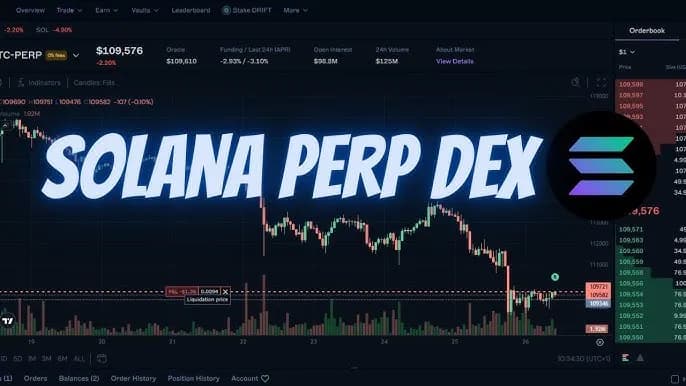
Solana has three serious perpetual futures platforms: Jupiter Perps, Drift, and Zeta Markets. Each takes a different architectural approach. Jupiter uses an oracle-based pricing model with LP-backed liquidity. Drift runs a hybrid order book with virtual AMM. Zeta Markets operates a fully on-chain central limit order book (CLOB) -- the closest thing to a CEX-style derivatives exchange that exists entirely on Solana.
If you have traded perps on Binance or Bybit, Zeta Markets will feel the most familiar. This guide covers how to get started, how perpetual futures and options work on Zeta, how it compares to alternatives, and the risk management practices that keep leveraged traders solvent. Derivatives are just one corner of a much wider landscape — our Solana ecosystem overview for 2026 maps where perps fit alongside DeFi, staking, NFTs, and infrastructure.
What Zeta Markets Is
Zeta Markets is a decentralized derivatives exchange built natively on Solana. It launched in 2021 and has processed over $10 billion in cumulative trading volume. The platform supports:
- Perpetual futures on SOL, BTC, ETH, and other major assets with up to 20x leverage
- Options contracts (calls and puts) on SOL and other assets
- Cross-margin -- your entire account balance serves as collateral across all positions
- On-chain order book -- all orders are submitted and matched on-chain via Solana transactions
The key differentiator is the order book model. Unlike Jupiter Perps (where you trade against a liquidity pool) or peer-to-pool models, Zeta matches buyers and sellers directly on an order book. This means tighter spreads during high activity, but potentially wider spreads during low volume -- standard order book dynamics.
Getting Started
Connect and Deposit
- Go to zeta.markets and click "Launch App."
- Connect your wallet. Zeta supports Phantom, Solflare, Backpack, and other Solana wallets. If you plan to manage positions from your phone, our best Solana mobile trading apps guide compares which of those wallets handles on-the-go trading best.
- Deposit USDC. Zeta uses USDC as the settlement currency for all markets. You need USDC in your wallet to deposit into your Zeta margin account. If you only have SOL, swap on Jupiter first.
- Approve the deposit transaction. Your wallet will prompt you to confirm. The USDC moves from your wallet to your Zeta margin account, which is a separate on-chain account managed by Zeta's smart contracts.
Your deposited USDC is your available margin. It is not locked to a specific position -- Zeta uses cross-margin, so your entire balance backs all open positions.
Placing Your First Trade
- Select a market. The top navigation shows available perp markets (SOL-PERP, BTC-PERP, ETH-PERP, etc.).
- Choose your direction. Long (buy) if you expect price to rise, short (sell) if you expect price to fall.
- Set your leverage. The slider or input field lets you choose from 1x to 20x. Higher leverage means larger position size relative to your margin, but also a closer liquidation price.
- Choose order type. Market order (execute immediately at best available price) or limit order (execute only at your specified price or better).
- Review and confirm. The interface shows your entry price, estimated liquidation price, position size, and fees. Confirm in the UI and then approve the transaction in your wallet.
Your position is now open. The P&L updates in real time based on the mark price of the perpetual contract.
How Perpetual Futures Work on Zeta
Perpetual futures (perps) are contracts that track the price of an underlying asset without an expiry date. They are the most popular derivatives instrument in crypto, and Zeta implements them with standard mechanics:
Leverage. A 10x long on SOL with $100 margin gives you $1,000 of SOL exposure. If SOL rises 5%, your position gains $50 (50% return on margin). If SOL drops 5%, you lose $50. Higher leverage amplifies both gains and losses.
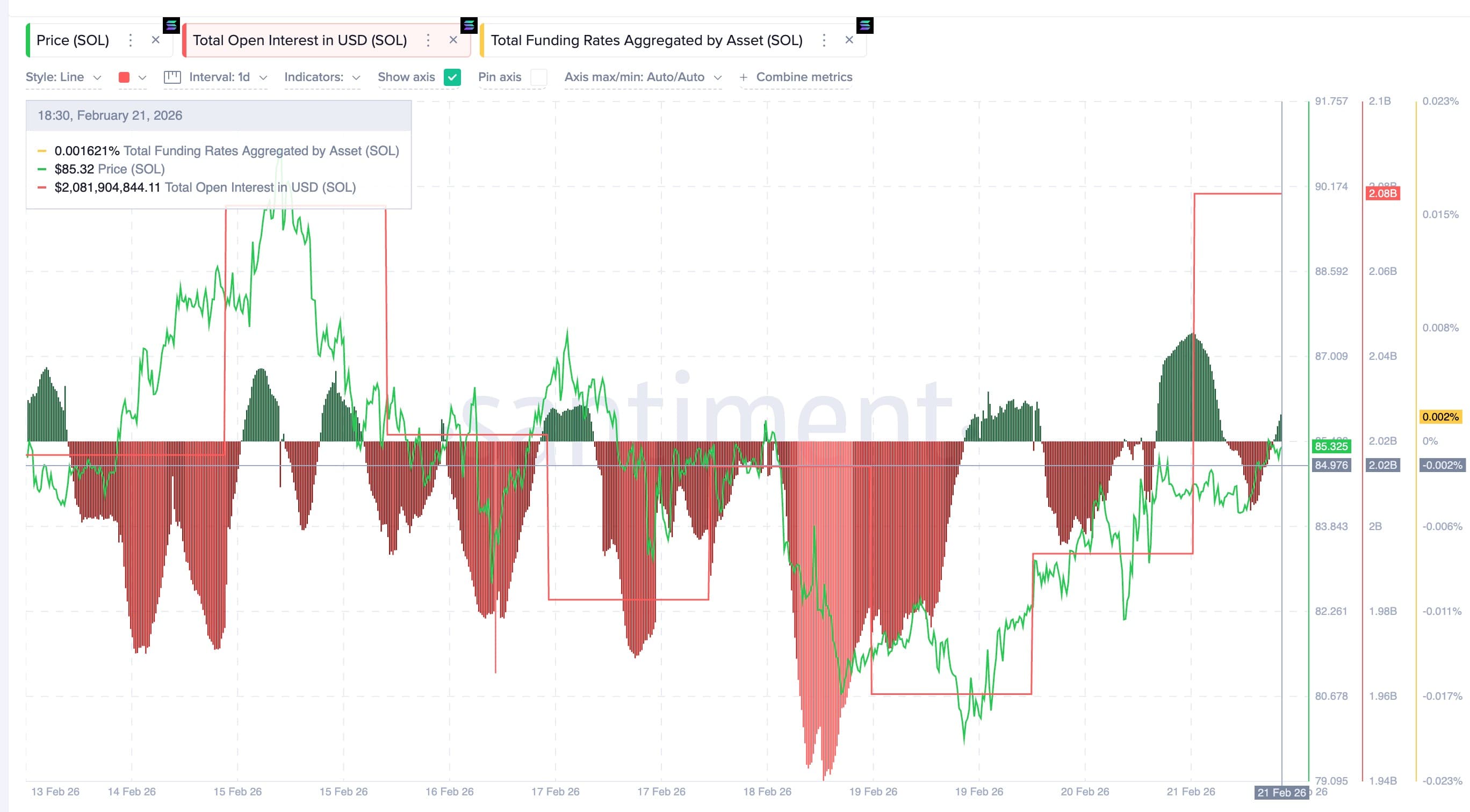
Funding rates. Funding is the mechanism that keeps the perp price anchored to the spot price. When the perp trades above spot (more longs than shorts), longs pay shorts a funding fee. When the perp trades below spot (more shorts than longs), shorts pay longs. Funding is calculated and settled every hour on Zeta.
Funding rates matter for two reasons. First, if you hold a position for days or weeks, accumulated funding can eat into profits or add to them. Second, extreme funding rates (above 0.1% per hour) signal crowded positioning -- when everyone is long, a reversal tends to be violent.
Liquidation. If your unrealized losses approach your deposited margin, Zeta's liquidation engine closes your position to prevent the protocol from taking a loss. Your liquidation price depends on your leverage, entry price, and total margin balance.
Cross-margin means that if you have $1,000 deposited and only $200 is committed to a position, the remaining $800 serves as a buffer before liquidation. This is safer than isolated margin (where only the position's allocated margin counts) but means a single bad trade can affect your entire account balance.
Fees. Zeta charges a taker fee (market orders) and a reduced maker fee (limit orders that add liquidity to the book). Fee rates vary by tier and volume but are competitive with other Solana perp platforms. Check Zeta's fee schedule for current rates.